


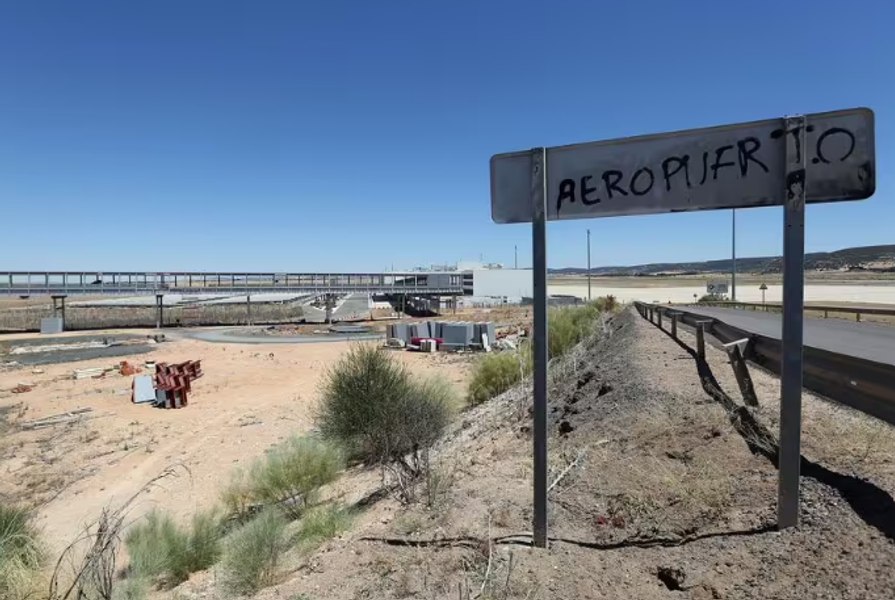
Spain's 'ghost airport' reopens after 14 years, focusing on private flights
Translated from Romanian, summarized and contextualized by DistantNews.
At a glance
News
Sources not specified
Outcome reported
- Spain's Ciudad Real Airport, once dubbed the "ghost airport," has reopened after 14 years of abandonment and decay.
- Built with a 1 billion euro investment and inaugurated in 2008, it went bankrupt in 2012 due to insufficient air traffic.
- The revitalized airport will focus on private flights, particularly from Europe and the United States, and boasts one of Europe's longest runways.
Ciudad Real International Airport, Spain's "ghost airport," has reopened after more than a decade of neglect. The airport, which cost approximately 1 billion euros to build and opened in 2008, declared bankruptcy in April 2012, becoming a symbol of Spain's infrastructure failures.
Located about 240 kilometers from Madrid, the project failed to attract the projected air traffic. After years of being used for aircraft storage, the airport is undergoing revitalization under new management. Operations have resumed, but they are limited to private flights, primarily from Europe and the United States.
"We are currently focusing on private aviation and dedicated operations," said Rafael Gómez Arribas, the airport's general manager. A notable feature remains its runway, approximately 4,100 meters long, making it one of the longest in Europe and capable of accommodating large aircraft like the Airbus A380. Yellow warning crosses, standard aviation signage indicating an inoperable runway, have been removed or covered during the reactivation process.
Initially known as "Don Quijote Airport," the project was envisioned as a second major hub for Madrid. However, its distance from the capital and a lack of demand led to its financial collapse. The revitalized airport now aims to carve out a niche in the private aviation sector.
We are currently focusing on private aviation and dedicated operations.
DistantNews Editorial
Originally published by Adevărul in Romanian. Translated, summarized, and contextualized by our editorial team with added local perspective. Read our editorial standards.
More Stories



From Our Blog

What Gets Lost (and Found) When News Is Translated

The Critical Role of Diaspora Media in Global News

What Travellers Should Know About Countries with Restricted Press

A Digital Nomad's Guide to Following Local News

How the Same Story Looks Different in Different Countries
