

Spain’s Sánchez accuses Israel and Russia of disinformation over Ceuta migrant crisis
Translated from Romanian and summarized by DistantNews. Read the original for the full story.
At a glance
News
From a news agency
Under investigation
- Prime Minister Pedro Sánchez accused networks linked to Russia and Israel, as well as far-right groups, of spreading disinformation about July’s migrant influx into Ceuta.
- Sánchez said the campaign sought to attack Spain and divide Europe, and linked it to Madrid’s positions on the wars in Ukraine and the Middle East.
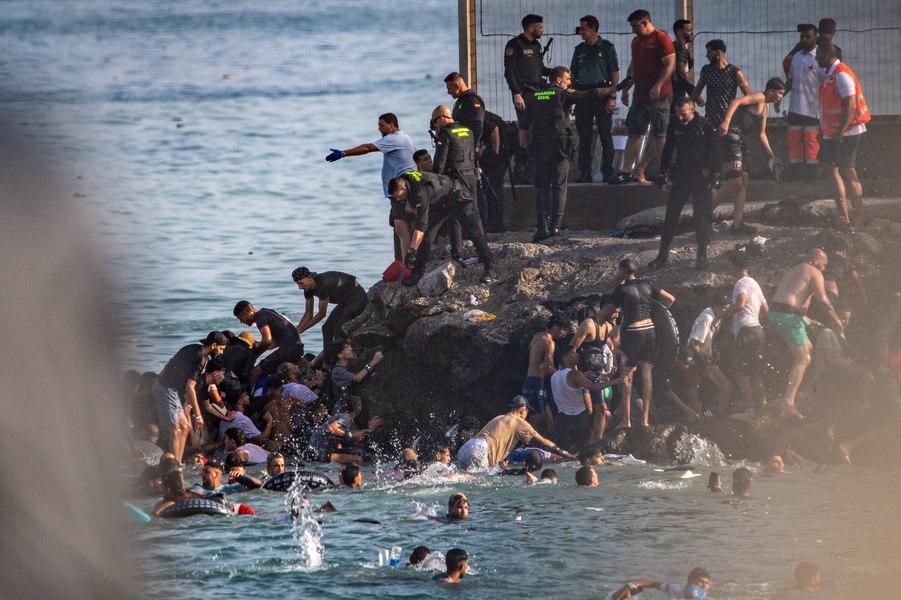
- Spanish authorities say about 70,000 people entered Ceuta and most have been returned to Morocco, while estimates of those remaining range from 3,500 to 10,000.
Pedro Sánchez says the migrant crisis in Ceuta became the target of an online disinformation campaign involving networks linked to Russia and Israel, along with an international far-right movement.
Speaking to Cadena Ser radio, Spain’s centre-left prime minister said false claims appeared after July 30 and 31. He said the campaign used migration to attack Spain, Europe and the cohesion between them. Sánchez attributed the allegations to a study by the European External Action Service, the European Union’s foreign policy body.
After July 30 and 31, rumors and false information appeared, coming from social media networks linked both to Russia and Israel, as well as from an international far-right movement that constantly uses migration not only to attack Spain, but also to attack Europe and divide it.
He also linked the alleged campaign to disagreements between Madrid and the two countries over Spain’s positions on the war in Ukraine and conflicts in the Middle East. Sánchez said both countries had used the crisis to criticize his government. He added that online falsehoods were also circulated by groups involved in people smuggling.
It is evident that the two countries took advantage of the crisis to criticize the Spanish government.
One claim said migrants could not be expelled if they entered Ceuta by swimming. Sánchez said that claim was false and that authorities were still investigating what happened.
Sánchez rejected the idea that Moroccan authorities bore no responsibility for the sudden influx. He said intelligence services with which Spain normally cooperates pointed instead to some level of involvement by Moroccan authorities.
No intelligence service among those with which the Spanish government normally cooperates raises any doubt; rather, they suggest some involvement, in one way or another, by the Moroccan authorities.
Spanish authorities say around 70,000 people entered the North African enclave and that most have since been returned to Morocco. The Spanish government estimates that 3,500 to 7,000 migrants, including unaccompanied minors, remain in Ceuta. Right-wing leaders in the enclave put the figure at at least 10,000.
We continue to investigate what happened.
About this summary
Originally published by Adevărul in Romanian. Translated, summarized, and contextualized automatically by DistantNews, with a note on how the source frames the story. Not individually reviewed before publishing. How this works.
More Stories


From Our Blog

What Gets Lost (and Found) When News Is Translated

The Critical Role of Diaspora Media in Global News

What Travellers Should Know About Countries with Restricted Press

A Digital Nomad's Guide to Following Local News

How the Same Story Looks Different in Different Countries
