


Spain wins World Cup with dominant midfield and defense
Translated from Spanish, summarized and contextualized by DistantNews.
At a glance
News
Sources not specified
Outcome reported
- Spain won its second World Cup title by defeating its opponent in the final.
- The team's victory stemmed from its midfield superiority, high defensive pressure, and quick ball recovery.
- Key players like Rodri, Pedri, and Dani Olmo controlled the game's tempo, while the defense conceded only one goal.
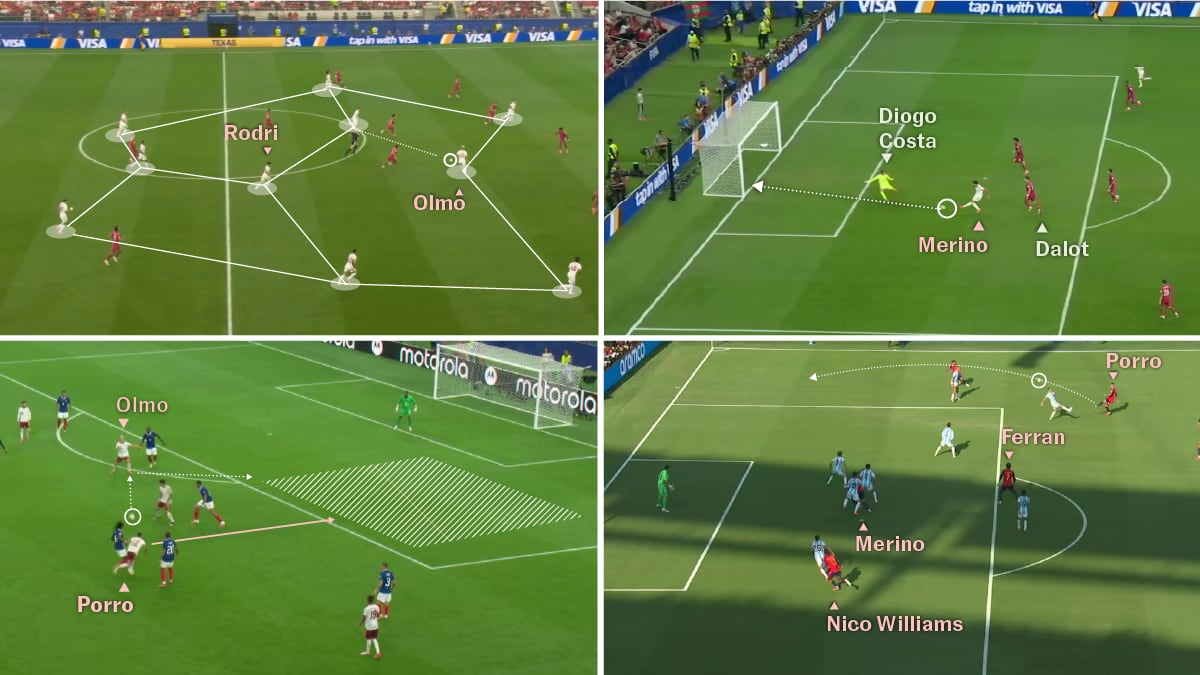
Spain has claimed its second World Cup trophy, showcasing a distinct playing style throughout the tournament. Coach Luis de la Fuente's squad demonstrated dominance, particularly in the midfield, where Rodri, Pedri, and Dani Olmo orchestrated the game with tactical intelligence and precise passing. This control allowed Spain to dictate the pace and exploit spaces effectively.
An example of this midfield prowess occurred in the Round of 16 against Portugal. Following a turnover, Rodri quickly regained possession and initiated an attack. Pedri received the ball, turned, and delivered a defense-splitting pass to Dani Olmo, breaking Portugal's first defensive line. Though the ensuing chance didn't result in a goal, it highlighted Spain's ability to convert midfield control into immediate attacking threats.
The team's defensive solidity was equally crucial, conceding only one goal throughout the competition. Spain's strategy involved high pressure and ball recovery deep in enemy territory. They ranked second in defensive actions in the opponent's half and conceded the fewest chances. A match against Austria exemplified this: after a loss of possession, Spain's midfielders immediately pressed, forcing Austria into errors and regaining the ball swiftly. This relentless pressure, even when leading, ensured opponents had little room to maneuver, ultimately securing Spain's championship.
DistantNews Editorial
Originally published by El País in Spanish. Translated, summarized, and contextualized by our editorial team with added local perspective. Read our editorial standards.
More Stories

From Our Blog

What Gets Lost (and Found) When News Is Translated

The Critical Role of Diaspora Media in Global News

What Travellers Should Know About Countries with Restricted Press

A Digital Nomad's Guide to Following Local News

How the Same Story Looks Different in Different Countries
