


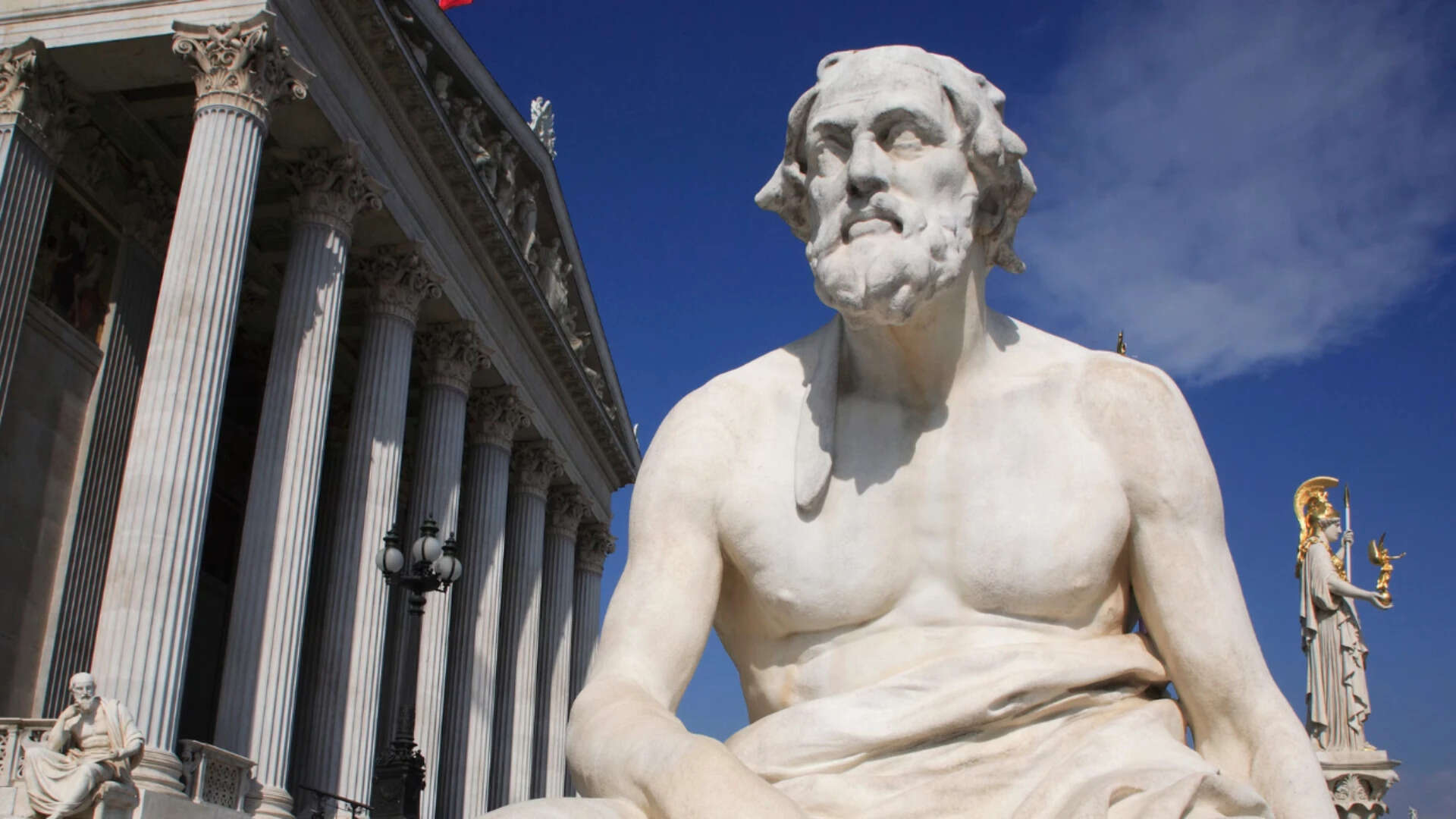
Spartan King's ancient advice: Self-control is the root of courage
Translated from English, summarized and contextualized by DistantNews.
At a glance
In-depth
Sources not specified
Context piece
- Ancient Spartan King Archidamus II used a quote about self-control to urge caution against immediate war with Athens.
- The quote, recorded by Thucydides, links self-control to self-respect and courage, arguing true bravery stems from discipline, not impulse.
- This principle, rooted in the Greek concept of sophrosyne, highlights how controlling desires builds inner strength and character.
In 432 BC, amidst rising tensions and calls for immediate war against Athens, the elderly Spartan King Archidamus II urged restraint, drawing on a profound principle: "Self-control is the chief element in self-respect, and self-respect is the chief element in courage."
Self-control is the chief element in self-respect, and self-respect is the chief element in courage.
Recorded by the historian Thucydides in his "History of the Peloponnesian War," this quote was not mere philosophical musing. It was a direct response to Corinthian allies who mocked Sparta's caution and demanded swift action. Archidamus, a seasoned warrior, understood the devastating cost of prolonged conflict. He countered the crowd's anger, warning that impatience should not be mistaken for bravery. Sparta's strength, he argued, lay not in recklessness but in the disciplined control of fear and desire, cultivated through rigorous training.
Courage comes from self-respect, the belief that your character actually matters.
This ancient wisdom, rooted in the Greek concept of "sophrosyne" (self-control or a clear mind), posits a chain reaction of character development. Archidamus connected this self-mastery to "aidos," a sense of personal honor and self-respect. The logic is that individuals who lack self-control are easily swayed by external events, acting on impulse and later regretting their actions, which erodes self-belief. Conversely, proving that values, not fleeting emotions, guide one's actions builds the inner fortitude necessary to face adversity.
You cannot buy self-respect or gain it through cheap praise. You earn it through small, daily choices to control yourself.
While often cited today as general advice, the quote's original purpose was starkly practical: to prevent a passionate assembly from plunging into a disastrous war. Archidamus's words underscore that true courage is not found in outward displays of aggression but in the quiet, daily discipline of mastering oneself. This internal strength, he implied, is the bedrock of genuine resilience and sound decision-making, especially when faced with pressure.
Sparta was strong not because its soldiers were reckless, but because their strict, simple training taught them to control their fears and desires.
DistantNews Editorial
Originally published by Times of India in English. Translated, summarized, and contextualized by our editorial team with added local perspective. Read our editorial standards.
More Stories


From Our Blog

What Press Freedom Means for the News You Read

What Gets Lost (and Found) When News Is Translated

The Critical Role of Diaspora Media in Global News

What Travellers Should Know About Countries with Restricted Press

A Digital Nomad's Guide to Following Local News
