


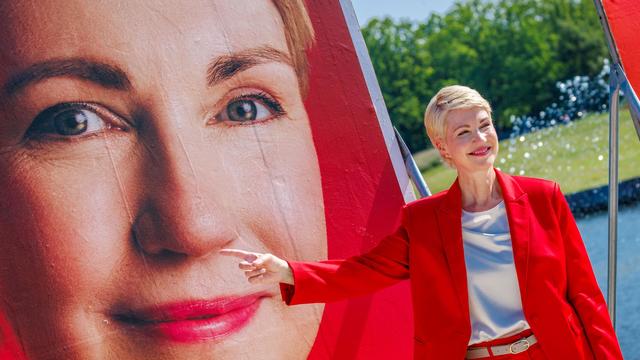
SPD launches election campaign in Mecklenburg-Vorpommern
Translated from German, summarized and contextualized by DistantNews.
At a glance
News
From a news agency
Context piece
- The SPD in Mecklenburg-Vorpommern launched its election campaign with campaign posters featuring top candidate Manuela Schwesig.
- Schwesig aims to win re-election as minister-president, promising to boost small and medium-sized businesses and create new industrial jobs with a 2 billion euro investment plan.
- The SPD faces challenges as polls show the AfD in second place, and Schwesig is positioning the election as a choice between stable, democratic governance and the AfD's potential rise to power.
Mecklenburg-Vorpommern's Minister-President Manuela Schwesig has officially kicked off the SPD's election campaign, launching the party's campaign posters in Schwerin. Schwesig, who seeks to retain her position as head of government after the September 20 election, announced the start of the "hot election campaign phase." However, current polls place the SPD second, trailing the opposition AfD.
Now the 'hot election campaign phase' begins.
Schwesig framed the election as a critical choice for the state's future, emphasizing the need for stable, democratic leadership over the AfD's potential governance. She outlined key campaign promises, including significant investments to support small and medium-sized businesses and create new industrial jobs through a 2 billion euro plan by 2035. In education, she highlighted tuition-free kindergartens and pledged 1 billion euros for school renovations.
It's about whether she can continue to pursue stable, reliable, and democratic policies as minister-president or if the AfD will come to power.
Further campaign pledges include making the Deutschlandticket cheaper for young people and reimbursing GEMA fees for clubs holding up to three events annually. Schwesig also sought to differentiate her party from the federal government's policies, despite the SPD's role in the coalition. She announced a veto against a pension reform in the Bundesrat and criticized the federal economics minister's forecast for electricity prices, arguing that lower production costs should be passed on to consumers immediately.
Then things will get worse for the people in the state.
DistantNews Editorial
Originally published by Die Zeit in German. Translated, summarized, and contextualized by our editorial team with added local perspective. Read our editorial standards.
More Stories

From Our Blog

What Gets Lost (and Found) When News Is Translated

How the Same Story Looks Different in Different Countries

The Critical Role of Diaspora Media in Global News

What Travellers Should Know About Countries with Restricted Press

A Digital Nomad's Guide to Following Local News
