

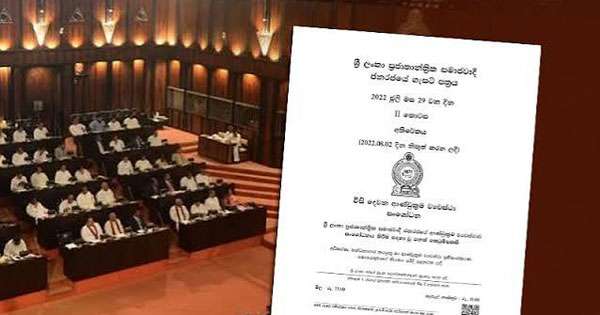

Sri Lanka Responds to UN Envoy on Judicial Reforms
Translated from Sinhala and summarized by DistantNews. Read the original for the full story.
At a glance
News
Official statement
Approved/passed
- Sri Lanka officially responded to a UN Special Rapporteur's letter concerning proposed amendments to judicial retirement ages.
- The government stated the reforms aim to reduce case backlogs and improve public access to justice, not to extend any specific judge's tenure for political gain.
- The amendments propose raising the retirement age for Supreme Court judges from 65 to 67, Court of Appeal judges from 63 to 65, and High Court judges from 61 to 63, with corresponding increases in the maximum number of judges.
- Petitions challenging the constitutionality of these bills have been filed, and the government will respect the Supreme Court's decision.
Sri Lanka has officially responded to concerns raised by Margaret Satterthwaite, the UN Special Rapporteur on the Independence of Judges and Lawyers. The government asserted that proposed amendments to increase the retirement age for judicial officials will also apply to currently serving judges. This clarification addresses potential interpretations that the reforms might be intended to extend the tenure of specific individuals for political advantage.
The proposed amendment to increase the retirement age for judicial officials will also extend the retirement age for currently serving judges.
The government emphasized that the proposed changes, which include raising the retirement age for Supreme Court judges from 65 to 67 and for Court of Appeal judges from 63 to 65, are designed to tackle the significant backlog of cases and reduce delays within the judiciary. Furthermore, the amendments aim to enhance public access to justice. The reforms also propose increasing the maximum number of judges in the Court of Appeal from 19 to 24 and in the High Court from 110 to 120.
The main objective of these amendments is to reduce the excessive accumulation of cases and delays in the courts, as well as to ensure public access to justice.
In its official communication, Sri Lanka assured that the amendments would not impact the independence of the judiciary and would proceed without executive influence. The government also highlighted its responsibility, under Article 2(3) and 14 of the International Covenant on Civil and Political Rights, to maintain a fair and efficient judicial system. The response further stated that legally raising the retirement age in line with international standards does not hinder judicial independence, nor does it grant the executive the right to selectively extend the service of individual judges.
The mandatory retirement age for Supreme Court judges will be raised from 65 to 67.
Additionally, the government pointed out that retaining experienced judges within the system is crucial for institutional integrity, especially as the judiciary expands with the appointment of new judges. The response also noted that petitions challenging the constitutionality of these bills have been filed before the Supreme Court, and the government pledged to fully respect the court's final verdict.
These draft bills have not been formulated with the intention of extending the tenure of any specific judge or for political gain.
About this summary
Originally published by Lankadeepa in Sinhala. Translated, summarized, and contextualized automatically by DistantNews, with a note on how the source frames the story. Not individually reviewed before publishing. How this works.
More Stories

From Our Blog

What Gets Lost (and Found) When News Is Translated

The Critical Role of Diaspora Media in Global News

What Travellers Should Know About Countries with Restricted Press

A Digital Nomad's Guide to Following Local News

How the Same Story Looks Different in Different Countries
