

Stolen gas leak caused Texas school's deadly 1937 explosion that killed 295
Translated from English, summarized and contextualized by DistantNews.
At a glance
News
Sources not specified
Outcome reported
- A devastating explosion at New London Consolidated School in Texas on March 18, 1937, killed 295 people, mostly children.
- Investigators found the school illegally used unodorized natural gas from a pipeline, which leaked and accumulated beneath the building.
- The disaster led to global changes in natural gas safety regulations.
A routine school day in New London, Texas, ended in unimaginable tragedy on March 18, 1937. A massive explosion ripped through the New London Consolidated School, a five-year-old building, reducing it to rubble in mere seconds. When the dust settled, 295 lives were lost, the majority of them children, marking it as the deadliest school disaster in U.S. history.
By the time the dust settled, 295 people, most of them children, had lost their lives, making it the deadliest school disaster in US history.
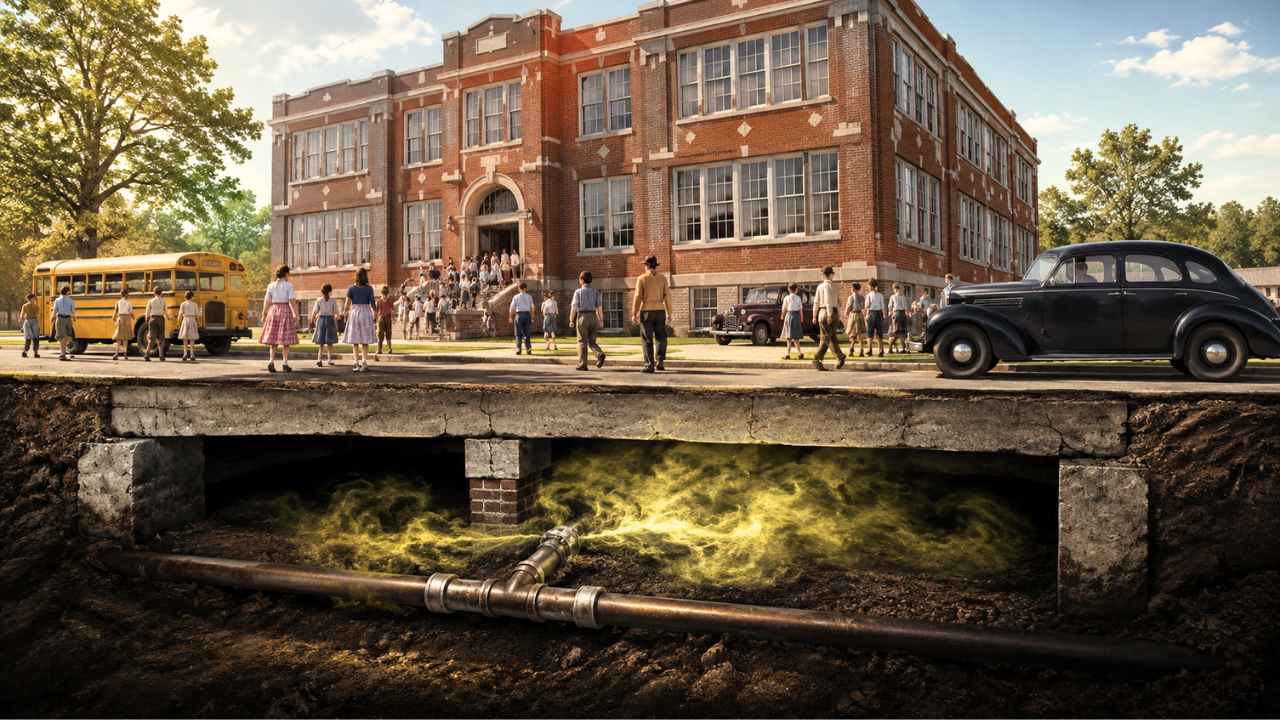
The tragedy's root cause was an odorless natural gas leak beneath the school. Investigations revealed that the school district, facing financial pressures during the Great Depression, had secretly tapped into a pipeline carrying residue natural gas. This by-product of oil production, often treated as waste, was used for heating to cut costs. However, this "free" fuel lacked the safety safeguards of a regulated public gas system, including leak detection.
For days, possibly weeks, the unodorized gas silently accumulated in the crawlspace beneath the school. Students and staff remained unaware as the invisible danger spread. The catastrophic event was triggered around 3:17 pm when a shop teacher activated an electric sander, creating a spark that ignited the trapped gas.
Unlike the natural gas supplied to homes today, it contained no warning odorant.
The explosion was immense, causing the steel-and-concrete school to collapse in approximately nine seconds. The blast was felt up to 40 miles away, overturning cars and scattering debris. Parents and volunteers immediately rushed to the scene, desperately digging through the wreckage with their bare hands.
Investigators concluded that the electrical spark ignited the gas trapped beneath the building.
This horrific event not only claimed hundreds of young lives but also served as a grim catalyst for change. The disaster prompted significant reforms in natural gas safety regulations worldwide, ensuring that such a preventable tragedy would not befall another community.
The explosion was so powerful that much of the steel-and-concrete school collapsed in roughly nine seconds.
DistantNews Editorial
Originally published by Times of India in English. Translated, summarized, and contextualized by our editorial team with added local perspective. Read our editorial standards.
More Stories



From Our Blog

What Press Freedom Means for the News You Read

What Gets Lost (and Found) When News Is Translated

The Critical Role of Diaspora Media in Global News

What Travellers Should Know About Countries with Restricted Press

A Digital Nomad's Guide to Following Local News
