


'Strait of Hormuz blockade is a whole-economy shock'
Summarized and contextualized by DistantNews.
At a glance
News
Named sources
Context piece
- Disruption in the Strait of Hormuz impacts the global economy beyond energy markets, according to Crescent Petroleum CEO Majid Jafar.
- The waterway carries vital goods like fertilizer and helium, essential for semiconductors and industry.
- Direct damage to energy infrastructure exceeds $60 billion, with lost trade surpassing $150 billion and rising daily.
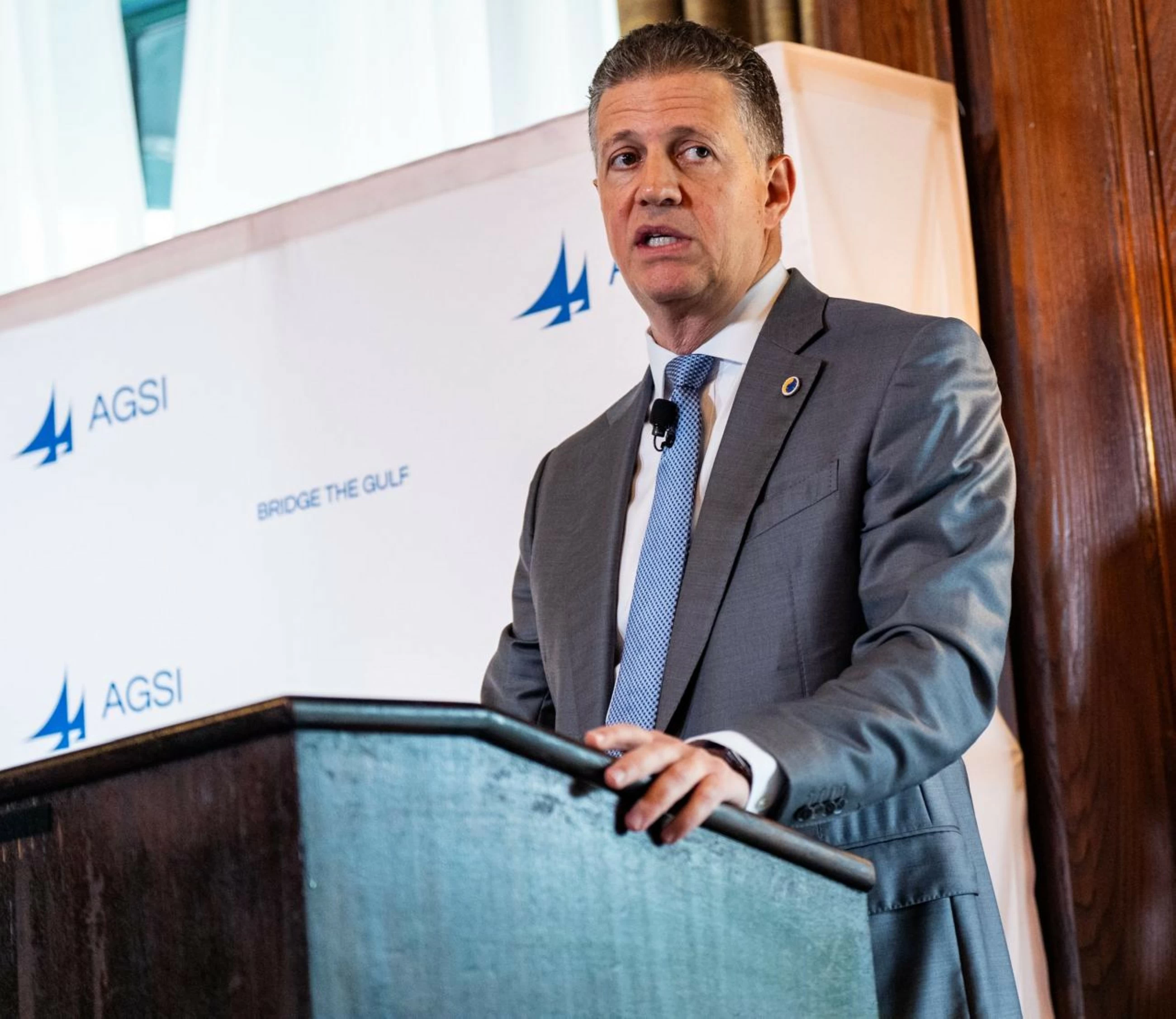
The disruption of the Strait of Hormuz has triggered a "whole-economy shock" with consequences extending far beyond energy markets, warned Majid Jafar, Chief Executive Officer of Crescent Petroleum. Speaking to business, finance, and government leaders in Washington D.C., Jafar highlighted the global economy's dependence on strategic chokepoints.
This is not an energy story. It is a whole-economy story.
"This is not an energy story. It is a whole-economy story," Jafar stated. He emphasized that the strait, through which roughly one-fifth of the world's oil normally flows, also transports a significant portion of global fertilizer, helium vital for semiconductors, and industrial feedstock. The impact is felt in everyday life, affecting "the food on your table, the planes in the sky, the chips in your phone."
It is not just oil prices in the markets that are affected; it is the food on your table, the planes in the sky, the chips in your phone.
Jafar estimated direct damage to energy infrastructure has already surpassed $60 billion, with lost revenue and disrupted trade exceeding $150 billion and increasing by over $1 billion daily. The International Energy Agency has labeled it the largest supply disruption in the history of the global oil market, prompting economists to lower global growth forecasts and raise inflation predictions.
Infrastructure is never just steel and concrete; it is human effort, accumulated expertise, and the livelihoods that millions depend on every day.
He also stressed the importance of resilience in infrastructure, noting that "a supply source with a single way out is insecure." Jafar advocated for investment in new energy corridors, distributed storage, and cross-border connectivity, suggesting that resilience itself is becoming an investable opportunity for various financial institutions. Jafar concluded by condemning the targeting of civilian energy infrastructure as a war crime under international law, underscoring its devastating impact on livelihoods worldwide.
The deliberate targeting of civilian energy infrastructure is considered a war crime under international law.
DistantNews Editorial
Originally published by Gulf Today. Summarized and contextualized by our editorial team with added local perspective. Read our editorial standards.
More Stories



From Our Blog

What Gets Lost (and Found) When News Is Translated

The Critical Role of Diaspora Media in Global News

What Travellers Should Know About Countries with Restricted Press

A Digital Nomad's Guide to Following Local News

How the Same Story Looks Different in Different Countries
