


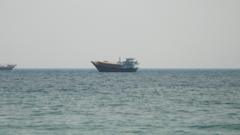
Strait of Hormuz remains a fault line as Iran and US drift back into war
Summarized and contextualized by DistantNews.
At a glance
Analysis
Named sources
Ongoing story
- Iran and the US are drifting back toward conflict, with tensions high over the Strait of Hormuz following a recent maritime incident.
- Disagreements persist over a June memorandum of understanding regarding the strait's management, with Iran interpreting a clause as giving it sway over the corridor.
- Iran has introduced a new bill to manage the strait, signaling its determination to control the waterway, which it views as a strategic asset and leverage against adversaries.
The Strait of Hormuz remains a critical fault line as Iran and the United States appear to be drifting back into a state of heightened tension. The situation is particularly precarious following a recent incident involving three vessels, including a Qatari-flagged liquefied natural gas tanker, attacked in a shipping corridor near Oman's coast. A regional diplomatic source described the attacks as the work of a "rogue unit" within Iran's Islamic Revolutionary Guard Corps (IRGC).
You can drive a truck through those clauses.
Underlying this escalation is a June memorandum of understanding, known as a memorandum of understanding, which has been understood differently by both sides from its inception. Iran interprets point five of the 14-point plan as granting it significant influence over the management of this vital maritime corridor. This clause states: "The Islamic Republic of Iran will make arrangements using its best efforts for the safe passage of commercial vessels."
Conversely, the US interprets this point as a directive for Tehran to ensure the free flow of global oil and gas supplies, along with other essential commodities, through the strategic strait. An Arab oil executive working in the region commented, "You can drive a truck through those clauses," highlighting the ambiguity and potential for misinterpretation.
rogue unit
Adding to the complexity, Iran's parliament has quietly introduced a new bill titled the Strategic Action for the Security and Sustainable Progress of the Strait of Hormuz and the Persian Gulf. Ebrahim Azizi, head of the assembly's national security commission, who previously asserted that controlling the waterway is Iran's "inalienable right" and stated "never" when asked about ceding control, posted the news on X. Iran views control over the strait not just as a bargaining chip but as new leverage, a form of deterrence, and an economic lifeline, especially if international sanctions persist and its global assets remain frozen.
inalienable right
This determination by Tehran to unilaterally rewrite the rules in the region is also creating friction with its neighbors, including Qatar, a key mediator in the current crisis. The article suggests that while the new leadership in Tehran shares a broad strategic vision, there are evident divisions regarding the path forward, with some advocating for diplomatic gains and others believing the ceasefire was premature before inflicting sufficient damage on the US.
never
DistantNews Editorial
Originally published by BBC News. Summarized and contextualized by our editorial team with added local perspective. Read our editorial standards.
More Stories


From Our Blog

What Gets Lost (and Found) When News Is Translated

The Critical Role of Diaspora Media in Global News

What Travellers Should Know About Countries with Restricted Press

A Digital Nomad's Guide to Following Local News

How the Same Story Looks Different in Different Countries
