


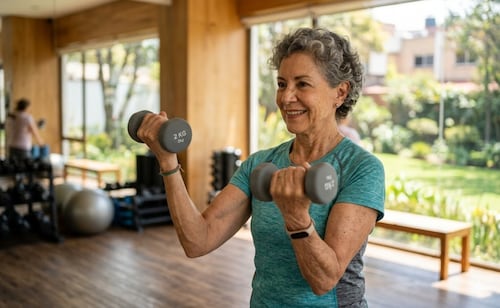
Strength Training Emerges as Key to Cellular Age Reversal, Outpacing Cardio
Translated from Spanish, summarized and contextualized by DistantNews.
At a glance
News
Sources not specified
Context piece
- Recent research suggests resistance training is more crucial for longevity and mitigating aging than previously thought.
- Muscle mass loss, or sarcopenia, weakens the metabolic system and reduces mobility in older adults.
- Experts recommend combining aerobic exercise with strength training at least two to three times weekly for optimal health.
For decades, public health recommendations championed aerobic exercise like running and swimming as the key to longevity and cardiovascular health. However, recent advances in sports medicine and clinical physiology have dramatically shifted this paradigm, now positioning resistance and strength training as fundamental to combating the effects of aging.
the combination of both disciplines is optimal, but it highlights that muscle-strengthening sessions are critical for preserving functional autonomy from middle age onward.
The progressive loss of muscle tissue, known as sarcopenia, not only compromises mobility in older adults but also weakens the overall metabolic system. Muscle is now understood to act as a vital shield against the passage of time. While the World Health Organization emphasizes that a combination of aerobic and strength training is optimal, it highlights that muscle-strengthening sessions are critical for preserving functional autonomy from middle age onward.
Research from the Mayo Clinic demonstrates that skeletal muscle is more than just a mover; it functions as an endocrine organ. It releases myokines, proteins that regulate systemic inflammation, improve insulin sensitivity, and protect cognitive function. Relying solely on cardiovascular endurance activities is insufficient to halt the bone and muscle degradation caused by age-related hormonal changes.
skeletal muscle not only serves to generate movement, but also actively functions as an endocrine organ capable of releasing myokines, which regulate systemic inflammation, improve insulin sensitivity, and protect the brain's cognitive capacities.
Specialists at Harvard Medical School explain that strength training induces structural adaptations, such as increased bone mineral density and regeneration of fast-twitch muscle fibers. These adaptations significantly reduce the risks of serious fractures and falls, which are major causes of morbidity in the elderly population. The key to slowing biological decline isn't eliminating cardio, but restructuring routines to prioritize weights, resistance bands, or bodyweight exercises like calisthenics. The American College of Sports Medicine suggests adults engage in moderate-to-high intensity strength training at least two to three times per week, targeting major muscle groups.
strength training induces structural adaptations (such as increased bone mineral density and regeneration of fast-twitch muscle fibers) that exponentially reduce the risks of fractures and serious falls.
DistantNews Editorial
Originally published by El Universal in Spanish. Translated, summarized, and contextualized by our editorial team with added local perspective. Read our editorial standards.
More Stories



From Our Blog

What Press Freedom Means for the News You Read

What Gets Lost (and Found) When News Is Translated

The Critical Role of Diaspora Media in Global News

What Travellers Should Know About Countries with Restricted Press

A Digital Nomad's Guide to Following Local News
