


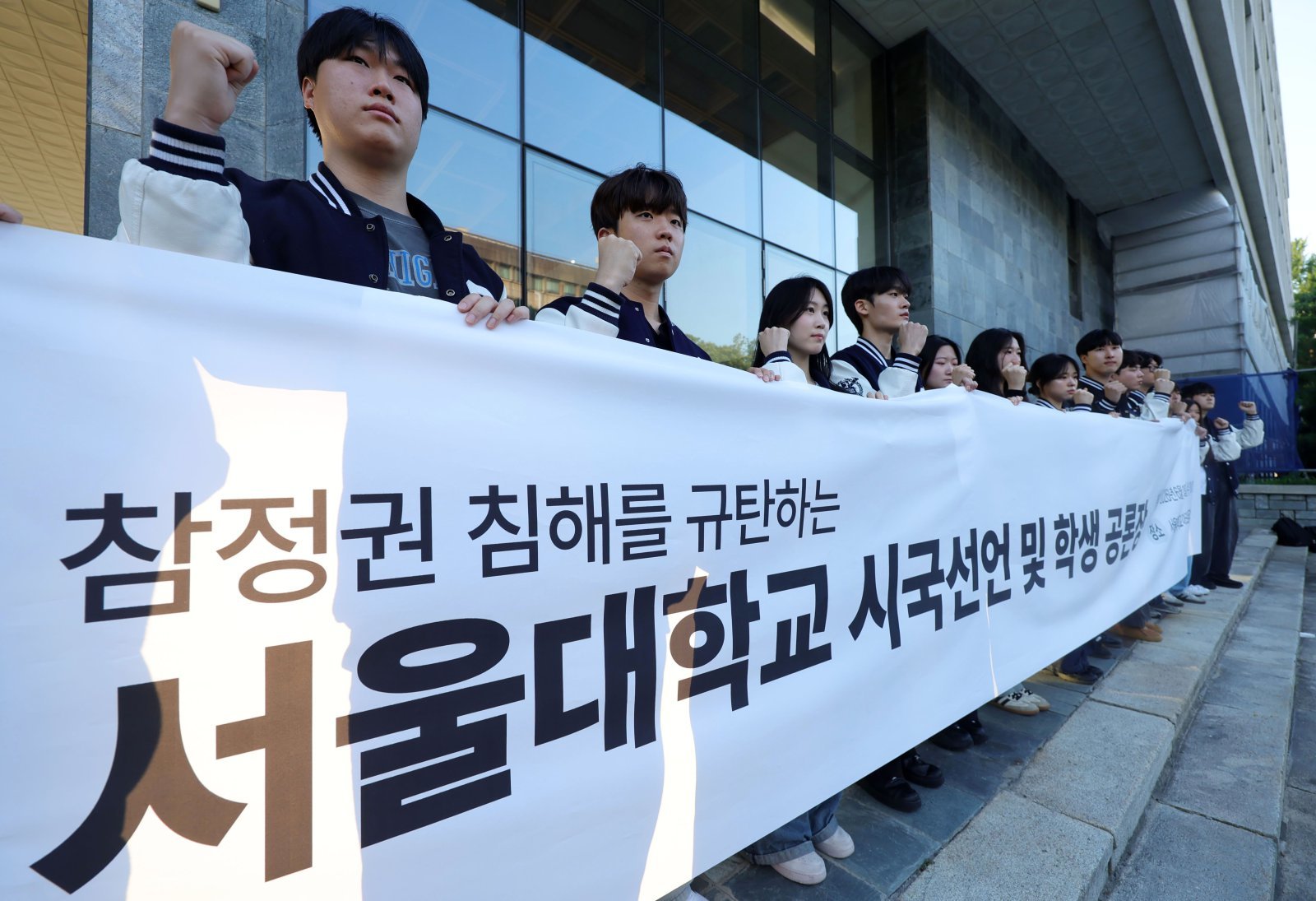
Student outcry over ballot shortage grows, with 391 statements collected from 212 universities
Translated from Korean, summarized and contextualized by DistantNews.
At a glance
News
Sources not specified
Context piece
- Over 390 statements and declarations have been posted on an online archive site concerning the ballot shortage during the June 3 local elections.
- The archive, 'Record of One Vote,' has collected 391 statements from 212 universities across South Korea.
- Analysis of the statements shows that 94% address suffrage issues, and 64% demand measures to prevent recurrence.
Criticism is mounting across South Korean universities regarding the ballot shortage incident during the June 3 local elections. An online archive, titled 'Record of One Vote,' has emerged as a central hub, compiling numerous statements and declarations from students nationwide.
The archive currently hosts 391 statements and declarations from 212 universities, encompassing 241 campuses. These submissions come from various student bodies, including university student councils, student self-governing organizations, departmental student councils, clubs, and individual students. Prominent universities such as Seoul National University, Korea University, Yonsei University, Chonnam National University, Kyungpook National University, Inha University, and Hankuk University of Foreign Studies are among those represented.
An analysis of the collected statements reveals key concerns and demands. A significant 94% of the declarations specifically address issues related to suffrage rights. Furthermore, 64% of the statements call for the implementation of measures to prevent a recurrence of the ballot shortage problem.
Notably, 69 of the statements explicitly urged that the incident should not be exploited as a tool for political maneuvering. The archive aims to document and publicize the collective voice of students who are demanding accountability and systemic improvements following the election irregularities.
DistantNews Editorial
Originally published by Dong-A Ilbo in Korean. Translated, summarized, and contextualized by our editorial team with added local perspective. Read our editorial standards.
More Stories


From Our Blog

What Gets Lost (and Found) When News Is Translated

The Critical Role of Diaspora Media in Global News

What Travellers Should Know About Countries with Restricted Press

A Digital Nomad's Guide to Following Local News

How the Same Story Looks Different in Different Countries
