


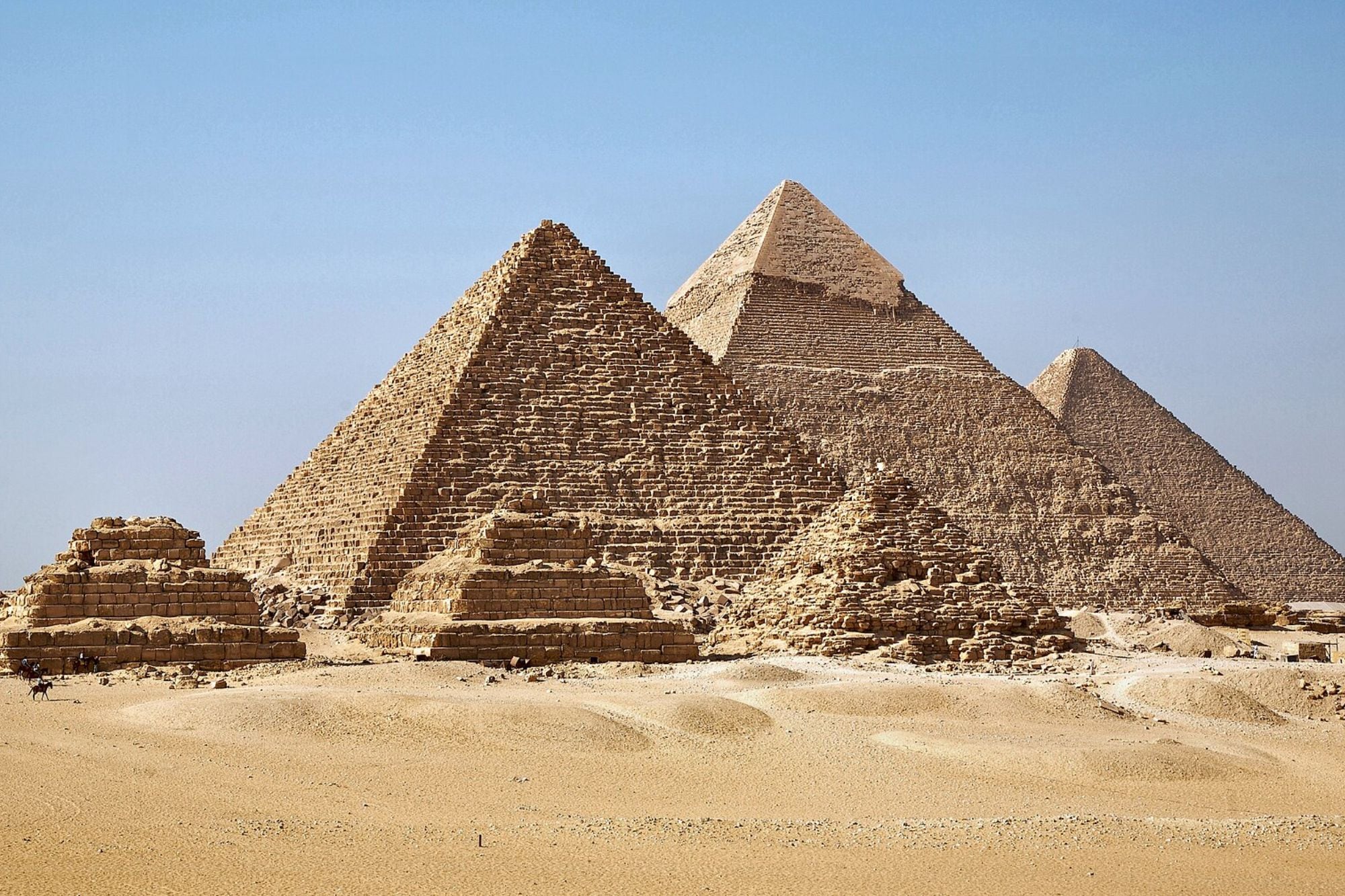
Study Reveals Egyptian Pyramids Built to Withstand Earthquakes
Translated from Spanish, summarized and contextualized by DistantNews.
At a glance
News
Named sources
Context piece
- A new study suggests the Egyptian pyramids, particularly the Great Pyramid of Giza, were built with earthquake-resistant features.
- Researchers analyzed the pyramid's internal vibrations, finding its design dissipates seismic energy.
- This stability is attributed to factors like a wide base, low center of gravity, and interlocking stone blocks.
Ancient Egyptian builders may have incorporated sophisticated earthquake-resistant designs into the Great Pyramid of Giza, according to a recent study.
Researchers from Egypt's National Institute of Research of Astronomy and Geophysics (NRIAG) installed sensors within the pyramid to measure its response to natural ground vibrations. Their findings, published in Scientific Reports, indicate the structure vibrates at a frequency distinct from the surrounding terrain. This difference helps prevent resonance, a phenomenon that amplifies tremors and can lead to building collapse.
The study highlights several key design elements contributing to the pyramid's remarkable stability. These include a broad base, a low center of gravity, symmetrical geometry, and millions of precisely fitted stone blocks. Additionally, special "relief chambers" located above the King's Chamber are thought to help disperse seismic energy before it impacts sensitive areas of the structure.
These combined features create a "balanced and coherent structure," according to lead author Mohamed ElGabry, a seismologist at NRIAG. The pyramid's construction on a solid limestone foundation further enhances its resilience. Its iconic shape concentrates mass at the base, reducing instability.
Remarkably, the Great Pyramid has withstood numerous historical earthquakes that have damaged or destroyed modern buildings in Egypt. While some of its outer casing has eroded over millennia, the core structure remains intact, a testament to its enduring engineering. Built around 2550 BC for Pharaoh Khufu, the pyramid originally stood about 146 meters tall and comprises roughly 2.3 million stone blocks, making it the sole surviving wonder of the ancient world.
These elements, in conjunction, create a balanced and coherent structure.
DistantNews Editorial
Originally published by La Nación in Spanish. Translated, summarized, and contextualized by our editorial team with added local perspective. Read our editorial standards.
More Stories


From Our Blog

What Gets Lost (and Found) When News Is Translated

The Critical Role of Diaspora Media in Global News

What Travellers Should Know About Countries with Restricted Press

A Digital Nomad's Guide to Following Local News

How the Same Story Looks Different in Different Countries
