


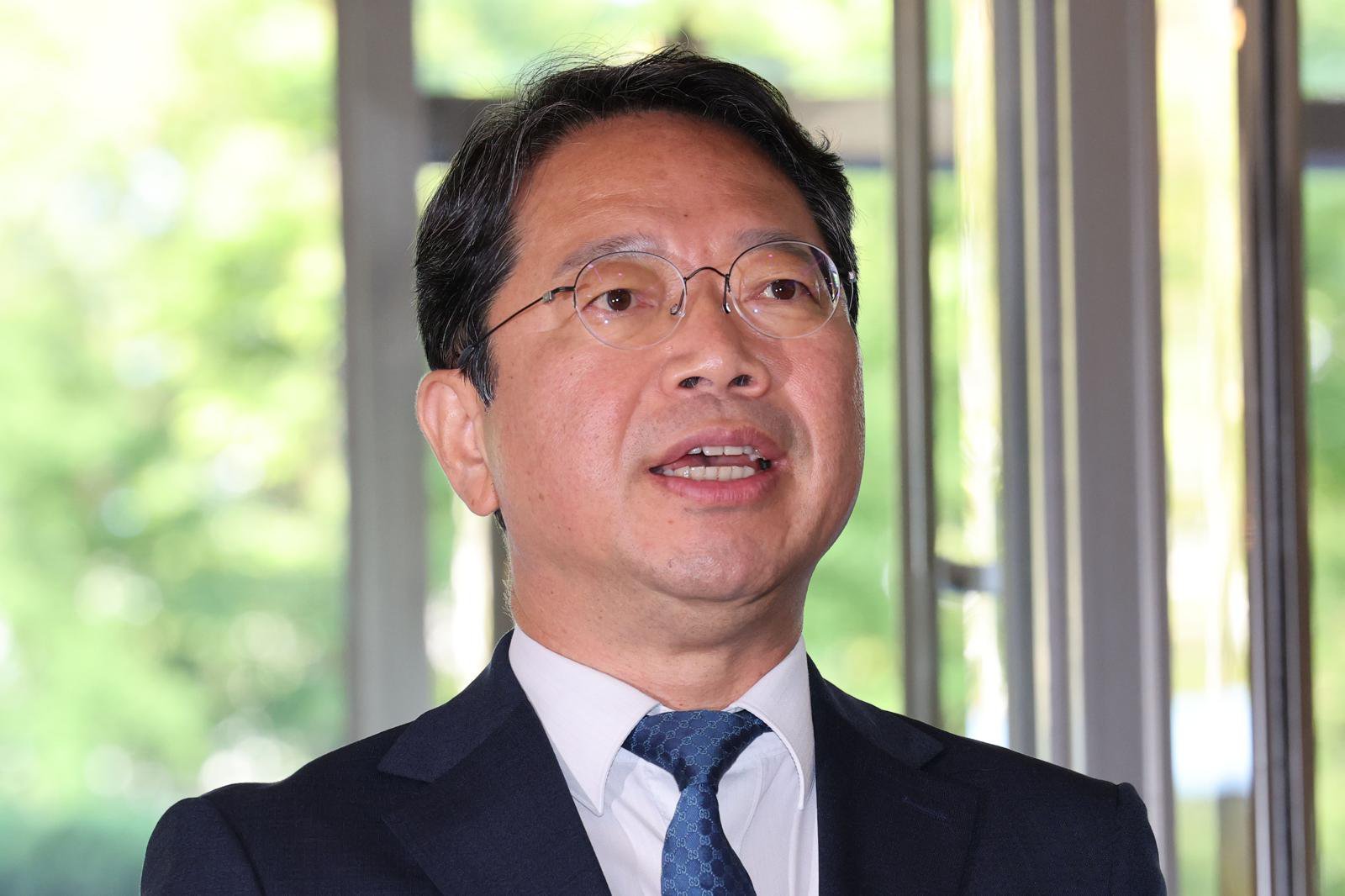

Successive complaints over clinical-trial lobbying raise prospect of renewed probe into Kim Seung-won
Translated from Korean and summarized by DistantNews. Read the original for the full story.
At a glance
News
Named sources
Under investigation
- Civic groups have filed a second complaint against Justice Minister nominee Kim Seung-won over allegations that he sought expedited clinical-trial approval for drug developer Genencell.
- Prosecutors gave Kim a deferred prosecution decision in December 2024, while a broker and Genencell’s founder face trial over the case.
- Legal experts say prosecutors can reopen the investigation because a deferred prosecution decision does not carry the binding force of a final court judgment, but fresh evidence would be needed to justify a change.
The allegations surrounding Justice Minister nominee Kim Seung-won’s request for clinical-trial approval are generating repeated criminal complaints, reopening questions about a case prosecutors closed with a deferred prosecution decision.
The civic group Citizens’ Livelihood Countermeasures Committee said it reported Kim to the Seoul Metropolitan Police Agency on the charges of violating the Improper Solicitation and Graft Act and abusing his authority. The complaint, filed on the fourth, followed an earlier complaint by former Seoul Metropolitan Council member Lee Jong-bae against Kim and former Food and Drug Safety Minister Kim Kang-lip.
A deferred prosecution decision by prosecutors is not a final disposition.
The committee alleges that Kim abused his authority by asking the then food and drug safety minister to help Genencell, a developer of COVID-19 treatments, secure approval for its clinical-trial plans. Kim had been investigated over allegations that, at the request of a broker identified by the surname Yang, he asked Kim Kang-lip in October 2021 to expedite approval of Genencell’s Phase 2 and 3 trial plans.
The broker and Genencell founder Kang, both identified by surname in the report, were later indicted and are standing trial. Prosecutors, however, gave Kim Seung-won a deferred prosecution decision in December 2024. That disposition acknowledges alleged criminality but closes the case without sending it to trial.
Formally, if the statute of limitations has not expired, an indictment is possible, but in practical terms, new evidence or another reason that justifies an investigation must emerge.
Legal experts said the decision does not have the binding effect of a final court ruling and therefore does not automatically prevent a renewed investigation. A lawyer who previously worked as a prosecutor said prosecutors could investigate the same matter again even after a non-prosecution decision. Yang Hong-seok of law firm Igong cautioned that a new indictment would require more than the fact that the statute of limitations had not expired. New evidence or another reason sufficient to justify renewed investigative action would be necessary.
Kim denies the allegations, saying he merely conveyed a public-interest grievance at the broker’s request and did not make an improper solicitation. Separately, a shareholder group linked to Sejong Medical, whose financial health deteriorated after investing in Genencell and which faces possible delisting, plans to submit a petition to court on the seventh calling for severe punishment for the broker and Genencell’s founder.
It was not an improper solicitation, but simply the 전달 of a grievance from a public-interest perspective.
About this summary
Originally published by Hankyoreh in Korean. Translated, summarized, and contextualized automatically by DistantNews, with a note on how the source frames the story. Not individually reviewed before publishing. How this works.
More Stories


From Our Blog

News in Translation: What Gets Lost, and How We Keep the Framing

Diaspora Media: How Communities Follow News From Home

Traveling Where the Press Is Not Free: How to Read the News There

The Digital Nomad's Guide to Local News

The Same Story, Different Countries: How Coverage Changes at the Border
