

/s3/static.nrc.nl/wp-content/uploads/2026/08/08175524/BULGARIA-DRONE-EXPLOSION_76251160.jpg)
/s3/static.nrc.nl/wp-content/uploads/2026/08/07105630/090826OPI_2035776458_sudan.jpg)
Sudan's brutal, forgotten conflict devastates Khartoum as regional powers fuel proxy war
Translated from Dutch, summarized and contextualized by DistantNews.
At a glance
News
Sources not specified
Context piece
- Sudan's civil war, now in its fourth year, has devastated the capital Khartoum, leaving its center deserted and buildings in ruins.
- The conflict, involving the Sudanese Armed Forces and Rapid Support Forces, is exacerbated by regional powers like the UAE, Egypt, Qatar, Saudi Arabia, and Turkey, acting as a proxy war.
- International indifference and a focus on other conflicts like Ukraine have allowed the war to persist, with potential geopolitical implications due to its impact on Red Sea shipping.
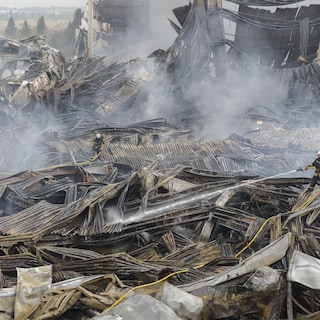
Khartoum, once a bustling metropolis of 7 million, now stands as a scarred testament to Sudan's brutal civil war, now in its fourth year. The capital's center is deserted, its buildings reduced to charred husks, and streets bear the marks of intense fighting. Makeshift mass graves spill human skulls, a grim indicator of the ongoing violence that has claimed hundreds of thousands of lives and displaced 14 million people.
Khartoum is the scarred heart of one of Africa’s worst conflicts this century.
The conflict, primarily between the Sudanese Armed Forces (SAF) and the Rapid Support Forces (RSF), has escalated into a proxy war fueled by regional powers. The UAE allegedly supports the RSF with weapons and funds, while Egypt, Qatar, Saudi Arabia, and Turkey back the SAF. This external backing has incentivized the belligerents to prolong the war, with the RSF building an economic empire and SAF leaders believing in a military victory.
Outsiders have shown callous indifference to the suffering, by paying to keep the fighting going or neglecting it.
Despite its devastating impact, comparable to the horrors of the Congo war, Sudan's conflict has garnered little international attention. European focus on Ukraine and other global distractions have led to a "callous indifference" from outsiders, who are accused of either funding the fighting or neglecting the crisis. This neglect is particularly concerning as the wars in Sudan and Iran now overlap, potentially endangering Red Sea shipping and raising the cost of conflict for its sponsors, possibly creating a reason for them to seek peace.
The RSF has periodically claimed to be ready for ceasefire talks, but has used its spoils to grow into a military and economic empire with ambitions to rule the country.
DistantNews Editorial
Originally published by NRC Handelsblad in Dutch. Translated, summarized, and contextualized by our editorial team with added local perspective. Read our editorial standards.
More Stories
/s3/static.nrc.nl/wp-content/uploads/2026/08/08124331/080826BUI_2035799611_.jpg)
/s3/static.nrc.nl/wp-content/uploads/2026/07/31112834/040826OPI_2035618342_WEB_ILLU_Economist_French-nukes_Chloe-Cushman.jpg)
From Our Blog

What Gets Lost (and Found) When News Is Translated

The Critical Role of Diaspora Media in Global News

What Travellers Should Know About Countries with Restricted Press

A Digital Nomad's Guide to Following Local News

How the Same Story Looks Different in Different Countries
