


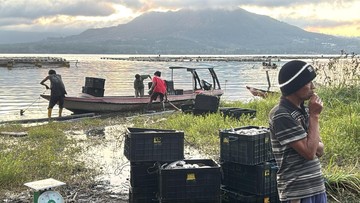
Sulfur Eruption Kills 25 Tons of Farmed Fish in Bali's Lake Batur
Translated from Indonesian, summarized and contextualized by DistantNews.
At a glance
News
Sources not specified
Outcome reported
- A sulfur eruption phenomenon in Lake Batur, Bali, caused the death of 25 tons of farmed tilapia.
- The phenomenon, involving the release of gases like H2S and nitrites from the lakebed, reduces oxygen levels, stressing the fish.
- While a significant loss, some of the recently deceased fish are still usable for processing, mitigating total financial impact for farmers.
A sulfur eruption phenomenon in Lake Batur, Bangli Regency, Bali, has resulted in the death of approximately 25 tons of farmed tilapia. The event began early Monday morning, releasing gases from the lake's depths to the surface.
According to I Wayan Agus Wirawan, head of fisheries at the Bangli Livestock and Food Security Agency, the sulfur eruption, known as upwelling, is a recurring event in Lake Batur, typically occurring between July and August. While it did not happen in 2022 and 2023, it has reappeared in 2024, 2025, and now 2026. This process brings gases such as hydrogen sulfide (H2S), nitrates, and nitrites to the surface, significantly depleting the water's oxygen content.
The drastic drop in oxygen levels causes severe stress to the fish, leading to mass mortality. The most recent deaths were reported in the Dusun Dukuh area. Despite the substantial loss, farmers are partially mitigating the financial impact. Many of the fish that died recently are still in good condition and have been sent to factories for processing, retaining some economic value.
Local fish farmers are reportedly well-acquainted with the patterns of this phenomenon. Wirawan noted that farmers typically adjust their practices during these periods, often avoiding stocking new fish and harvesting earlier to minimize losses. This understanding and proactive approach help them manage the challenges posed by the natural upwelling events in the lake.
DistantNews Editorial
Originally published by CNN Indonesia in Indonesian. Translated, summarized, and contextualized by our editorial team with added local perspective. Read our editorial standards.
More Stories



From Our Blog

What Gets Lost (and Found) When News Is Translated

The Critical Role of Diaspora Media in Global News

What Travellers Should Know About Countries with Restricted Press

A Digital Nomad's Guide to Following Local News

How the Same Story Looks Different in Different Countries
