

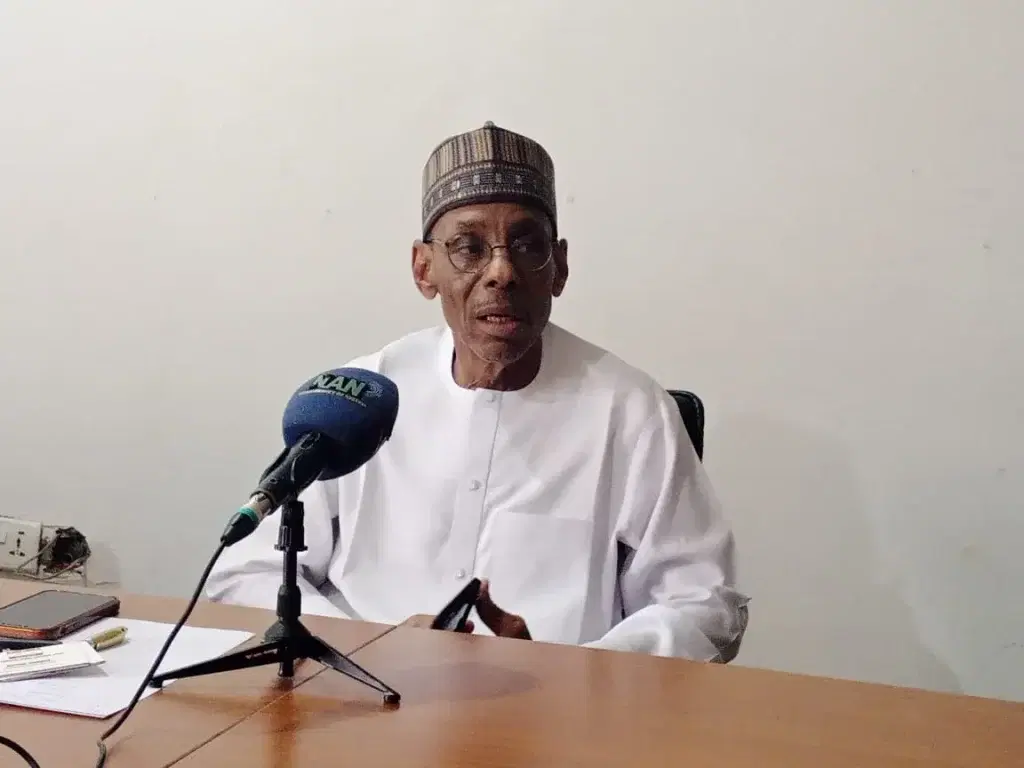

Sultan urges Muslims to sight new moon for Islamic New Year
Translated from English, summarized and contextualized by DistantNews.
At a glance
News
Official statement
New plan
- Nigerian Muslims are urged to sight the new moon of Muharram to mark the start of the Islamic New Year 1448AH.
- The Sultan of Sokoto directed Muslims to observe the sky on June 15, 2026, and report any sightings.
- Muharram is a sacred month and the beginning of the Islamic calendar, determining religious observances.
Muslims across Nigeria are called to participate in sighting the new moon of Muharram, which will signal the beginning of the Islamic New Year 1448AH. Sultan of Sokoto, Muhammad Sa’ad Abubakar III, issued the directive through a statement from the Sokoto Sultanate Council.
The advisory committee chairman, Professor Sambo Wali Junaidu, designated Monday, June 15, 2026, as the day for observing the Muharram crescent. This date corresponds to the 29th day of Zulhijjah 1447AH, the final month of the current Islamic year.
This is to inform the Muslim Ummah that Monday 15th June, 2026 which is equivalent to 29th day of Zulhijja 1447AH shall be the day to look for the new moon of Muharram 1448AH.
Muslims are instructed to look for the new moon after sunset and report any confirmed sightings through traditional channels to their local leaders. These reports will be relayed to the Sultan for verification.
The moon-sighting process is fundamental for establishing the start of Islamic months. Muharram holds particular significance as one of Islam's four sacred months and marks the commencement of the Islamic lunar calendar, influencing the timing of religious events.
Muslims are therefore requested to start looking for the new moon of Muharram 4448AH on Monday and report its sighting to the nearest District or Village Head for onward communication to His Eminence, Alhaji Muhammad Sa’ad Abubakar CFR, mni, the Sultan of Sokoto and President General, Nigeria Supreme Council for Islamic Affairs (NSCIA).
DistantNews Editorial
Originally published by The Punch in English. Translated, summarized, and contextualized by our editorial team with added local perspective. Read our editorial standards.
More Stories



From Our Blog

How the Same Story Looks Different in Different Countries

What Gets Lost (and Found) When News Is Translated

The Critical Role of Diaspora Media in Global News

What Travellers Should Know About Countries with Restricted Press

A Digital Nomad's Guide to Following Local News
