


Sumi Jo marks 40-year career, finds joy in aging
Translated from Korean, summarized and contextualized by DistantNews.
At a glance
News
Sources not specified
New plan
- Soprano Sumi Jo celebrates her 40th anniversary in the music world, reflecting on the happiness of aging.
- She is marking the occasion with concerts and an exhibition, showcasing her life and music.
- Jo, the first Asian singer to break into European opera, aims to inspire young musicians.
Soprano Sumi Jo, celebrating four decades on the global stage, finds profound happiness in aging and the accumulation of life experiences. "I've heard many people say that after seeing my performances, they feel that now is not the time to wrap up their lives, but a time when they can become more beautiful," Jo shared with reporters in Seoul. "I am proud to be able to convey this philosophy of life."
I've heard many people say that after seeing my performances, they feel that now is not the time to wrap up their lives, but a time when they can become more beautiful. I am proud to be able to convey this philosophy of life.
Jo, 64, is commemorating her 40th anniversary with a series of performances and an exhibition titled 'Continuum: Songs of the Four Seasons.' The exhibition runs until August 22, and her anniversary tour 'Continuum,' which began in her mother's hometown of Changwon, will continue in Seoul next month. She describes the tour not just as a celebration of longevity, but as a "storytelling performance that shows my life and music like a drama."
Her career began in 1986 with her debut as Gilda in Verdi's 'Rigoletto' in Trieste, Italy. Jo broke barriers in the European opera scene, which was not easily accessible to Asian singers. "At the time, I heard that Asians lacked expressive power, so I even took acting lessons from a famous actress," she recalled. "I prepared so intensely that when I finally stood on stage, it felt as if I had been there a hundred times."
At the time, I heard that Asians lacked expressive power, so I even took acting lessons from a famous actress. I prepared so intensely that when I finally stood on stage, it felt as if I had been there a hundred times.
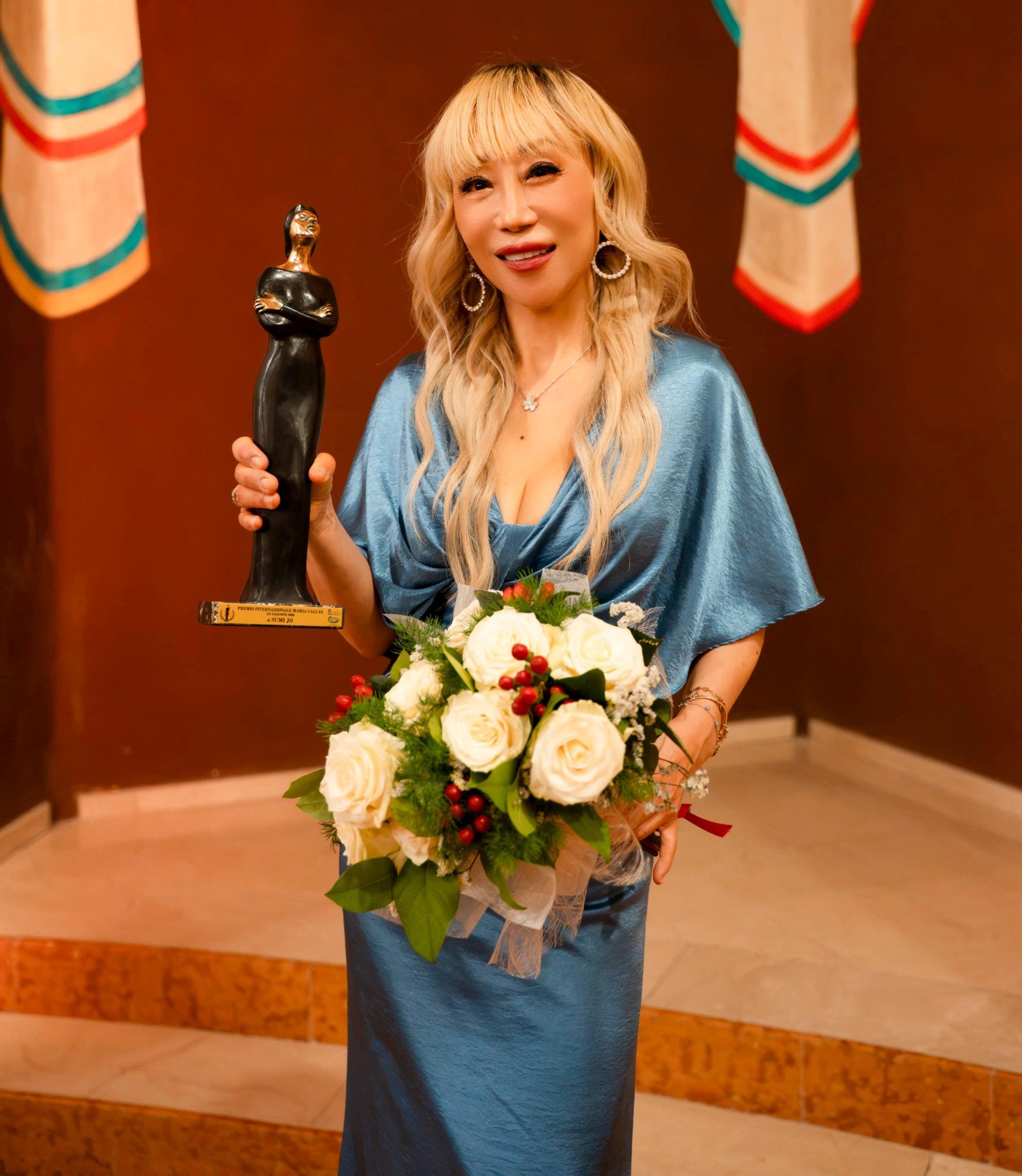
Recently, on August 2nd, she received the Special Maria Callas Award in Verona, Italy, becoming the first Asian singer to do so. The award, established to commemorate Maria Callas's debut in Verona, honors musicians who have contributed to opera and classical music. "To be recognized in Italy, a country with such strong pride in its operatic culture, for truly understanding that culture as an Asian, meant more than any other award," Jo stated, adding that she thought of her mother, who listened to Callas's music during her pregnancy.
To be recognized in Italy, a country with such strong pride in its operatic culture, for truly understanding that culture as an Asian, meant more than any other award.
Looking ahead, Jo will host a free concert, 'Dream Big!', for approximately 2,000 classical music students on September 8th at the Seoul Arts Center. The event will feature young singers, including bass Seung-ho Yoo, who won second place in the second Sumi Jo International Vocal Competition held in France this year. To aspiring artists, she emphasizes, "There are no shortcuts in art. Everything you see and experience accumulates and eventually becomes art."
There are no shortcuts in art. Everything you see and experience accumulates and eventually becomes art.
DistantNews Editorial
Originally published by Dong-A Ilbo in Korean. Translated, summarized, and contextualized by our editorial team with added local perspective. Read our editorial standards.
More Stories



From Our Blog

What Gets Lost (and Found) When News Is Translated

The Critical Role of Diaspora Media in Global News

What Travellers Should Know About Countries with Restricted Press

A Digital Nomad's Guide to Following Local News

How the Same Story Looks Different in Different Countries
