


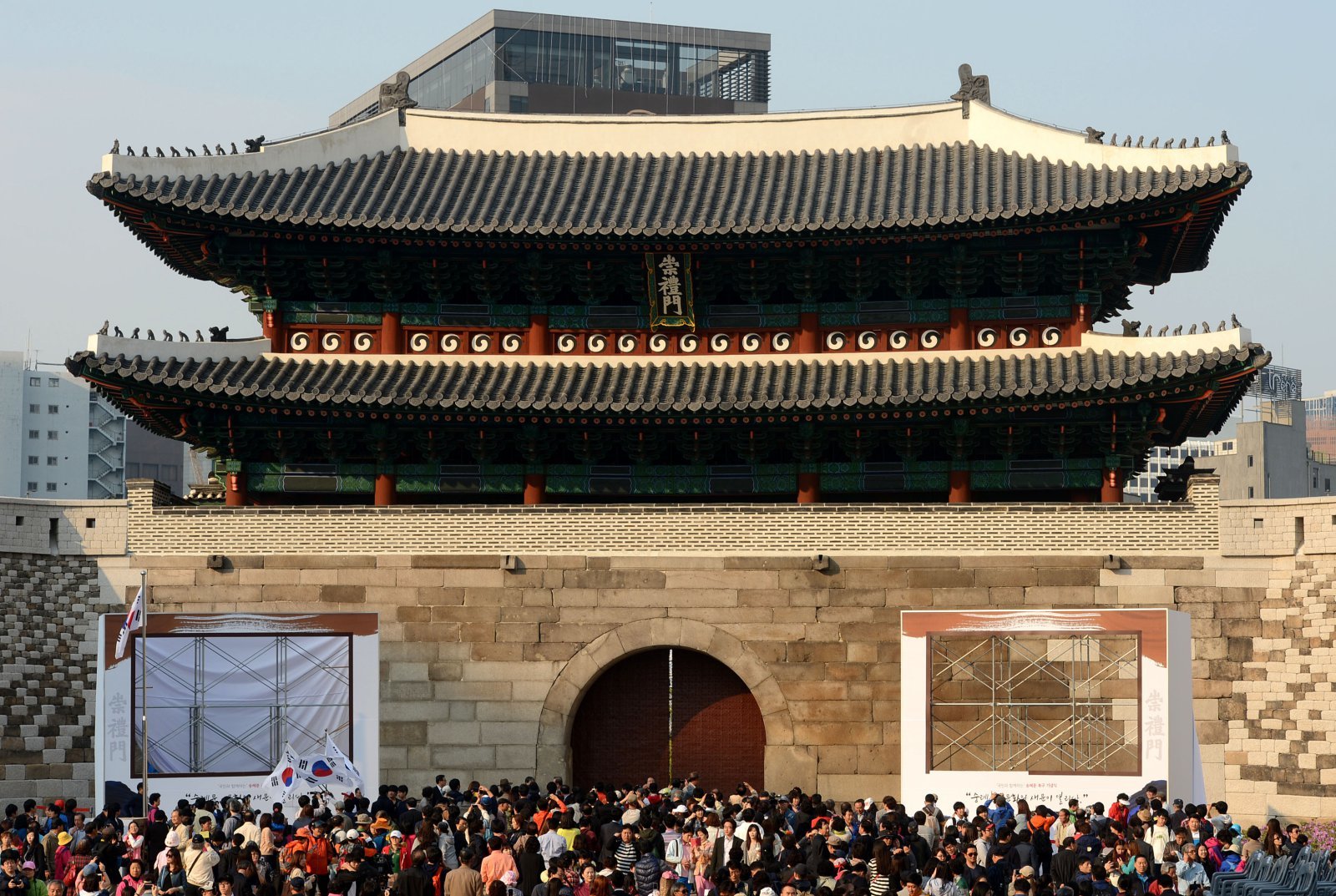
Sungnyemun Gate's base and walls to undergo first preservation work since 2013 restoration
Translated from Korean and summarized by DistantNews. Read the original for the full story.
At a glance
News
Named sources
New plan
- South Korea will begin preservation work on the stone base and surrounding walls of the historic Sungnyemun Gate.
- This is the first preservation treatment since its restoration was completed in 2013 after a 2008 fire.
- The project will address stone damage including delamination, cracking, and contamination, and is expected to take about 75 days.
The iconic Sungnyemun Gate, a national treasure of South Korea, is set to undergo its first significant preservation treatment since its meticulous restoration following a devastating fire in 2008. The project, focusing on the stone base and surrounding walls, aims to address newly identified signs of deterioration.
Recent monitoring and on-site inspections revealed that stone materials on the south-facing lower section of the base are experiencing increased delamination and peeling. Further checks also confirmed additional damage, including cracks and black and white contamination on both the base and adjacent wall stones. These findings necessitate immediate conservation efforts.
This is the first preservation work on the wall stones since 2013. While broadly considered a form of repair, the specific focus on stone conservation distinguishes it as a preservation project.
Officials from the Deoksugung Palace Management Office, which oversees Sungnyemun, stated that this is the first preservation work on the wall stones since 2013. While broadly considered a form of repair, the specific focus on stone conservation distinguishes it as a preservation project. The planned work includes dry and wet cleaning of the stones, resin treatment for cracks and delaminated areas, and re-treatment of damaged existing repairs.
To address material weakening and granular disintegration in the lower sections of the original stones, rock strengthening treatments will be applied. Laser cleaning will be utilized for various forms of contamination, including blackening caused by environmental factors. The surrounding area's air quality, impacted by heavy traffic, contributes to the accumulation of pollutants on the stone surfaces. This comprehensive approach is designed not only to halt further damage but also to ensure the stable preservation and management of Sungnyemun, while simultaneously improving the visitor experience.
Vehicular traffic in the vicinity of Sungnyemun means that exhaust fumes can accumulate on the stone's exterior surface, causing it to appear black. Cleaning and laser cleaning of contaminated areas are among the key tasks of this project.
About this summary
Originally published by Dong-A Ilbo in Korean. Translated, summarized, and contextualized automatically by DistantNews, with a note on how the source frames the story. Not individually reviewed before publishing. How this works.
More Stories


From Our Blog

What Gets Lost (and Found) When News Is Translated

The Critical Role of Diaspora Media in Global News

What Travellers Should Know About Countries with Restricted Press

A Digital Nomad's Guide to Following Local News

How the Same Story Looks Different in Different Countries
