


Supercomputers alone won’t speed up discoveries without trained researchers, says NSCC chief
Summarized and contextualized by DistantNews.
At a glance
News
Named sources
New plan
- Singapore launched its latest national research supercomputer, ASPIRE 2B, to accelerate scientific discovery.
- The supercomputer can improve weather forecasting, coastal defence planning, and cancer treatment development.
- The National Supercomputing Centre emphasizes training researchers in high-performance computing (HPC) as crucial for unlocking the supercomputer's potential.
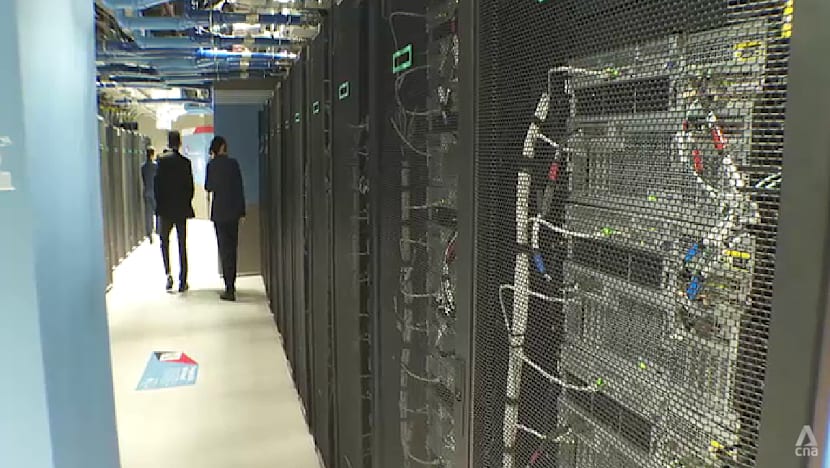
Singapore has launched its newest national research supercomputer, ASPIRE 2B, aiming to significantly speed up scientific discovery by providing researchers with enhanced computing power. The advanced system is expected to bolster the nation's capabilities in areas such as predicting extreme weather events, strengthening coastal defence strategies, and developing more personalized cancer treatments.
However, the National Supercomputing Centre (NSCC) emphasizes that building powerful infrastructure alone is insufficient. According to its chief executive, Terence Hung, training researchers to effectively utilize these supercomputers has become a greater priority than merely expanding computing capacity. Dr. Hung likened the situation to giving a Formula 1 race car to an untrained driver, stressing that specialized knowledge is essential for optimal performance.
If you give a researcher who is not trained in HPC a supercomputer, it's like giving a normal driver a Formula 1 race car and expecting the driver to be able to do well on the race track.
"If you give a researcher who is not trained in HPC a supercomputer, it's like giving a normal driver a Formula 1 race car and expecting the driver to be able to do well on the race track," Dr. Hung explained. "The same thing happens in the supercomputing realm. If you ask a domain researcher, like a material scientist, to be able to use an HPC system effectively, they won't be able to do so without the appropriate training that my team provides to the research community."
The NSCC provides detailed training, including one-to-one engagement with researchers whose applications are underperforming. The team conducts in-depth profiling to identify bottlenecks and advises on optimizing algorithms for the supercomputer's hardware. This support is increasingly vital as supercomputing converges with artificial intelligence, opening new avenues for research processes.
The same thing happens in the supercomputing realm. If you ask a domain researcher, like a material scientist, to be able to use an HPC system effectively, they won't be able to do so without the appropriate training that my team provides to the research community.
DistantNews Editorial
Originally published by CNA. Summarized and contextualized by our editorial team with added local perspective. Read our editorial standards.
More Stories



From Our Blog

What Gets Lost (and Found) When News Is Translated

The Critical Role of Diaspora Media in Global News

What Travellers Should Know About Countries with Restricted Press

A Digital Nomad's Guide to Following Local News

How the Same Story Looks Different in Different Countries
