

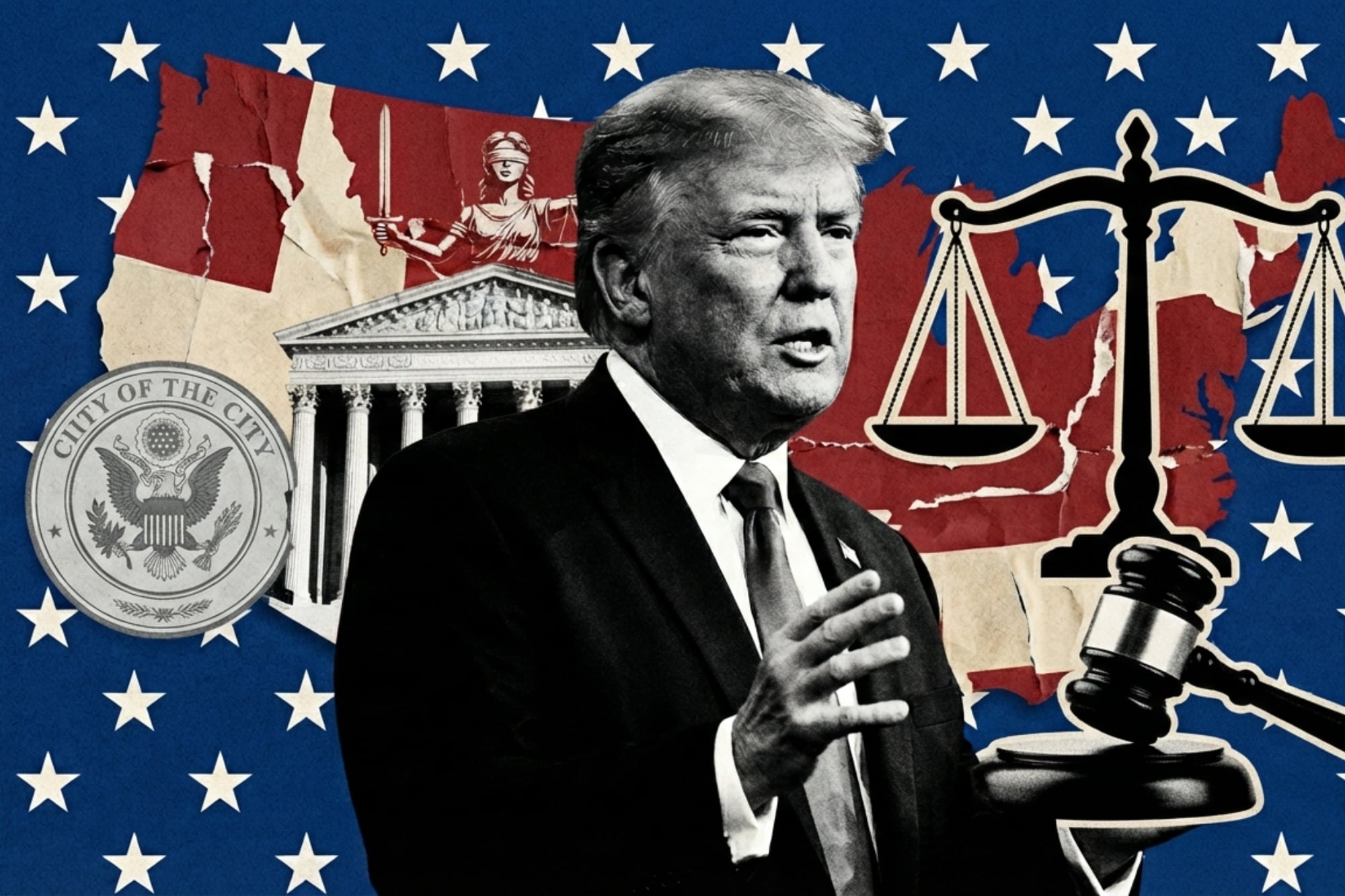
Supreme Court delivers mixed rulings on Trump's executive power
Translated from Spanish, summarized and contextualized by DistantNews.
At a glance
News
Named sources
Outcome reported
- The U.S. Supreme Court issued mixed rulings impacting President Donald Trump's executive power.
- One decision expanded presidential authority over independent agencies like the FTC, overturning a century-old precedent.
- Another ruling preserved the independence of the Federal Reserve, preventing Trump from removing its governor.
The U.S. Supreme Court delivered a series of decisions this week that have significant implications for President Donald Trump's agenda, presenting both expansions and limitations to his executive authority.
The FTC undoubtedly exercises executive power and, therefore, must be accountable to the chief Executive.
In a key ruling in *Trump v. Slaughter*, the Court upheld the removal of Federal Trade Commission (FTC) commissioner Rebecca Kelly Slaughter. Chief Justice John Roberts wrote that the FTC "undoubtedly exercises executive power and, therefore, must be accountable to the chief Executive." This decision overturns a nearly century-old precedent that had restricted the president's ability to dismiss officials from independent agencies, thereby significantly broadening presidential control over regulatory bodies that historically operated with a degree of autonomy.
However, the Court took a different stance in *Trump v. Cook*, rejecting Trump's attempt to remove Federal Reserve Governor Lisa Cook. The five-to-four decision affirmed that Federal Reserve members do not serve at the president's pleasure and can only be removed for specific, legally defined causes. Chief Justice Roberts noted that the administration had failed to follow necessary due process procedures before attempting to remove Cook, including providing her an opportunity to formally respond to accusations.
The members of the Federal Reserve do not exercise their functions at the will of the president and can only be removed for specific causes provided by law.
Another notable ruling came in *Chatrie v. United States*, concerning the use of geofence warrants by law enforcement to obtain location data from cell phones near crime scenes. The Supreme Court determined that collecting location information from multiple devices could constitute a search protected by the Fourth Amendment of the Constitution. Justice Elena Kagan, writing for the majority, stated that individuals maintain a reasonable expectation of privacy regarding their location data.
People maintain a reasonable expectation of privacy regarding their location data.
DistantNews Editorial
Originally published by La Nación in Spanish. Translated, summarized, and contextualized by our editorial team with added local perspective. Read our editorial standards.
More Stories


From Our Blog

What Gets Lost (and Found) When News Is Translated

The Critical Role of Diaspora Media in Global News

What Travellers Should Know About Countries with Restricted Press

A Digital Nomad's Guide to Following Local News

How the Same Story Looks Different in Different Countries
