

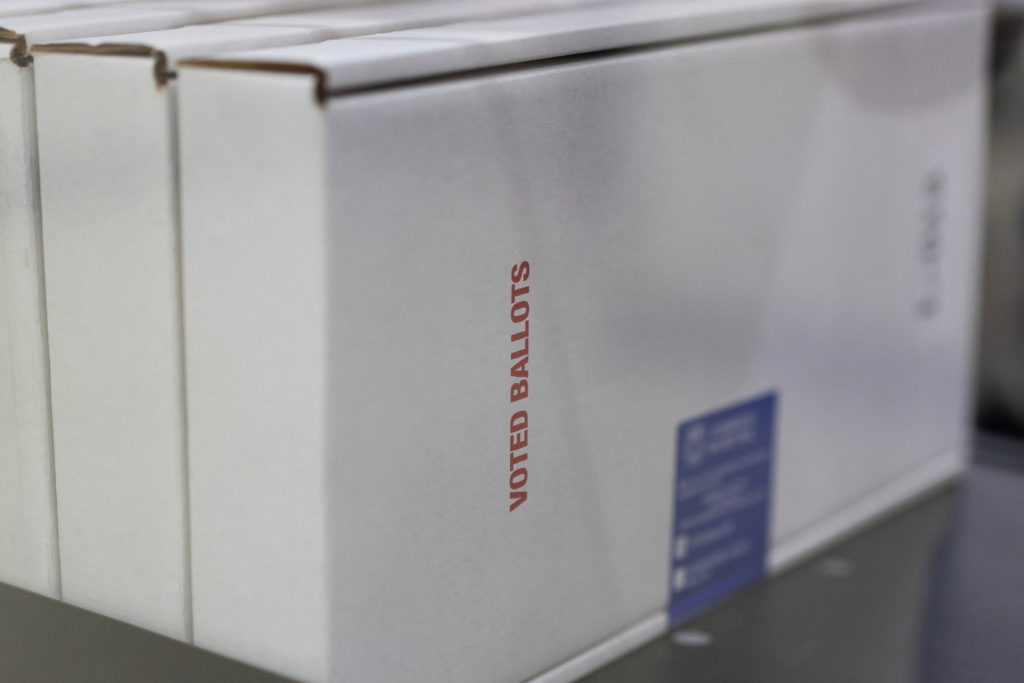

Supreme Court sides with Republicans in fight over broadcast ad rates
Summarized by DistantNews. Read the original for the full story.
At a glance
News
From a news agency
Outcome reported
- The Supreme Court halted a lower court ruling that blocked political party committees from receiving favorable broadcast advertising rates before federal elections.
- The order restores FCC guidance allowing party committees to buy political advertising at cheaper rates, potentially giving national Republican groups more access to television airtime.
- The court said the appeals court likely lacked jurisdiction, while Justice Ketanji Brown Jackson dissented and Democratic candidates criticized the decision.
The Supreme Court has handed Republicans a victory weeks before the November elections by restoring access to cheaper broadcast advertising rates for political party committees.
The unsigned order halted a lower court decision that had prevented party committees from receiving more favorable rates. It put back in place guidance from the Federal Communications Commission allowing political parties and committees to obtain the rates available for political advertising ahead of federal elections.
Current and future rescissions will require the party committees to pay more for advertising space, thereby hampering their efforts to reach the electorate in the critical weeks leading up to the midterms.
The ruling could benefit national Republican groups, which have raised more money than their Democratic counterparts and can use it to fill the airwaves with advertisements supporting Republican candidates. The National Republican Congressional Committee has reserved $10.8 million in television advertising for 23 House races this month, according to the committee and AdImpact.
That injury, which implicates their First Amendment rights to speak and coordinate their political activities freely, cannot be remedied after the fact through refunds or reimbursements.
The dispute followed the Supreme Court's decision in June to strike down federal limits on the amount political committees can spend in coordination with federal candidates. The latest order said the appeals court likely lacked jurisdiction over a challenge brought by Democratic candidates including Georgia Sen. Jon Ossoff, Michigan Rep. Kristen McDonald Rivet, Ohio Senate candidate Sherrod Brown and North Carolina Senate candidate Roy Cooper. Ossoff and McDonald Rivet are seeking reelection, while Brown and Cooper are running for the Senate.
The Supreme Court said Republican committees were likely being harmed because broadcasters had begun withdrawing the favorable rates after the lower court ruling. "Current and future rescissions will require the party committees to pay more for advertising space, thereby hampering their efforts to reach the electorate in the critical weeks leading up to the midterms," the court said. It added that the injury implicated the committees' First Amendment rights and could not be remedied later through refunds or reimbursements. Justice Ketanji Brown Jackson dissented.
The Supreme Court has just ignored the clear language of the law and given a massive TV ad discount to billionaires and other big money donors, further eroding the power of everyday people.
Cooper's campaign condemned the ruling. Campaign manager Jeff Allen said, "The Supreme Court has just ignored the clear language of the law and given a massive TV ad discount to billionaires and other big money donors, further eroding the power of everyday people." He said former Republican National Committee Chair Michael Whatley would benefit from the RNC's $130 million war chest.
Former RNC Chair Michael Whatley will be first in line to benefit from the RNC's $130 million warchest to bail out his flailing campaign.
About this summary
Originally published by CBS News. Summarized and contextualized automatically by DistantNews, with a note on how the source frames the story. Not individually reviewed before publishing. How this works.
More Stories

From Our Blog

The Same Story, Different Countries: How Coverage Changes at the Border

News in Translation: What Gets Lost, and How We Keep the Framing

Diaspora Media: How Communities Follow News From Home

Traveling Where the Press Is Not Free: How to Read the News There

The Digital Nomad's Guide to Local News
