


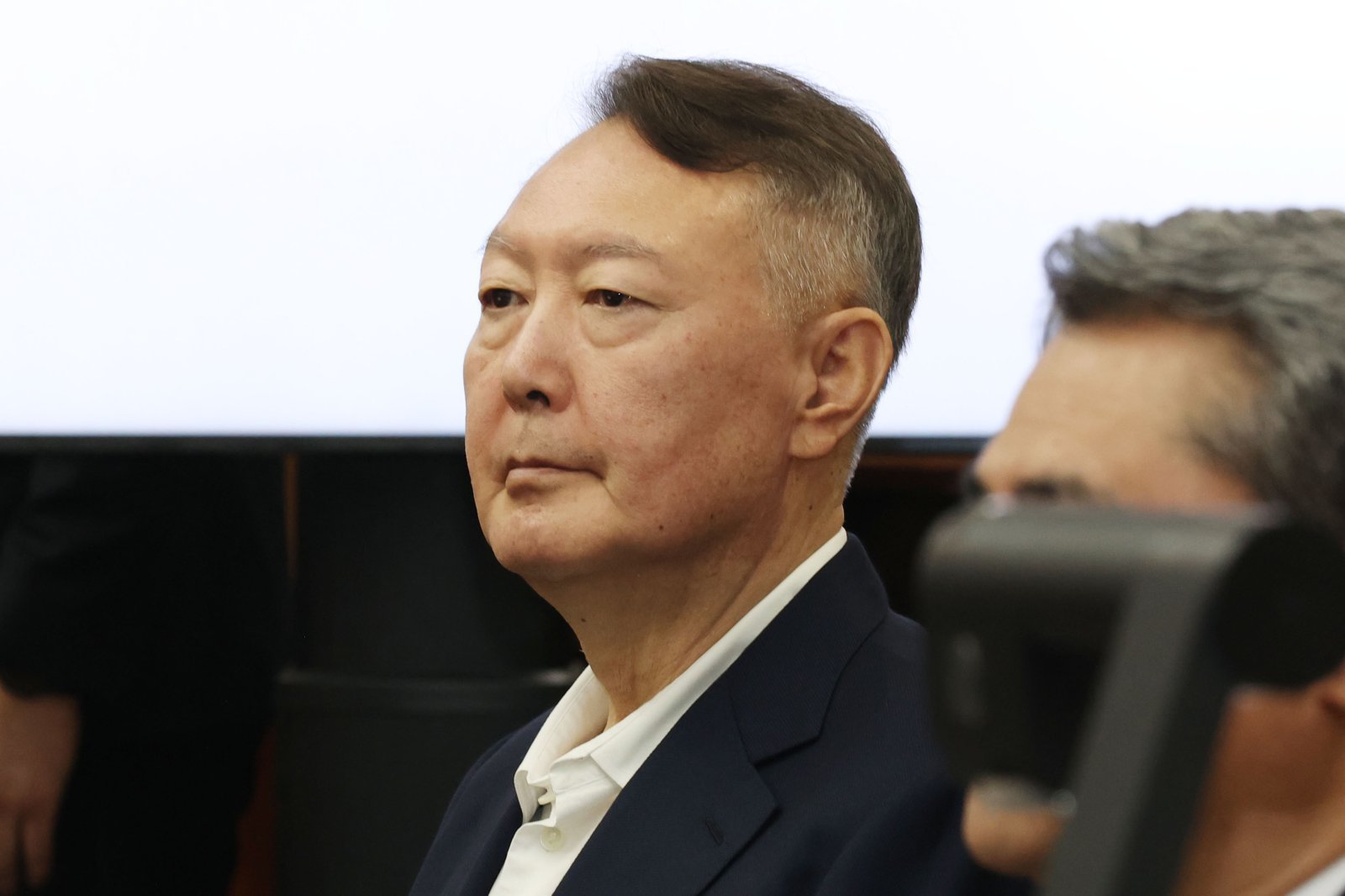
Supreme Court Upholds 7-Year Sentence for Ex-President Yoon in Obstruction Case
Translated from Korean, summarized and contextualized by DistantNews.
At a glance
News
From a news agency
Outcome reported
- South Korea's Supreme Court upheld a 7-year prison sentence for former President Yoon Suk-yeol for obstructing a public official's duty.
- This marks the first final ruling from the Supreme Court regarding Yoon's case, 583 days after martial law was declared.
- The court also affirmed the legality of the Corruption Investigation Office for High-ranking Officials' (CIO) investigation into Yoon, impacting other related trials.
South Korea's Supreme Court has upheld a 7-year prison sentence for former President Yoon Suk-yeol, confirming his conviction for obstructing a public official's duty. This landmark decision, delivered on July 9, is the first final ruling from the Supreme Court concerning Yoon, occurring 583 days after martial law was declared.
The Supreme Court's Third Division found no legal errors in the lower courts' rulings. Both Yoon and the special prosecution team had appealed the appellate court's decision, but their appeals were dismissed, solidifying the original sentence. This verdict is the first Supreme Court judgment among the eight criminal cases Yoon faces. Notably, the sentencing was broadcast live, a first for a Supreme Court ruling of this nature.
Yoon was indicted in July of the previous year for allegedly using presidential security personnel to block the execution of an arrest warrant issued by the Corruption Investigation Office for High-ranking Officials (CIO) in January. He also faces charges of abuse of power for allegedly infringing upon the deliberation rights of nine cabinet members who were not convened for a meeting, and for disseminating false information to foreign media.
Further charges include fabricating and discarding a martial law decree after its declaration, making it appear as if it were officially promulgated, and ordering the deletion of call records from military commanders' secure phones. The first trial sentenced Yoon to 5 years, while the second trial increased it to 7 years by finding him guilty of additional charges, including infringing cabinet members' deliberation rights and ordering false reports to foreign media. However, both lower courts acquitted him on charges related to the false promulgation and discarding of the martial law decree.
The Supreme Court's affirmation of the CIO's investigative authority, stating it conducted substantial investigations and initiated indictments, is expected to influence the ongoing trial concerning allegations of leading a rebellion. Yoon's defense had consistently argued that the CIO lacked the authority to investigate rebellion charges, rendering the arrest warrant execution unlawful. The Supreme Court's ruling, however, supports the lower courts' stance that the CIO's investigation was lawful, as it expanded from directly investigable charges of abuse of power to related rebellion offenses.
DistantNews Editorial
Originally published by Dong-A Ilbo in Korean. Translated, summarized, and contextualized by our editorial team with added local perspective. Read our editorial standards.
More Stories


From Our Blog

What Gets Lost (and Found) When News Is Translated

The Critical Role of Diaspora Media in Global News

What Travellers Should Know About Countries with Restricted Press

A Digital Nomad's Guide to Following Local News

How the Same Story Looks Different in Different Countries
