

,xPosition=.5,yPosition=.5;Resize=(1200,675)&impolicy=medium)
Sweden's King Unveils Giant Bronze Moose Sculpture
Translated from Danish, summarized and contextualized by DistantNews.
At a glance
News
From a news agency
New plan
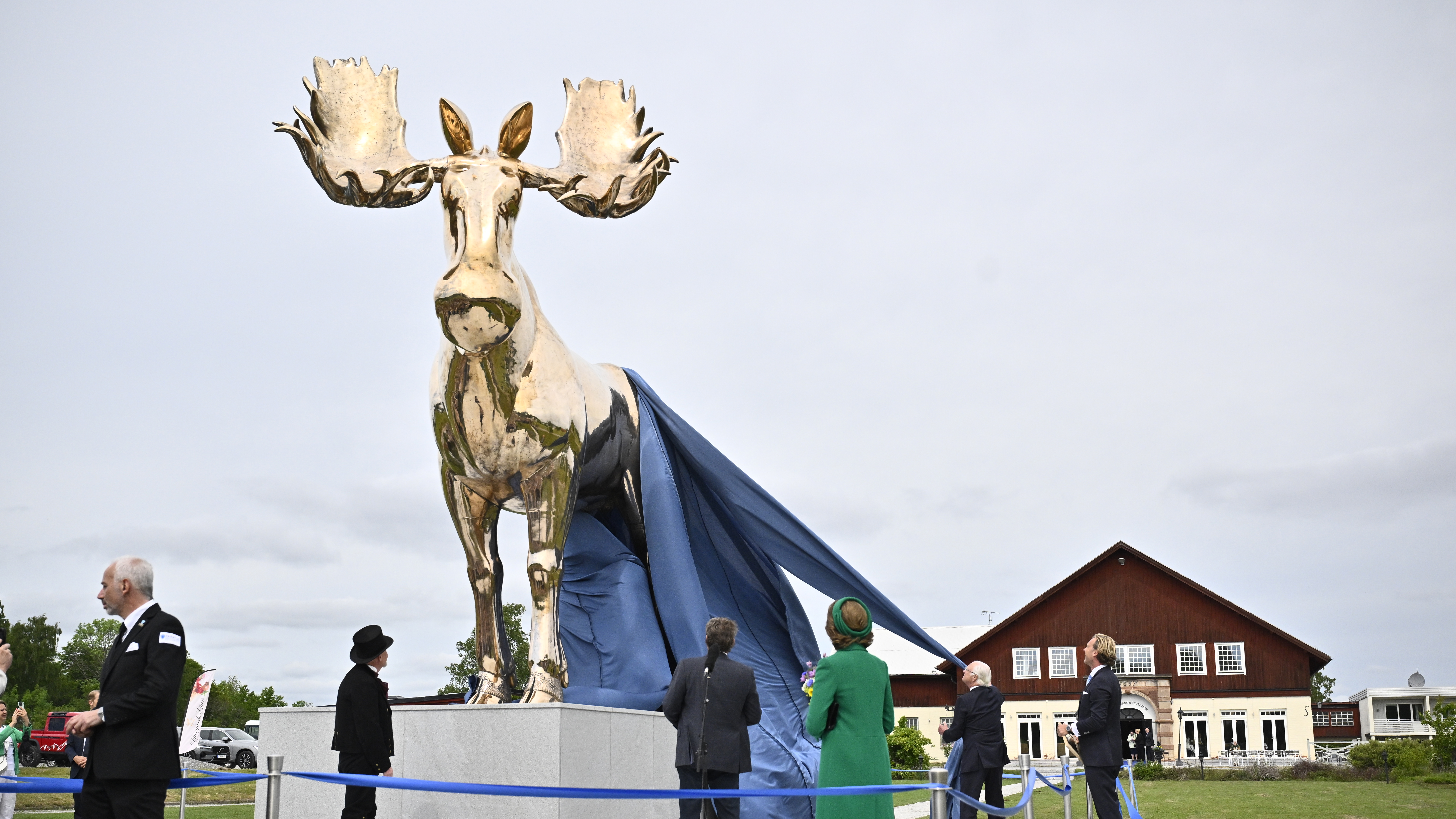
- Sweden celebrated its National Day by unveiling a seven-meter-tall, seven-ton bronze moose sculpture called Kungsälgen.
- The sculpture, located north of Stockholm, took ten years to create and is expected to last 2,000 years.
- King Carl Gustaf and Queen Silvia attended the inauguration ceremony.
Sweden marked its National Day on June 6, 2026, with a grand unveiling of a monumental bronze moose sculpture, Kungsälgen, north of Stockholm. The imposing artwork stands seven meters tall and weighs seven tons, a testament to the nation's rich natural heritage and artistic endeavors.
King Carl Gustaf and Queen Silvia presided over the inauguration of Kungsälgen, which faces the historic Skokloster Castle. The sculpture is the culmination of a decade-long creative process by artist Jerker Andersson. Andersson described the moose as a symbol of Sweden, representing "strength, freedom, and closeness to nature," and embodying the "king of the forest."
The moose is one of our most beloved animals, and for me it has been important to create a work that is both timeless and deeply Swedish. The moose symbolizes the king of the forest and the Kingdom of Sweden.
Andersson expressed his vision for Kungsälgen to be a timeless and deeply Swedish work. "The moose is one of our most beloved animals," he stated, aiming to create a piece that resonates with the national identity. The bronze sculpture is engineered for remarkable longevity, with an anticipated lifespan of 2,000 years, ensuring its presence for generations to come.
Kungsälgen is not just a sculpture. It represents strength, freedom, and closeness to nature.
DistantNews Editorial
Originally published by DR Nyheder in Danish. Translated, summarized, and contextualized by our editorial team with added local perspective. Read our editorial standards.
More Stories

From Our Blog

What Gets Lost (and Found) When News Is Translated

The Critical Role of Diaspora Media in Global News

What Travellers Should Know About Countries with Restricted Press

A Digital Nomad's Guide to Following Local News

How the Same Story Looks Different in Different Countries
