

Swiss arms factory supplied Nazi Germany, Solothurn museum reveals
Translated from German, summarized and contextualized by DistantNews.
At a glance
In-depth
Sources not specified
Context piece
- The Waffenfabrik Solothurn, a Swiss arms factory, supplied weapons to Nazi Germany after World War I.
- Founded in 1923, the factory was later majority-owned by the German firm Rheinmetall, which had Nazi officials involved.
- German and Austrian engineers developed anti-tank rifles and machine guns for the Wehrmacht at the Solothurn facility.
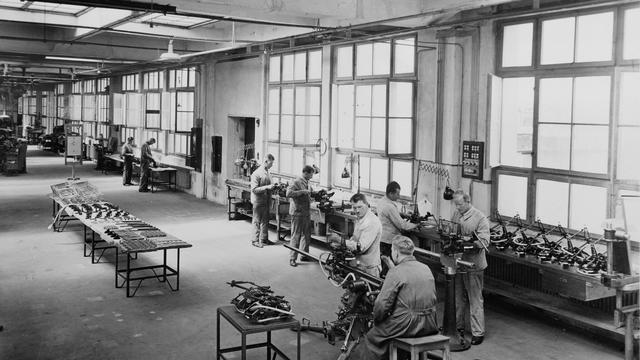
The Alte Zeughaus museum in Solothurn is shedding light on the dark dealings of the Waffenfabrik Solothurn, a Swiss company that supplied weapons to Nazi Germany. Following its defeat in World War I, Germany was prohibited from producing weapons under the 1919 Treaty of Versailles. However, the neutral Switzerland became a de facto rear base for German rearmament efforts.
Companies like Oerlikon-Bührle and Flug- und Fahrzeugwerke Altenrhein, along with the Waffenfabrik Solothurn, played a role in this clandestine buildup. The Solothurn factory, initially known as a cartridge factory, was established in 1923 by Swiss politician Hermann Obrecht and German engineer Hans von Steiger. At the time, Switzerland's arms exports were minimal, and the burgeoning industry faced skepticism from both the left and the center.
A significant shift occurred in 1929 when the German firm Rheinmetall acquired a majority stake in the Solothurn factory. With Nazi officials at the helm, who had been actively pushing for German rearmament for years, German and Austrian engineers worked at the facility near the Swiss Jura mountains. They focused on developing tank and anti-tank rifles, as well as machine guns, which would later be used by the Wehrmacht.
DistantNews Editorial
Originally published by Die Zeit in German. Translated, summarized, and contextualized by our editorial team with added local perspective. Read our editorial standards.
More Stories


From Our Blog

What Gets Lost (and Found) When News Is Translated

How the Same Story Looks Different in Different Countries

The Critical Role of Diaspora Media in Global News

What Travellers Should Know About Countries with Restricted Press

A Digital Nomad's Guide to Following Local News
