


Swiss glaciers on track for massive ice loss as heatwave fuels melt
Translated from English, summarized and contextualized by DistantNews.
At a glance
News
Named sources
Context piece
- Switzerland's glaciers are rapidly melting due to an ongoing European heatwave, reaching
Switzerland's glaciers are on track to lose a significant amount of ice this year, with "glacier loss day" arriving by Monday, the second earliest on record. This milestone signifies the point when all winter snow and ice has melted, leading to net ice loss for the remainder of the season.
We're just seeing enormous ablation, ice melt rates and snow melt rates all over the Alps.
Matthias Huss, head of Glacier Monitoring in Switzerland (GLAMOS), described "enormous ablation, ice melt rates and snow melt rates all over the Alps." He noted that the current state is "three months too early compared to a healthy state." The only earlier glacier loss day since records began in 2000 was in 2022.
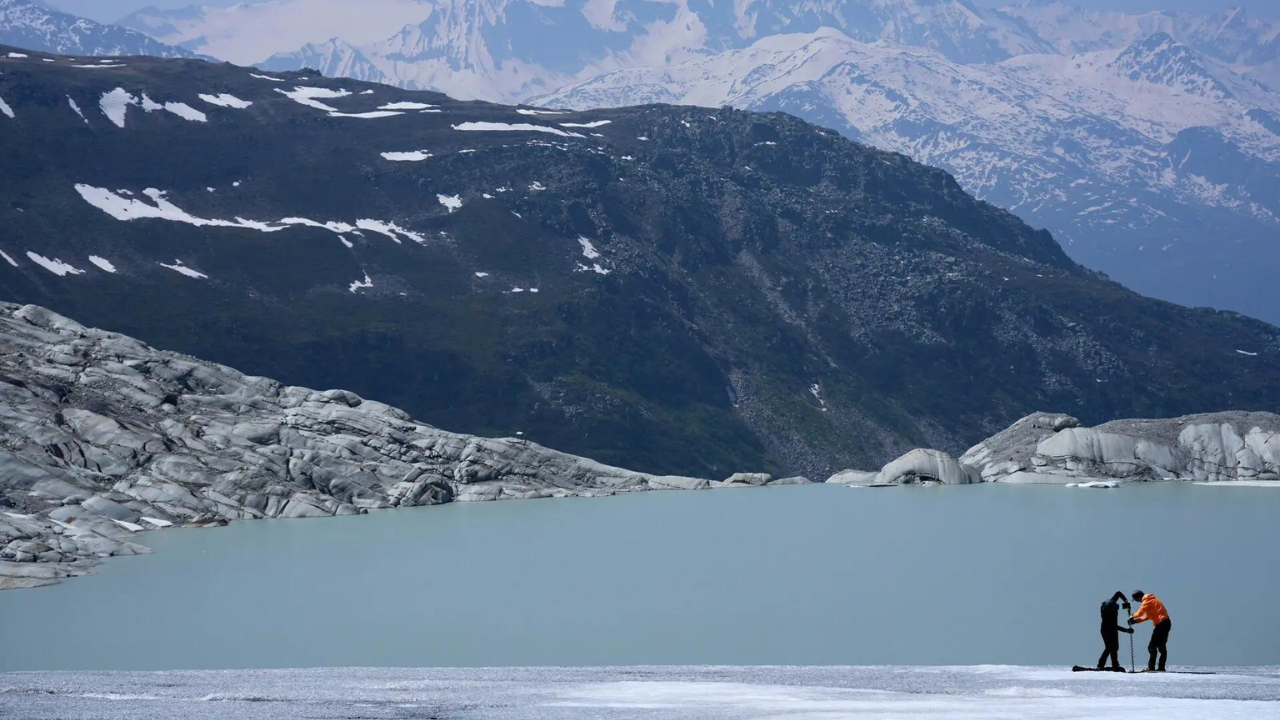
This year's accelerated melting is attributed to an intense heatwave across Europe, a warm May, and insufficient winter snowfall. Huss observed about a meter of vertical ice melt at the Rhone Glacier in just 10 days due to the heatwave. He emphasized that prolonged periods of extreme warmth, not just single heatwaves, are detrimental to glaciers.
We are three months too early compared to a healthy state
Conditions this year mirror 2022, a record year for Alpine glacier melt. Switzerland received about 25% less snow than the 2010-2020 average. Early snow disappearance in May exposed darker ice, increasing solar absorption and melting. Dust from the Sahara Desert in March also reduced snow reflectivity, worsening conditions. Huss anticipates "very strong ice loss also this year."
It's very impressive to see, and this is just the effect of the heatwave.
Scientists increasingly link Europe's extreme heat to climate change. A World Weather Attribution study found the current heatwave would have been virtually impossible without human-induced climate change, making such events around 200 times more likely than two decades ago. Europe, the fastest-warming continent, has seen temperatures rise significantly.
The problem is rather that we have very high temperatures that last for a very long time.
DistantNews Editorial
Originally published by Times of India in English. Translated, summarized, and contextualized by our editorial team with added local perspective. Read our editorial standards.
More Stories


From Our Blog

What Press Freedom Means for the News You Read

What Gets Lost (and Found) When News Is Translated

The Critical Role of Diaspora Media in Global News

What Travellers Should Know About Countries with Restricted Press

A Digital Nomad's Guide to Following Local News
