


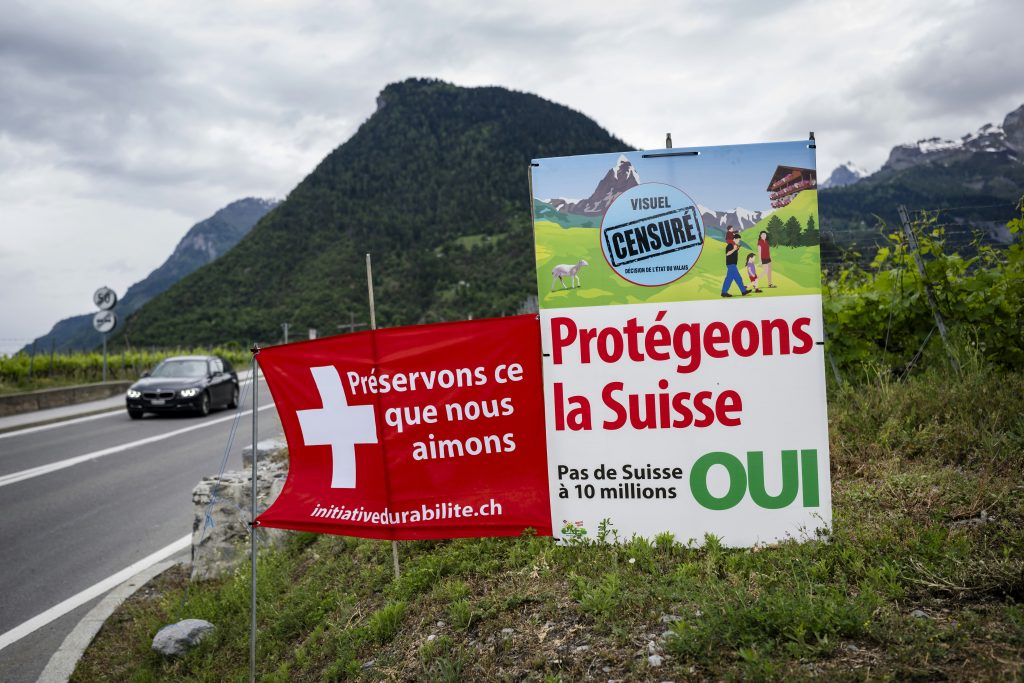
Switzerland rejects population cap, averting EU accord crisis
Translated from French, summarized and contextualized by DistantNews.
At a glance
News
Sources not specified
Outcome reported
- Swiss voters rejected a proposal by the far-right UDC party to cap the country's population at 10 million by 2050.
- The initiative's defeat prevents Switzerland from having to withdraw from its free movement agreement with the European Union.
- The vote highlighted a divide between urban and rural areas, with cities largely opposing the cap and rural areas showing more support.
Swiss voters decisively rejected a far-right initiative aimed at capping the nation's population at 10 million by 2050, a decision that brings relief to both domestic and European circles. The proposal, put forth by the Swiss People's Party (UDC), was defeated with 54% of the vote on Sunday.
By their decision today, citizens have sent a signal of stability, openness, and reliability.
Had the initiative passed and the population exceeded 10 million before 2050, Switzerland would have been compelled to terminate its free movement agreement with the European Union within two years. This outcome was a significant concern for economic and diplomatic stakeholders, who feared it would trigger the collapse of other vital bilateral accords concerning asylum and security.
has allowed Switzerland to avoid major disruption for its economy and its relations with Brussels.
Beat Jans, Switzerland's Justice and Police Minister, stated that the voters' decision signaled "stability, openness, and reliability." Analysts like Jess Middleton from Verisk Maplecroft noted that the rejection averted "major disruption for its economy and its relations with Brussels." However, employer organization economiesuisse acknowledged the result while pointing out that "immigration still concerns the population."
it is also clear that immigration concerns the population.
The vote revealed a clear geographical divide. While major urban centers and French-speaking regions like Basel-City (73.48% no), Neuchâtel (67.26% no), and Geneva (65.42% no) overwhelmingly rejected the cap, rural areas showed considerable support. This urban-rural split mirrors similar trends in other European democracies grappling with migration issues. Voter turnout was high at nearly 59%, significantly above the recent average, indicating the public's engagement with the issue.
This is not surprising, given the intensity of the campaign. It is also not surprising, because beyond the question of immigration policy, Switzerland's European policy was also partly at stake.
DistantNews Editorial
Originally published by El Watan in French. Translated, summarized, and contextualized by our editorial team with added local perspective. Read our editorial standards.
More Stories


From Our Blog

What Gets Lost (and Found) When News Is Translated

The Critical Role of Diaspora Media in Global News

What Travellers Should Know About Countries with Restricted Press

A Digital Nomad's Guide to Following Local News

How the Same Story Looks Different in Different Countries
