


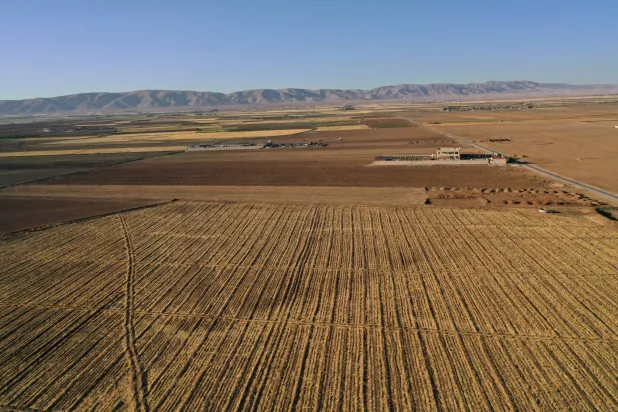
Syria's Wheat Harvest Expected to More Than Double this Year
Summarized and contextualized by DistantNews.
At a glance
News
From a news agency
Ongoing story
- Stock markets fluctuated as planned talks between the US and Iran, following a recent conflict resolution, were postponed.
- The delay dealt a blow to a week-long rally fueled by the initial agreement to end conflict and reopen the Strait of Hormuz.
- Oil prices rose, and markets reversed earlier gains as investors grew cautious about the deal's stability.
Global markets experienced volatility as crucial follow-up talks between the United States and Iran were unexpectedly postponed. This delay has cast a shadow over a recent rally that had boosted equities worldwide, driven by optimism over the resolution of a three-month conflict and the reopening of the vital Strait of Hormuz.
The planned talks between the US, Iran, Qatar and Pakistan have been postponed.
The agreement, signed by U.S. President Donald Trump and his Iranian counterpart Masoud Pezeshkian and approved by Iran's supreme leader, was intended to pave the way for broader discussions, including Tehran's nuclear program. However, Swiss officials announced the postponement of the talks, citing logistical complexities and citing a cancellation of U.S. Vice President JD Vance's travel to the country.
The logistics of these negotiations have never been simple or predictable.
The news immediately impacted financial markets. Stock exchanges that had been trending upward reversed course, with profit-taking exacerbating the downturn. Major markets in Seoul, Tokyo, Singapore, Sydney, Mumbai, Bangkok, and Jakarta saw losses, though some, like Wellington and Manila, managed slight gains. European markets showed mixed performance, with London dipping at the open while Paris and Frankfurt rose.
The deal signed, that geopolitical cloud is lifting, but markets have learned more than once that a resolution can unravel quickly.
In contrast to the equity markets, oil prices saw an increase, climbing around 1.8 percent for West Texas Intermediate. This rise occurred despite a recent 10 percent drop in oil prices over the week. Analysts noted that while the initial deal provided relief, the postponement highlights the fragility of such agreements and the ongoing need for a truly stable resolution before full economic confidence returns.
The hard work starts now, and investors will likely be cautious until we've got an air-tight deal and traffic genuinely flowing in full through the strait again.
DistantNews Editorial
Originally published by Asharq Al-Awsat. Summarized and contextualized by our editorial team with added local perspective. Read our editorial standards.
More Stories


From Our Blog

What Gets Lost (and Found) When News Is Translated

The Critical Role of Diaspora Media in Global News

What Travellers Should Know About Countries with Restricted Press

A Digital Nomad's Guide to Following Local News

How the Same Story Looks Different in Different Countries
