


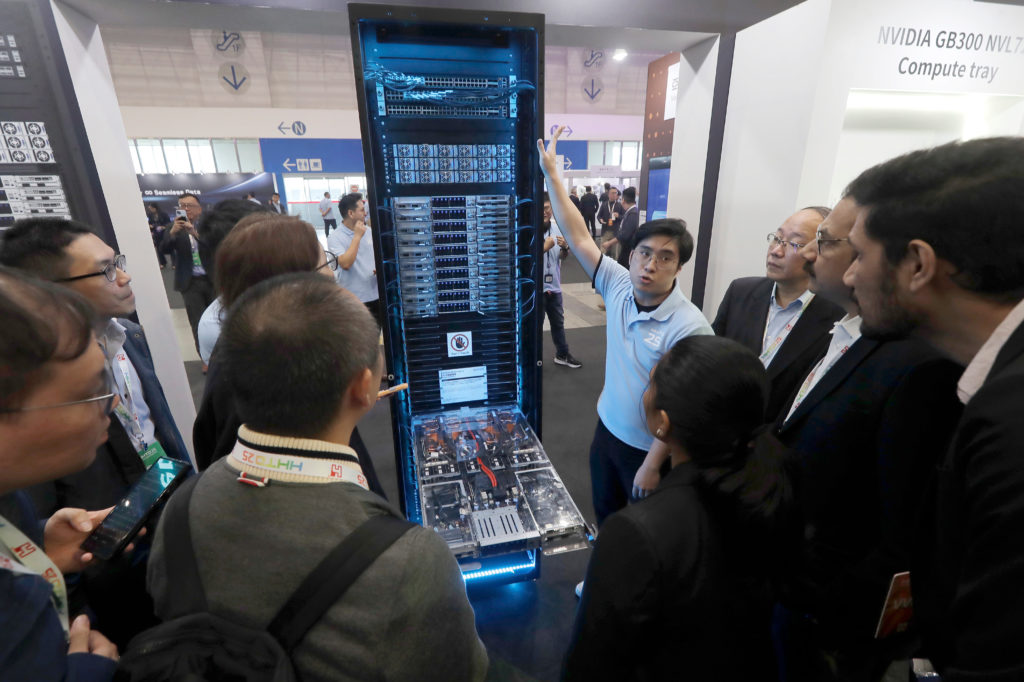
Taiwan charges 9 over illegal AI server exports to China, including Nvidia and Super Micro staffers
Summarized and contextualized by DistantNews.
At a glance
News
Named sources
New plan
- Taiwanese prosecutors have charged nine individuals, including employees from Nvidia and Super Micro, for illegally exporting high-end AI servers to mainland China.
- The servers, equipped with banned 'B300' graphics processing units, were allegedly shipped through various countries to circumvent U.S. export restrictions.
- The charges highlight the ongoing competition and scrutiny surrounding AI technology exports between China, the U.S., and Taiwan.
Taiwanese prosecutors have indicted nine people, including employees from tech giants Nvidia and Super Micro, for allegedly orchestrating the illegal export of advanced AI servers to mainland China. This action escalates the complex geopolitical and technological rivalry over artificial intelligence infrastructure.
The servers in question were reportedly equipped with 'B300' graphics processing units, components that are subject to strict U.S. export controls aimed at limiting China's access to cutting-edge AI technology. Prosecutors stated that 74 servers were successfully delivered to China, with some shipments routed through Indonesia and others via Japan and Hong Kong.
We will work with the Taiwan authorities to help them resolve the allegations as quickly as possible.
Nvidia acknowledged the charges, stating it would cooperate with Taiwanese authorities to resolve the allegations swiftly. Super Micro confirmed that the arrests of two former employees stemmed from its collaboration with investigators, emphasizing its commitment to strengthening its export compliance program.
Prosecutors are seeking significant prison sentences for some of the defendants, identifying one Nvidia manager as a key figure in authorizing the release of the banned GPUs. The alleged scheme involved setting up front companies in Japan and falsifying information to bypass export restrictions, underscoring the sophisticated methods employed to circumvent international trade regulations in the high-stakes AI sector.
The arrests of two of its former employees were due to its cooperation with the Taiwanese authorities and the company will continue to work to 'enhance its robust export compliance program to protect American innovation.'
DistantNews Editorial
Originally published by PBS NewsHour. Summarized and contextualized by our editorial team with added local perspective. Read our editorial standards.
More Stories


From Our Blog

How the Same Story Looks Different in Different Countries

What Gets Lost (and Found) When News Is Translated

The Critical Role of Diaspora Media in Global News

What Travellers Should Know About Countries with Restricted Press

A Digital Nomad's Guide to Following Local News
