

Taiwanese coffee beans command world's highest prices as growers prioritize quality
Translated from English, summarized and contextualized by DistantNews.
At a glance
News
Sources not specified
Context piece
- Taiwan's specialty coffee beans command some of the world's highest prices, with growers prioritizing quality over quantity.
- Taiwanese beans achieved the highest average selling price at a recent auction, significantly exceeding those from other major coffee-producing nations.
- The island's coffee market is valued at over $3 billion, with domestic consumption rates among the highest in Asia.
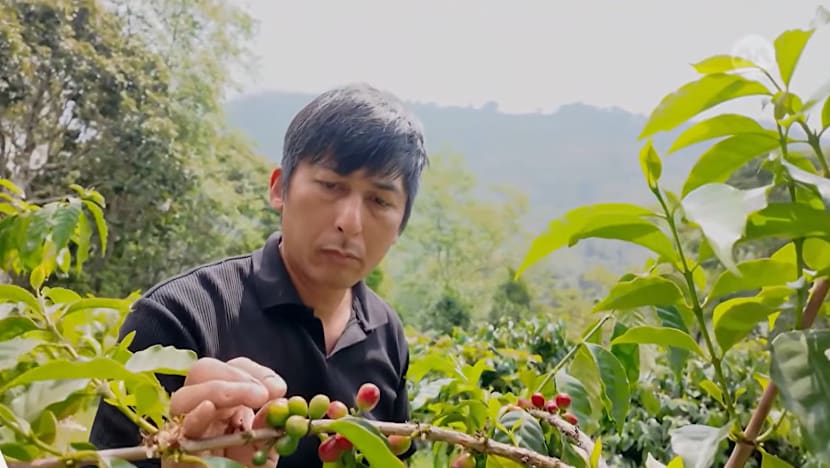
Taiwan is cultivating a niche in the premium coffee market, where its specialty beans fetch some of the world's highest prices. In the scenic Alishan mountains, farmers are producing small batches of high-quality coffee, attracting buyers willing to pay a premium.
Because of the cooler climate, the coffee cherries grow much more slowly. That slower growth allows them to build up more flavour compounds, sugars and density.
At last year's Cup of Excellence auction, Taiwanese beans recorded the highest average selling price at $52 per pound, nearly three times the price of beans from El Salvador. This success stems from a strategy of prioritizing quality over scale, as Taiwanese growers focus on producing distinctive, high-quality beans.
Fang Cheng-lun, founder of the family-run Zou Zhou Yuan farm, explains that the region's cooler climate slows the coffee cherry's growth. This slower ripening allows for the development of more flavor compounds, sugars, and density, setting Taiwan's beans apart from those of traditional producers like Brazil, Colombia, and Ethiopia.
The daily wage I pay one coffee picker could hire more than 40 workers in Ethiopia, or more than a dozen in Central America.
This focus on quality comes at a higher cost. Farmers meticulously hand-pick only ripe cherries and employ labor-intensive processing methods. Fang notes that the daily wage for a Taiwanese coffee picker could hire over 40 workers in Ethiopia or more than a dozen in Central America. Limited land also restricts large-scale production, with Taiwan producing only about 1,000 tons of coffee annually while importing 50,000 tons to meet domestic demand.
Our goal is to showcase the unique flavours from Taiwan's different coffee-growing regions.
The strategy is resonating with local consumers. Sylvia Lin, owner of San Formosan Coffee, aims to introduce more people to Taiwanese-grown coffee, showcasing the unique flavors from different regions. Customers like Stephanie Lee find the higher price justified, valuing the unique experience. Taiwan's strong coffee culture, with over 4 billion cups consumed annually, fuels the industry's growth, estimated to be worth over $3 billion.
Even though it's a bit more expensive, I think it's worth it, because it's something you can only really experience here in Taiwan.
DistantNews Editorial
Originally published by CNA in English. Translated, summarized, and contextualized by our editorial team with added local perspective. Read our editorial standards.
More Stories


From Our Blog

What Gets Lost (and Found) When News Is Translated

The Critical Role of Diaspora Media in Global News

What Travellers Should Know About Countries with Restricted Press

A Digital Nomad's Guide to Following Local News

How the Same Story Looks Different in Different Countries
