


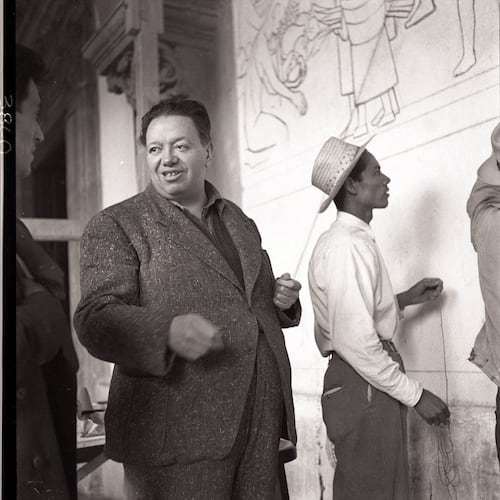
Talk to explore Diego Rivera's role in La Catrina's history
Translated from Spanish, summarized and contextualized by DistantNews.
At a glance
News
Sources not specified
New plan
- A talk on Diego Rivera and the invention of La Catrina will be held in Coyoacán as part of a community program.
- Historian Agustín Sánchez González will lead the discussion, specializing in Mexican caricature and José Guadalupe Posada.
- The event, which is free and will be streamed online, aims to answer questions about La Catrina's name and Rivera's role in preserving Posada's work.
A community program in Coyoacán, Mexico City, will host a talk exploring the history of Diego Rivera and the creation of La Catrina, a famous Mexican artistic figure. The event is part of the "Community Program for the Rescue and Dissemination of the History of Coyoacán."
The presentation will be led by Agustín Sánchez González, a historian who graduated from UNAM and was an investigator at the National Institute of Fine Arts and Literature (INBAL) until 2024. Sánchez González has dedicated his research to Mexican caricature and the work of artist José Guadalupe Posada, who is widely credited with creating the original La Calavera Garbancera, the precursor to La Catrina.
The talk aims to address key questions surrounding the iconic figure, such as whether "La Catrina" was always its name and the specific role Diego Rivera played in preserving and popularizing Posada's work. Rivera's famous mural "Dream of a Sunday Afternoon in Alameda Park" features a prominent depiction of La Catrina, solidifying her place in Mexican art and culture.
The event is scheduled for August 26 at 11:15 AM at the Elena Poniatowska Cultural Center, located at Fernández Leal 43 in the Barrio de la Concepción, Coyoacán. Admission is free, and the talk will also be available via live stream on the Facebook account Jorge Deschamps (Góngora).
DistantNews Editorial
Originally published by El Universal in Spanish. Translated, summarized, and contextualized by our editorial team with added local perspective. Read our editorial standards.
More Stories
From Our Blog

What Press Freedom Means for the News You Read

What Gets Lost (and Found) When News Is Translated

The Critical Role of Diaspora Media in Global News

What Travellers Should Know About Countries with Restricted Press

A Digital Nomad's Guide to Following Local News
