


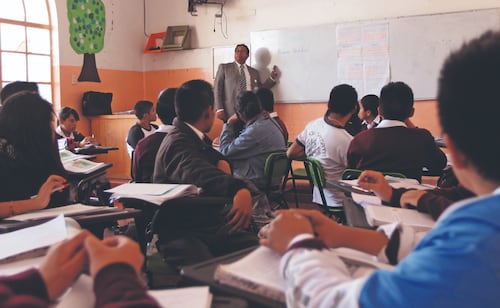
Teachers are aging; in 10 years, there won't be enough
Translated from Spanish, summarized and contextualized by DistantNews.
At a glance
News
Sources not specified
Context piece
- Mexico faces a significant challenge in ensuring a generational shift in its teaching workforce, with the average teacher age at 44.
- Normal schools, which train teachers, represent only 2.8% of national higher education enrollment, indicating a low supply of new educators.
- Experts warn that without strengthening teacher training, Mexico could struggle to fill vacancies, especially in rural and marginalized areas, exacerbating existing educational gaps.
Mexico is confronting a looming crisis in its education system as its teaching staff ages, with the average teacher now 44 years old. The country faces a critical challenge in securing a sufficient generational handover in classrooms over the next decade.
Compounding this issue, teacher training institutions, known as normal schools, represent a mere 2.8% of the national enrollment in higher education. This low figure signals a worrying trend in the pipeline of new educators entering the profession. While enrollment in normal schools has seen a gradual recovery in recent years, the growth remains moderate. Data shows a slight increase from around 108,000 students in the 2015-2016 academic year to approximately 115,000 in 2024, following years of stagnation and decline in various regions.
Experts caution that if current trends persist, Mexico could face severe difficulties in filling teaching vacancies, particularly in basic and upper secondary education. The problem is expected to be most acute in marginalized communities, which historically struggle with teacher shortages and higher rates of educational backwardness. This situation is particularly visible in subjects like mathematics, science, and English, where international organizations like UNESCO and the OECD have highlighted challenges in finding enough specialized teachers.
The global context is also concerning, with UNESCO projecting a worldwide deficit of 44 million teachers by 2030. Countries like Mexico, with existing educational disparities and difficulties in attracting new talent to teaching, are likely to be disproportionately affected. UNICEF emphasizes the urgent need to bolster the capabilities of both current and future teachers, especially for schools in indigenous, rural, and highly marginalized areas, to address the complex challenges within the Mexican education system.
It is urgent to strengthen the capacities of teachers, especially in indigenous schools.
DistantNews Editorial
Originally published by El Universal in Spanish. Translated, summarized, and contextualized by our editorial team with added local perspective. Read our editorial standards.
More Stories



From Our Blog

What Press Freedom Means for the News You Read

What Gets Lost (and Found) When News Is Translated

The Critical Role of Diaspora Media in Global News

What Travellers Should Know About Countries with Restricted Press

A Digital Nomad's Guide to Following Local News
