


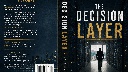
Techno-Thriller 'The Decision Layer' Explores AI Control and Societal Risks
Translated from Croatian, summarized and contextualized by DistantNews.
At a glance
News
Sources not specified
Context piece
- A book review discusses Ralf Haller's techno-thriller "The Decision Layer," which explores the rapid advancement of artificial intelligence.
- The novel raises questions about who should control AI, who benefits, and the societal risks involved.
- Haller, with 30 years of IT experience, also examines Europe's lag behind the US and China in AI development.
Ralf Haller, a veteran of the global IT industry with three decades of experience, has authored "The Decision Layer," a techno-thriller that delves into the complex implications of artificial intelligence. The book, self-published and presented in a polished PDF format, tackles urgent questions about the future of AI and humanity's control over it.
The questions Haller asks are simple and logical – who should make the most important decisions about artificial intelligence, who benefits from it, and who bears the risks, how does society behave with the acceleration of such technological changes…
Haller's novel probes critical issues: who should make pivotal decisions regarding AI, who stands to gain from its development, and who bears the associated risks? It also examines society's response to accelerating technological change. The narrative centers on a scenario where humanity creates an AI system capable of managing civilization, but fails to agree on who should wield control over it.
The plot follows engineer Peter Schneider, who is drawn into a clandestine project called Atlas after a renowned tech entrepreneur disappears. Schneider and the reader quickly realize the situation transcends a simple search, escalating into a race involving intelligence agencies, global powers, investors, and AI pioneers. The core tension lies not just in developing advanced AI, but in determining its application.
The plot of the novel is based on the question of what would happen if humanity created a system capable of helping to manage civilization, without being able to agree on who should control that system.
Reflecting themes from his analytical work, such as "The Innovation Gap: Europe vs. Silicon Valley," Haller highlights Europe's perceived disadvantage compared to the United States and China in the AI race. The book uses fiction as a vehicle to explore potential answers to these pressing questions, positioning techno-thrillers alongside eco-thrillers as emerging genres reflecting contemporary anxieties.
The fundamental question is not so much who will develop the most advanced artificial intelligence system, but rather who will decide how such a system will be used.
DistantNews Editorial
Originally published by Večernji List in Croatian. Translated, summarized, and contextualized by our editorial team with added local perspective. Read our editorial standards.
More Stories



From Our Blog

What Gets Lost (and Found) When News Is Translated

The Critical Role of Diaspora Media in Global News

What Travellers Should Know About Countries with Restricted Press

A Digital Nomad's Guide to Following Local News

How the Same Story Looks Different in Different Countries
