


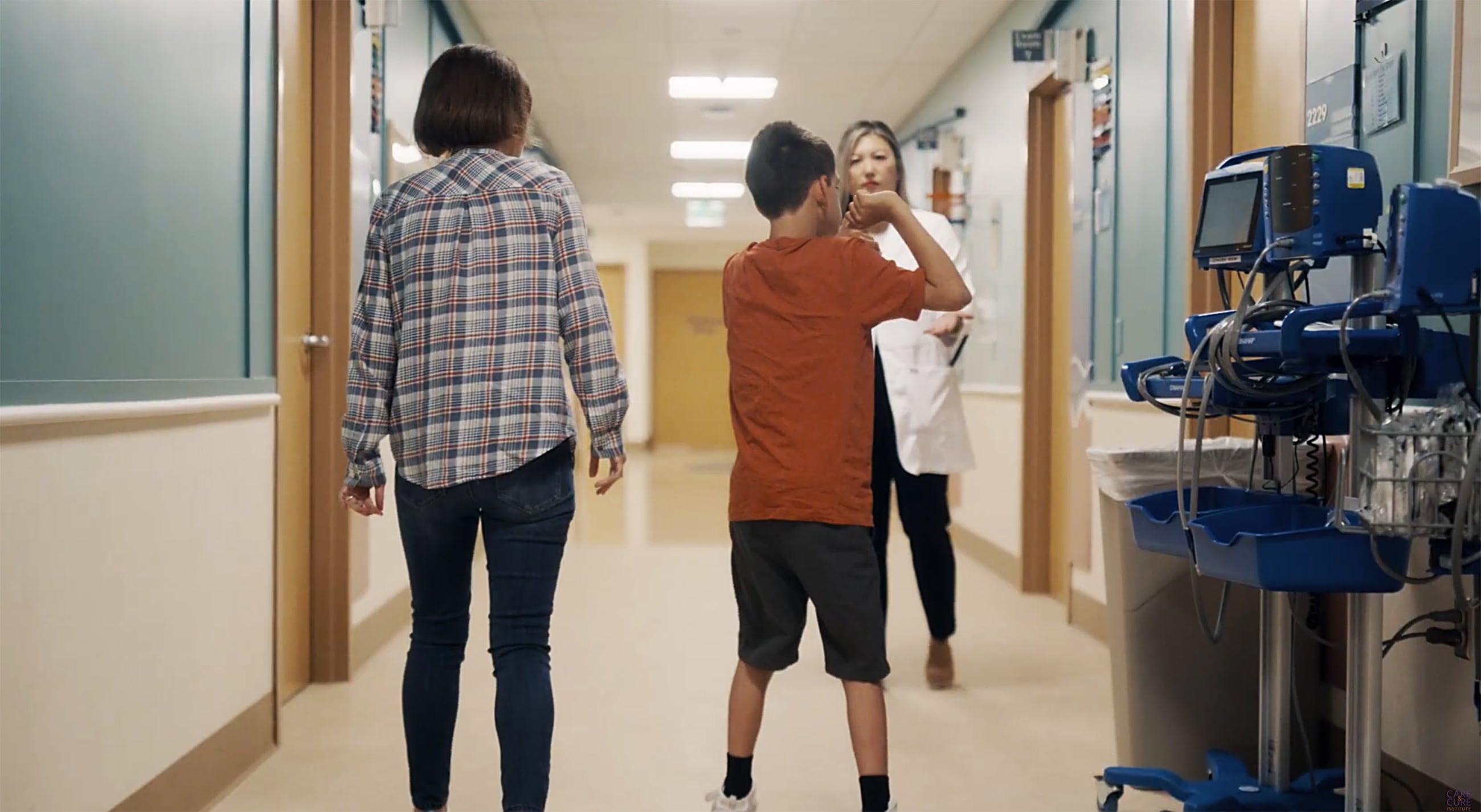
Teenager Walks Unaided for First Time After Experimental Gene Therapy for Epilepsy
Translated from Spanish, summarized and contextualized by DistantNews.
At a glance
In-depth
Named sources
Outcome reported
- A teenager named Connor has taken his first unaided steps thanks to an experimental gene therapy for epilepsy.
- This personalized treatment, tailored to each patient, offers hope for rare and currently incurable neurological diseases.
- The therapy involves a "genetic patch" that targets the specific cause of the patient's condition.
A groundbreaking experimental therapy is offering a new lease on life for a teenager named Connor, who has achieved a significant milestone: walking unaided for the first time. This remarkable progress is attributed to a personalized gene therapy designed to treat his epilepsy.
The treatment, described as a "genetic patch," is tailored specifically to each patient's unique condition. This highly individualized approach targets the root cause of rare and often incurable neurological diseases, providing a beacon of hope for those affected. Connor's ability to walk without assistance marks a pivotal moment, demonstrating the potential of this innovative medical intervention.
While the article focuses on Connor's personal triumph, it highlights the broader implications of this experimental therapy. Its success in treating epilepsy suggests a promising avenue for tackling other complex neurological disorders that have historically resisted conventional treatments. The development represents a significant step forward in the field of personalized medicine, where treatments are customized to an individual's genetic makeup and specific disease profile.
The "genetic patch" therapy works by addressing the underlying genetic abnormalities responsible for the neurological condition. By correcting or compensating for these genetic defects, the therapy aims to restore normal neurological function. Connor's case serves as a powerful testament to the potential of such targeted treatments to dramatically improve the quality of life for patients suffering from debilitating neurological diseases.
DistantNews Editorial
Originally published by El País in Spanish. Translated, summarized, and contextualized by our editorial team with added local perspective. Read our editorial standards.
More Stories



From Our Blog

What Gets Lost (and Found) When News Is Translated

The Critical Role of Diaspora Media in Global News

What Travellers Should Know About Countries with Restricted Press

A Digital Nomad's Guide to Following Local News

How the Same Story Looks Different in Different Countries
