


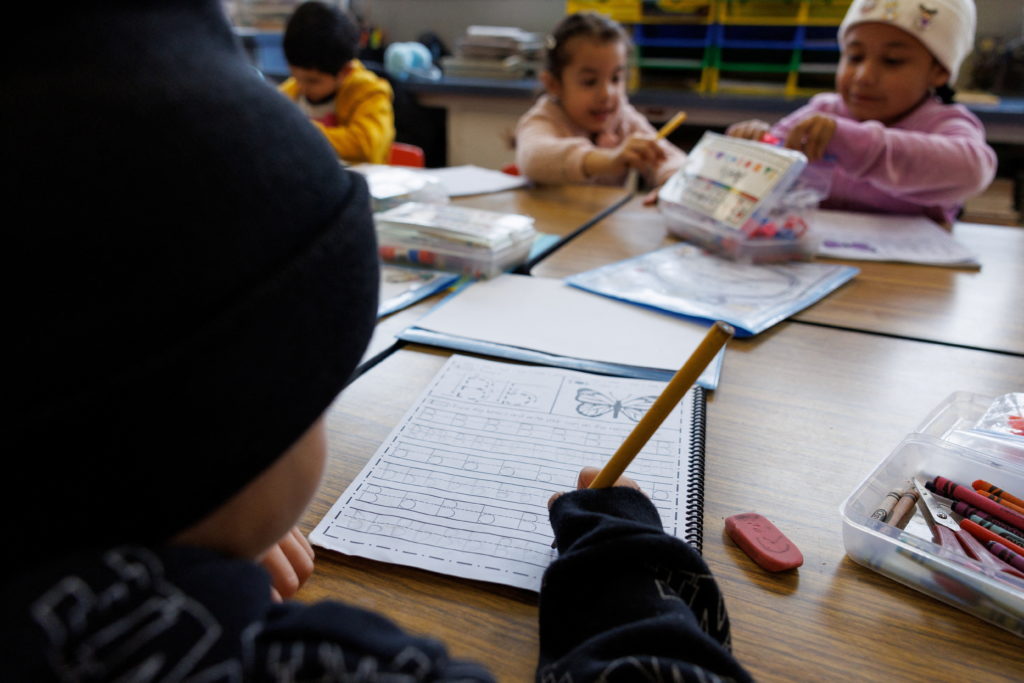
Teens' reading and math scores have stagnated, US test results show
Summarized and contextualized by DistantNews.
At a glance
News
From a news agency
New plan
- Test scores for younger U.S. students have rebounded to pre-pandemic levels in reading and shown some recovery in math.
- However, scores for 13-year-olds in math and reading remain stagnant and below pre-pandemic averages, with reading scores at 1971 levels.
- Experts urge a renewed focus on adolescent learners, as the pandemic disrupted crucial formative years for these students.
Latest federal testing data reveals a widening academic gap between younger and older students in the United States. While nine-year-olds have successfully regained ground academically, recovering to pre-pandemic reading scores and showing improvement in math, their teenage counterparts are facing continued stagnation.
The National Assessment Governing Board reports that 13-year-olds' average scores in both math and reading remain below pre-pandemic levels. Alarmingly, their reading scores from 2024 are essentially unchanged from when the long-term assessment began in 1971. This trend predates the pandemic, as scores had already begun to decline around 2012.
The 13-year-olds who took this assessment last year are headed to high school now or are already enrolled. Schools won't have them much longer. We can't hesitate or wait if we're going to turn these trends around.
Lesley Muldoon, executive director of the National Assessment Governing Board, stressed the need for immediate action. "We can't hesitate or wait if we're going to turn these trends around," she stated, noting that these 13-year-olds are now entering high school and will soon graduate, potentially still academically behind.
While schools have focused on implementing strategies like the "science of reading" for elementary students, the data indicates a critical need to intensify efforts for adolescent learners. The pandemic's disruptions occurred during the formative elementary years for current 13-year-olds, impacting their foundational skills. The test, taken by roughly 31,000 students, has remained consistent since the 1970s, offering a stable measure of academic achievement over time.
We can clearly see that this isn't just a pandemic story.
DistantNews Editorial
Originally published by PBS NewsHour. Summarized and contextualized by our editorial team with added local perspective. Read our editorial standards.
More Stories



From Our Blog

How the Same Story Looks Different in Different Countries

What Gets Lost (and Found) When News Is Translated

The Critical Role of Diaspora Media in Global News

What Travellers Should Know About Countries with Restricted Press

A Digital Nomad's Guide to Following Local News
