

Texas declares emergency as screwworm cases rise to four
Translated from Spanish, summarized and contextualized by DistantNews.
At a glance
News
Sources not specified
New plan
- Texas has confirmed four cases of the New World screwworm, a livestock-devastating pest, prompting the state to declare an emergency.
- The screwworm fly lays eggs in open wounds, and larvae eat live flesh. New cases were found in a calf and a dog hundreds of miles apart.
- The state is accelerating sterile fly releases and building a new plant to combat the pest, which was last eradicated in the U.S. in the 1960s.
Texas authorities have confirmed two additional cases of the New World screwworm, a parasitic fly whose larvae consume live flesh, raising the total to four and prompting the state to declare an emergency.
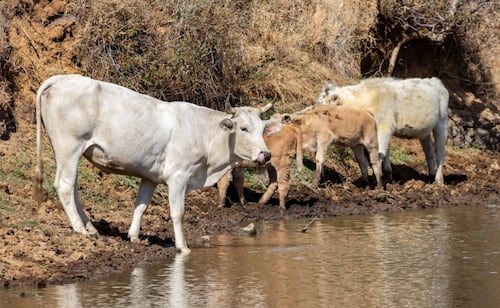
The pest, which lays eggs in open wounds of warm-blooded animals, poses a significant threat to the nation's livestock industry. The latest cases were discovered in a calf and a dog, located hundreds of miles apart in La Salle and Andrews counties, according to the Department of Agriculture.
While we address these cases that require immediate attention and continue to sample suspected cases, we are simultaneously working to eradicate the pest completely.
Governor Greg Abbott announced that the emergency declaration allows for the mobilization of all available resources and personnel to combat the threat. Texas is accelerating the release of sterile flies, a method used to contain the pest, and plans to construct a new facility in Edinburg to breed these insects. The sterile insect technique involves releasing sterilized male flies that mate with wild females, preventing viable larvae from hatching.
This re-emergence of the screwworm, last eradicated in the U.S. in the 1960s, has raised concerns since the pest was detected in Mexico in late 2024, after being contained in southern Panama for decades. The Department of Agriculture is also increasing sterile fly production at facilities outside the U.S. to prevent a widespread infestation.
allows for the mobilization of all available resources and the reassignment of personnel throughout Texas to respond to the threat of this parasite.
DistantNews Editorial
Originally published by El Universal in Spanish. Translated, summarized, and contextualized by our editorial team with added local perspective. Read our editorial standards.
More Stories

From Our Blog

What Press Freedom Means for the News You Read

What Gets Lost (and Found) When News Is Translated

The Critical Role of Diaspora Media in Global News

What Travellers Should Know About Countries with Restricted Press

A Digital Nomad's Guide to Following Local News
