


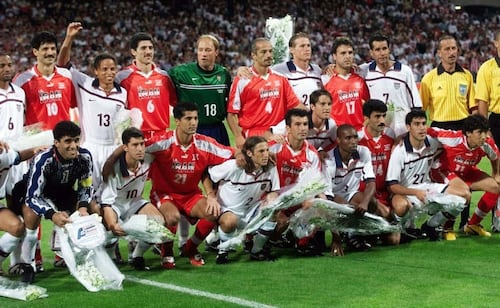
The 90 Minutes of Peace: Iran and the U.S. at the 1998 World Cup
Translated from Spanish, summarized and contextualized by DistantNews.
At a glance
In-depth
Sources not specified
Context piece
- The 1998 World Cup in France featured a politically charged match between rivals Iran and the United States on June 21.
- Iran secured its spot in the tournament by defeating Australia in a dramatic playoff, marking its second World Cup appearance.
- The match, dubbed "the mother of all games," required heightened security and agreements to keep politics off the field.
The 1998 FIFA World Cup in France was the stage for a highly anticipated and politically charged encounter between Iran and the United States. Held on June 21, 1998, during the group stage, the match between two nations with a long history of animosity drew significant global attention. The obvious political tension necessitated increased security measures around the stadium and led to agreements between the teams to keep their rivalry confined to the pitch, though many fans disagreed with this separation.
Iran's journey to the 1998 World Cup was itself a dramatic affair. Their qualification was sealed on November 30, 1997, after a tense playoff against Australia in Melbourne. Facing a 2-0 deficit late in the game, the Iranian team staged a remarkable comeback, scoring two goals in quick succession within five minutes. Karim Bagheri scored in the 71st minute, followed by Khodadad Azizi in the 75th, stunning the home crowd and securing Iran's second-ever World Cup berth.
This victory sparked immense celebrations in Tehran, with reports from EL UNIVERSAL describing jubilant scenes. Major streets were filled with honking cars, and the city was adorned with flags and portraits of national leaders. Young people danced in public squares, marking a moment of national pride and unity. The qualification was particularly significant as it was the first time Iran participated in the World Cup as the Islamic Republic, having previously appeared in Argentina in 1978.
DistantNews Editorial
Originally published by El Universal in Spanish. Translated, summarized, and contextualized by our editorial team with added local perspective. Read our editorial standards.
More Stories



From Our Blog

What Press Freedom Means for the News You Read

What Gets Lost (and Found) When News Is Translated

The Critical Role of Diaspora Media in Global News

What Travellers Should Know About Countries with Restricted Press

A Digital Nomad's Guide to Following Local News
