


The Ball: AI gives color to the Revolution
Translated from Spanish, summarized and contextualized by DistantNews.
At a glance
In-depth
Named sources
Ongoing story
- The documentary "La bola" uses artificial intelligence to colorize footage of the Mexican Revolution and recreate historical scenes.
- The AI software, named Adelita, was developed by engineers at UNAM and advised by historians.
- The film aims to present a new perspective on the Mexican Revolution, combining historical research with advanced technology.
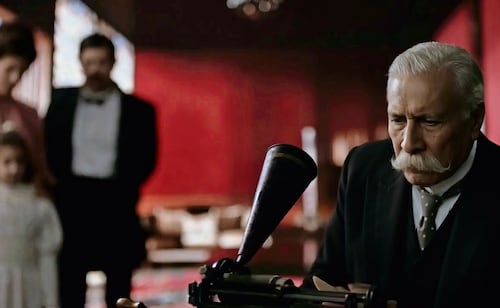
The documentary "La bola" is revolutionizing the portrayal of the Mexican Revolution by employing artificial intelligence to colorize historical footage and recreate scenes with real actors. This innovative approach is part of a film by Alfonso Coronel, narrated by Yalitza Aparicio, which is set to premiere at the Guanajuato International Film Festival (GIFF) before its commercial release.
The AI software used, named Adelita, is an original development by UNAM engineers. Coronel explained that the colorization process was not arbitrary but guided by historians specializing in military attire, doctors, and researchers. "We reviewed it shot by shot with them, they told us what went where. For example, a colonel's sash was blue and not white as many have depicted it; it was three years of research," the filmmaker stated.
"La bola" also leverages AI to dramatize certain scenes by finding actors who resemble historical figures. This method bypasses the need for traditional motion capture suits with sensors. Instead, the AI captures movement and integrates historical characters by using wardrobe and expressions as references. Coronel described it as similar to motion capture but powered by AI.
Coronel, an alumnus of UNAM's National School of Cinematographic Arts, has a passion for Mexican history. He noted that academics and historians have expressed fatigue with viewing historical events in black and white. "For me, the Mexican Revolution runs parallel to the history of cinema in Mexico," he said, adding that the proposal's academic origin was well-received. The film seeks to offer a fresh, visually engaging perspective on a pivotal period in Mexican history.
DistantNews Editorial
Originally published by El Universal in Spanish. Translated, summarized, and contextualized by our editorial team with added local perspective. Read our editorial standards.
More Stories


From Our Blog

What Press Freedom Means for the News You Read

What Gets Lost (and Found) When News Is Translated

The Critical Role of Diaspora Media in Global News

What Travellers Should Know About Countries with Restricted Press

A Digital Nomad's Guide to Following Local News
