

'The bridge between confrontation and peace': Pakistan calls for stronger mediation efforts to prevent conflicts
Summarized and contextualized by DistantNews.
At a glance
News
Named sources
Context piece
- Pakistan urged restraint and diplomacy to resolve the Middle East crisis, emphasizing mediation as the only sustainable path.
- Ambassador Asim Iftikhar Ahmad highlighted Pakistan's efforts to facilitate a solution, given its ties to Iran, Gulf countries, and the U.S.
- He called for a stronger role for mediation in conflict prevention, advocating for investment in early-warning systems and preventive diplomacy.
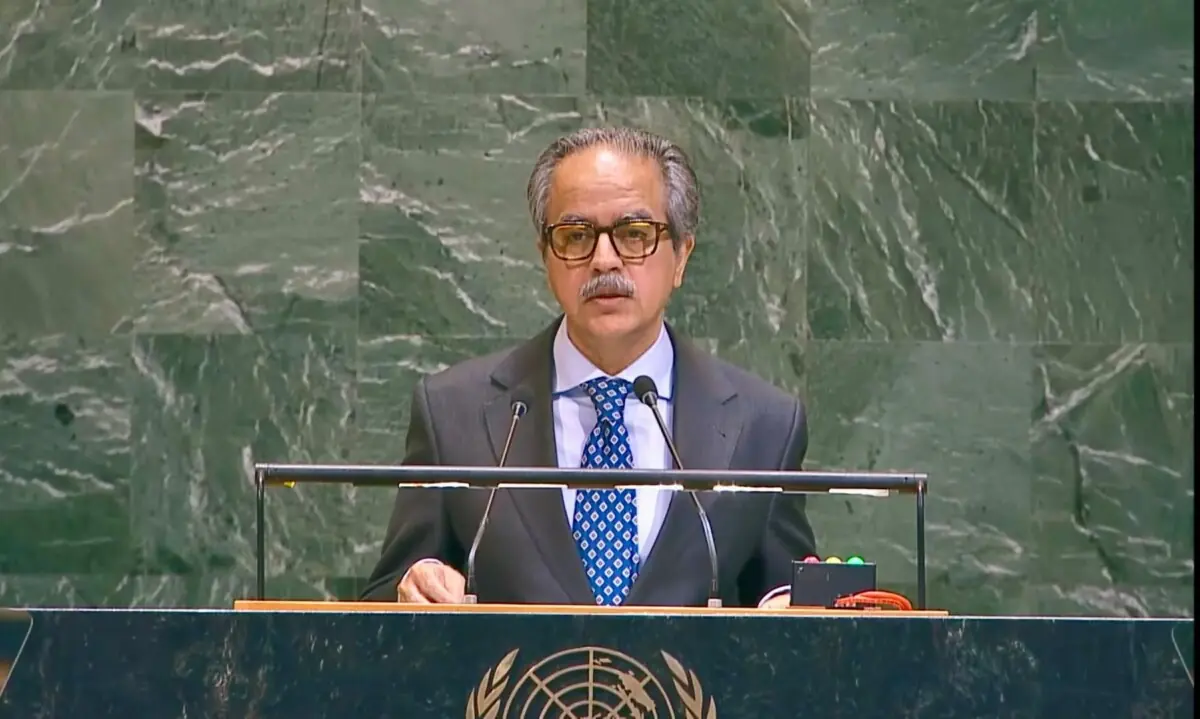
Pakistan has reiterated its call for de-escalation and a return to diplomacy in the Middle East, asserting that dialogue and mediation are the sole sustainable routes to conflict resolution. Addressing the UN General Assembly, Pakistan's Permanent Representative to the UN, Ambassador Asim Iftikhar Ahmad, stated that Islamabad has consistently championed diplomacy amid recent tensions involving Iran and the United States.
As a friendly neighbour of Iran, a brotherly partner of the Gulf countries, and a country with longstanding ties of amity with the United States, Pakistan continues to make sincere efforts to facilitate a durable solution for regional and global peace and stability.
Ambassador Ahmad emphasized Pakistan's unique position, describing it as a "friendly neighbor of Iran, a brotherly partner of the Gulf countries, and a country with longstanding ties of amity with the United States." He affirmed Pakistan's ongoing commitment to facilitating a durable solution for regional and global peace and stability.
During a debate on strengthening mediation in conflict prevention, Ahmad pressed for a more robust role for preventive diplomacy. He argued that conflicts are not inevitable but often stem from "diplomacy delayed, dialogue denied, and disputes left to fester." He stressed that the UN's primary responsibility should be preventing conflicts before they erupt, rather than merely responding to them.
Conflicts are not inevitable. They are often the result of diplomacy delayed, dialogue denied, and disputes left to fester.
Pakistan's commitment to peaceful dispute settlement was further underscored by Security Council Resolution 2788, adopted unanimously in July 2025 on Pakistan's initiative. The resolution reinforced Chapter VI of the UN Charter, promoting mediation and the Secretary-General's good offices, and highlighting the role of regional organizations. Ambassador Ahmad advocated for mediation to be a central pillar of conflict prevention, not just a crisis management tool, urging greater investment in early-warning mechanisms and preventive engagement.
The first responsibility of the United Nations is not merely to respond to conflicts after they erupt, but to prevent them before they consume lives, regions and generations.
Speaking later at a Security Council meeting on Ukraine, Ambassador Ahmad cautioned that prolonged conflicts increase the risks of miscalculation and escalation. He noted that unresolved wars often lead to spillover effects, underscoring the need for proactive diplomatic solutions to prevent wider instability.
Mediation must become the guiding principle of prevention, not an instrument of crisis management.
DistantNews Editorial
Originally published by Dawn. Summarized and contextualized by our editorial team with added local perspective. Read our editorial standards.
More Stories
From Our Blog

What Gets Lost (and Found) When News Is Translated

The Critical Role of Diaspora Media in Global News

What Travellers Should Know About Countries with Restricted Press

A Digital Nomad's Guide to Following Local News

How the Same Story Looks Different in Different Countries
