


The CCJ question
Summarized and contextualized by DistantNews.
At a glance
Analysis
Sources not specified
Context piece
- Opposition critics question Prime Minister Kamla Persad-Bissessar's stance on the Caribbean Court of Justice (CCJ), citing past skepticism.
- The article argues there is no contradiction in her support for the CCJ's international role while questioning its domestic function.
- A survey indicates lukewarm public support for the CCJ, suggesting political positions on the matter may not significantly sway voters.
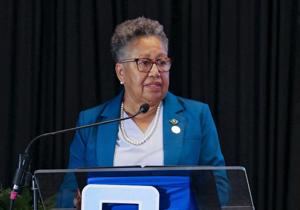
Opposition critics have challenged Prime Minister Kamla Persad-Bissessar's position on the Caribbean Court of Justice (CCJ), pointing to her past public statements that questioned the court's credibility and opposed its adoption as Trinidad and Tobago's final court of appeal. Opposition senator Dr. Amery Browne questioned the prime minister's seemingly contradictory stance, asking if the person speaking this week in St. Lucia was the same individual who previously expressed skepticism.
The article contends that Browne's argument is specious, explaining that the CCJ functions as two courts in one: a municipal court of last resort and an international court with jurisdiction over the Revised Treaty of Chaguaramas. It suggests that Persad-Bissessar's confidence in the CCJ's international role does not contradict her skepticism about its domestic function. However, it posits that her political stance is likely influenced more by electoral calculations than by a deep conviction.
A survey conducted in April of the previous year by political scientist Dr. Hamid Ghany revealed lukewarm support for the CCJ. The poll indicated that 45% of respondents preferred retaining appeals to the Privy Council, while just over 30% were undecided. Support for the CCJ was also divided along ethnic and religious lines, with significant portions of various groups favoring the Privy Council.
These findings suggest that public opinion is largely indifferent or opposed to the CCJ, implying that the political parties' positions will have minimal impact on voters. The article notes that among Hindus, the UNC's core base, a majority opposed abolishing appeals to the Privy Council. Similarly, the PNM's support base does not gain an electoral advantage from this issue. Therefore, the UNC may face no political repercussions for making the CCJ the country's final court of appeal, a move previously supported by the PNM under Dr. Keith Rowley.
Is this the same person who was speaking this week in St Lucia? Is it the same human being? What is their position on the CCJ, which they are pretending to embrace today?
DistantNews Editorial
Originally published by Trinidad Express. Summarized and contextualized by our editorial team with added local perspective. Read our editorial standards.
More Stories


From Our Blog

What Gets Lost (and Found) When News Is Translated

The Critical Role of Diaspora Media in Global News

What Travellers Should Know About Countries with Restricted Press

A Digital Nomad's Guide to Following Local News

How the Same Story Looks Different in Different Countries
