


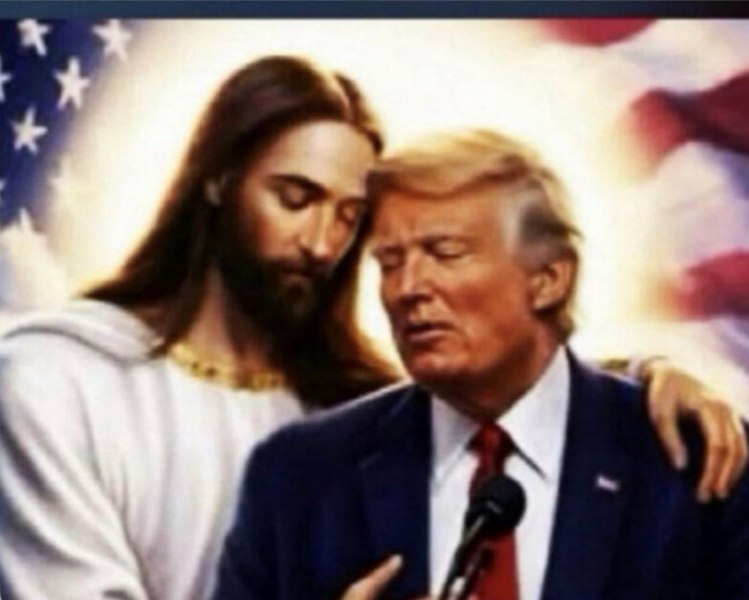
The Dangers of the Trump Administration Using Faith to Justify War in Iran
Translated from Romanian, summarized and contextualized by DistantNews.
TLDR
- The Trump administration is increasingly using religious rhetoric and symbols to justify its conflict with Iran, raising concerns about the politicization of faith.
- Officials like Secretary of War Pete Hegseth and former President Trump himself have employed biblical references and AI-generated religious imagery in their public discourse.
- Critics warn that this approach risks marginalizing religious minorities, blurring the lines between church and state, and potentially escalating religious tensions in the Middle East.
The current U.S. administration, under Donald Trump, has adopted a distinctive approach to foreign policy, particularly concerning the conflict with Iran, by increasingly weaving religious narratives into its justifications for military action. This strategy, while not entirely unprecedented in American political history, has raised serious questions about the boundaries of political discourse and the use of faith as a tool for legitimizing conflict.
Figures within the administration, such as Secretary of War Pete Hegseth, frequently frame their arguments with biblical allusions, presenting the American military in a near-mystical light. Former President Trump himself has shared AI-generated images depicting him in Christ-like poses on social media. Vice President JD Vance has even publicly criticized theological stances, such as those of Pope Leo XIV, who cautioned against divine endorsement of war. This rhetoric, critics argue, pushes official American discourse closer to the language of 'holy war,' a term previous leaders deliberately avoided to de-escalate religious sensitivities, especially in the volatile Middle East.
This pronounced emphasis on religion appears to reflect an ideological shift within the Republican Party, marked by the growing influence of radical evangelical currents aligned with the MAGA movement. While some observers attribute this to genuine personal convictions, others view it as a calculated political strategy to galvanize a crucial segment of the electorate. However, this overt and sometimes sectarian use of religious appeals is seen by experts as unprecedented and raises concerns in a religiously diverse society. Critics caution that such an approach could alienate other religious communities and non-affiliated individuals, undermining the principle of separation between church and state. Furthermore, framing conflicts in religious terms could inadvertently legitimize extremist narratives and complicate relationships with Muslim allies, potentially fueling propaganda from extremist groups.
It is not surprising that politicians try to attract the religious electorate, but the explicit and sectarian way they do it is unprecedented.
DistantNews Editorial
Originally published by Adevărul in Romanian. Translated, summarized, and contextualized by our editorial team with added local perspective. Read our editorial standards.
More Stories



From Our Blog

What Gets Lost (and Found) When News Is Translated

The Critical Role of Diaspora Media in Global News

What Travellers Should Know About Countries with Restricted Press

A Digital Nomad's Guide to Following Local News

How the Same Story Looks Different in Different Countries
