


The Double Heat Dome
Translated from Korean and summarized by DistantNews. Read the original for the full story.
At a glance
Opinion
Named sources
Context piece
- A heat dome in western Canada once pushed temperatures near 50°C and contributed to a wildfire that destroyed 90% of Lytton.
- The Korean Peninsula’s recent extreme heat resulted from two overlapping high-pressure systems, while weakened jet streams may have helped sustain the pattern.
- The heat dome has also kept typhoons from making landfall in Korea, illustrating the uncertain trade-offs of climate-driven weather changes.
Five years ago, summer in Lytton, British Columbia, became “a living hell.” Temperatures climbed to nearly 50°C in late June, the highest figure recorded in Canada, and a wildfire spread into the town in early July. Ninety percent of Lytton burned, forcing about 250 residents to evacuate.
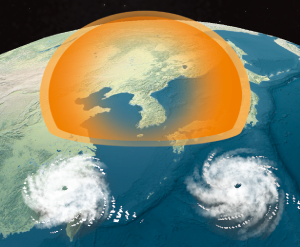
That disaster followed the formation of a vast heat dome over western Canada and the northwestern United States. Heat domes develop when strong, hot high pressure settles over a region while heat flows in from the Pacific or Africa. The pattern that produced the sweltering conditions on the Korean Peninsula was different: two high-pressure systems formed a “double heat dome.”
A hot, dry Tibetan high-pressure system remained nearly stationary about 10 kilometers above the ground. Around five kilometers lower, a hot and humid North Pacific high-pressure system continued expanding toward the peninsula. Together, they pressed down like two pot lids, preventing heat rising from the surface from escaping and allowing temperatures inside the system to build.
The column links the pattern to the jet stream, which normally pushes the Tibetan high northeastward or back toward Tibet. Rising summer temperatures in the Arctic have reduced the temperature gap with the equatorial region, weakening the jet stream. That is why global warming is being cited as one factor behind the heat dome.
The same system has also acted as a barrier against typhoons. None of the 23 typhoons this year, including “Wandering,” which recently dissipated off Japan, made landfall on the Korean Peninsula. Meteorologists say the heat dome is changing typhoon paths or causing storms to weaken early. Yet typhoons also replenish agricultural and household water supplies and oxygenate coastal waters. The column argues that the benefits and harms of blocking them are difficult to measure, while the unpredictable reach of human-driven weather changes is plainly worrying.
About this summary
Originally published by Dong-A Ilbo in Korean. Translated, summarized, and contextualized automatically by DistantNews, with a note on how the source frames the story. Not individually reviewed before publishing. How this works.
More Stories


From Our Blog

What Gets Lost (and Found) When News Is Translated

The Critical Role of Diaspora Media in Global News

What Travellers Should Know About Countries with Restricted Press

A Digital Nomad's Guide to Following Local News

How the Same Story Looks Different in Different Countries
