




The far right strengthens its position in Europe as anti-immigration parties move closer to power
Translated from Romanian and summarized by DistantNews. Read the original for the full story.
At a glance
Analysis
Named sources
Ongoing story
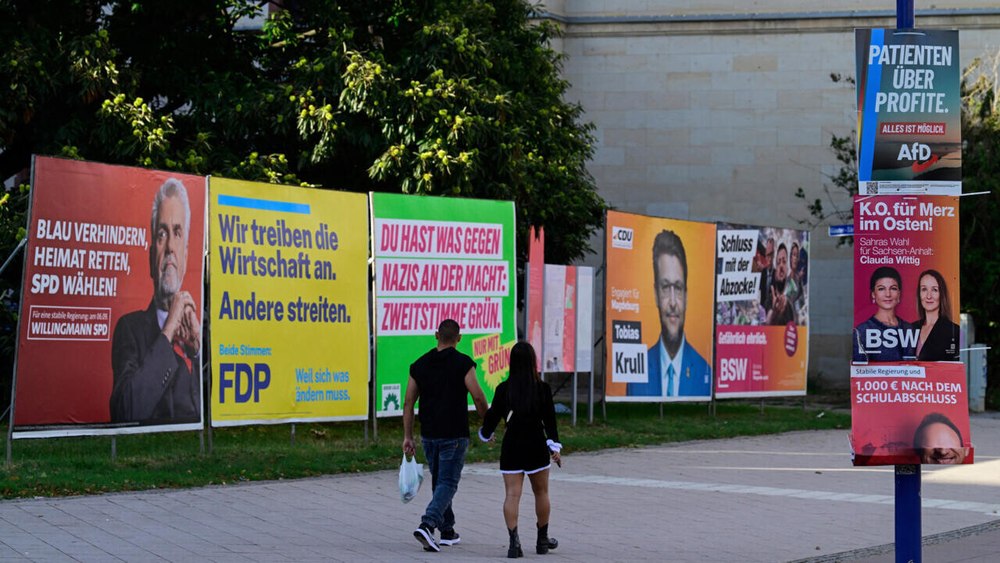
- Germany’s far-right, anti-immigration Alternative for Germany led a crucial regional election in Saxony-Anhalt with 44.5% in exit-poll projections.
- The result put the AfD well ahead of Chancellor Friedrich Merz’s CDU, which was projected at 18.5%, while other parties trailed.
- The election is being watched across Europe as right-wing and stricter immigration parties gain governing influence in more than half of the European Union’s member states.
The Alternative for Germany has won a crucial regional election in Germany according to exit-poll projections, taking the far right closer to a breakthrough that would have been unthinkable in the country after World War II. Whether the anti-immigration party can form a government remains unresolved.
The AfD was projected to win 44.5% of the vote in Saxony-Anhalt, decisively ahead of the Christian Democrats of Chancellor Friedrich Merz, who stood at 18.5%. The far-left Die Linke was projected to take 9.5%, the Social Democrats 8% and the Greens 9%. The smaller BSW party unexpectedly reached the 5% threshold needed to return to parliament.
The result has drawn attention well beyond Germany. In more than half of the European Union’s 27 member states, right-wing parties or movements advocating tighter immigration policies have entered government or gained significant influence over public policy.
Analysts associate the AfD’s rise with changing public attitudes toward immigration, particularly after the 2015 migration wave. That year, Angela Merkel’s government allowed about 1.3 million migrants to enter Germany, many of them refugees fleeing the war in Syria. Merkel defended the policy with the phrase “We can handle this,” but the decision continues to shape German politics more than a decade later.
British historian Timothy Garton Ash has described the refugee influx as one of the main causes of the AfD’s electoral success. The party is now the largest opposition force in the Bundestag, and national polls have repeatedly suggested that it could become Germany’s largest political party in a general election. Traditional parties have tried to block that possibility through a political “firewall,” refusing to form coalitions or govern with the AfD. Andreas Rödder, a contemporary-history professor at Mainz University, believes that strategy may not be enough to contain the party’s expanding influence.
In Magdeburg, the immigration debate also carries a powerful local memory. The city was the scene of a deadly attack on a Christmas market in December 2024, when a car drove into a crowd. Six people were killed and hundreds were injured.
We can handle this.
About this summary
Originally published by Adevărul in Romanian. Translated, summarized, and contextualized automatically by DistantNews, with a note on how the source frames the story. Not individually reviewed before publishing. How this works.
More Stories


From Our Blog

News in Translation: What Gets Lost, and How We Keep the Framing

Diaspora Media: How Communities Follow News From Home

Traveling Where the Press Is Not Free: How to Read the News There

The Digital Nomad's Guide to Local News

The Same Story, Different Countries: How Coverage Changes at the Border
