


The force absent from the most important negotiations of the decade. 'Irrelevance has moved from the rhetorical to the structural'
Translated from Romanian and summarized by DistantNews. Read the original for the full story.
At a glance
News
From a news agency
Context piece
- A political scientist notes a growing pro-peace faction in Tehran and increased regional involvement in Middle East peace talks.
- The European Union's absence from these negotiations, similar to Ukraine talks, is highlighted.
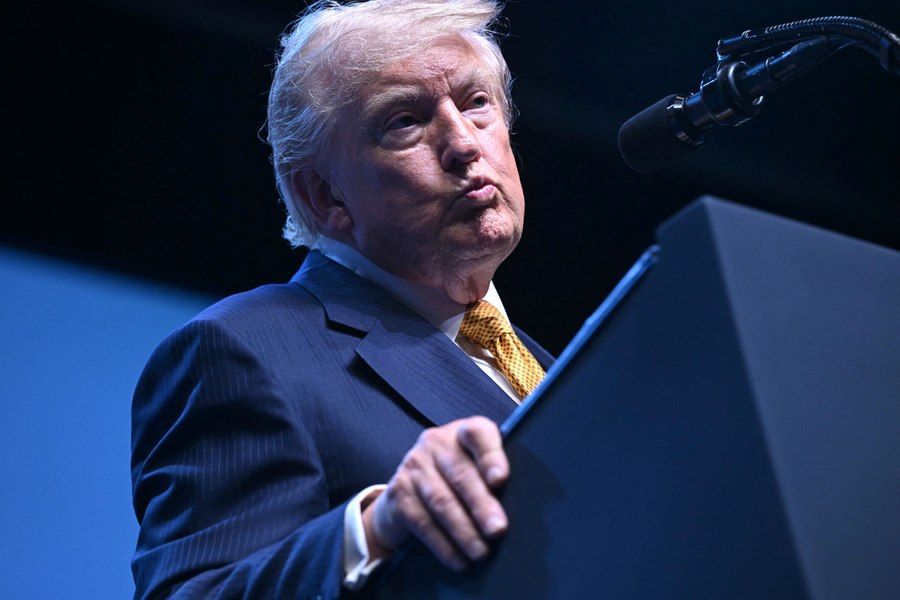
- Former President Donald Trump announced a preliminary understanding for a US-Iran agreement, including reopening the Strait of Hormuz.
Political scientist Ioana Constantin-Bercean, an expert on the Middle East, observes a strengthening pro-peace faction within Tehran and a growing engagement from regional states in peace negotiations. However, she points out the conspicuous absence of the European Union from these crucial talks, drawing a parallel to the negotiations concerning Ukraine.
A memorandum of understanding would have been largely negotiated, subject to finalization, between the United States of America, the Islamic Republic of Iran, and various other countries.
Discussions aimed at a lasting agreement in the Middle East are showing significant progress, despite the absence of a final accord between the warring parties. Former President Donald Trump announced over the weekend that a memorandum of understanding has been largely negotiated, which, if finalized, would include the reopening of the Strait of Hormuz. Trump stated on Truth Social that the agreement was "largely negotiated, subject to finalization, between the United States of America, the Islamic Republic of Iran, and various other countries."
significant progress has been made regarding a possible agreement between Washington and Tehran.
Earlier, on Saturday, May 23rd, US Secretary of State Marco Rubio indicated during a press conference in New Delhi that substantial progress had been made toward a potential US-Iran agreement. Rubio, however, cautioned that while progress is evident, it is not yet "final progress." He also explained that the United States had achieved its objectives in Iran through "Epiuc Fury," which aimed to degrade Iran's ballistic missile capabilities.
Qatar and Pakistan are among the countries that are most involved.
The increasing involvement of regional states in supporting American-Iranian negotiation efforts suggests a positive direction for the peace process. Constantin-Bercean notes that Qatar and Pakistan are particularly active, with Pakistan's involvement bolstered by Marshal Asim Munir's strong relationship with Donald Trump. A delegation from Qatar visited Tehran to support the negotiations, while Pakistan's chief decision-maker also traveled to Tehran to facilitate an agreement. Despite these efforts, Iran reportedly places its trust in Oman as the true mediator in discussions with the United States.
The only country in which Tehran has confidence is Oman.
About this summary
Originally published by Adevărul in Romanian. Translated, summarized, and contextualized automatically by DistantNews, with a note on how the source frames the story. Not individually reviewed before publishing. How this works.
More Stories
From Our Blog

News in Translation: What Gets Lost, and How We Keep the Framing

Diaspora Media: How Communities Abroad Follow Home

Traveling Where the Press Is Not Free: How to Read the News There

The Digital Nomad's Guide to Local News

The Same Story, Different Countries: How Coverage Changes at the Border
