


“The Future of Reading Is Not Dark. Its Value Will Be Renewed”
Translated from Korean and summarized by DistantNews. Read the original for the full story.
At a glance
In-depth
Named sources
Context piece
- Speakers at a 10th-anniversary conference in Seoul said reading could shift from owning books to accessing them, and from solitary reading to shared experiences shaped by wearable and AI technologies.
- Philosophers and researchers warned that relying on summaries, translation tools and AI-generated material could weaken the skills needed to interpret original sources and sustain a shared body of knowledge.
- Writers and psychologists argued that reading remains essential for inference, imagination and human individuality, even as AI transforms literature and access to information.
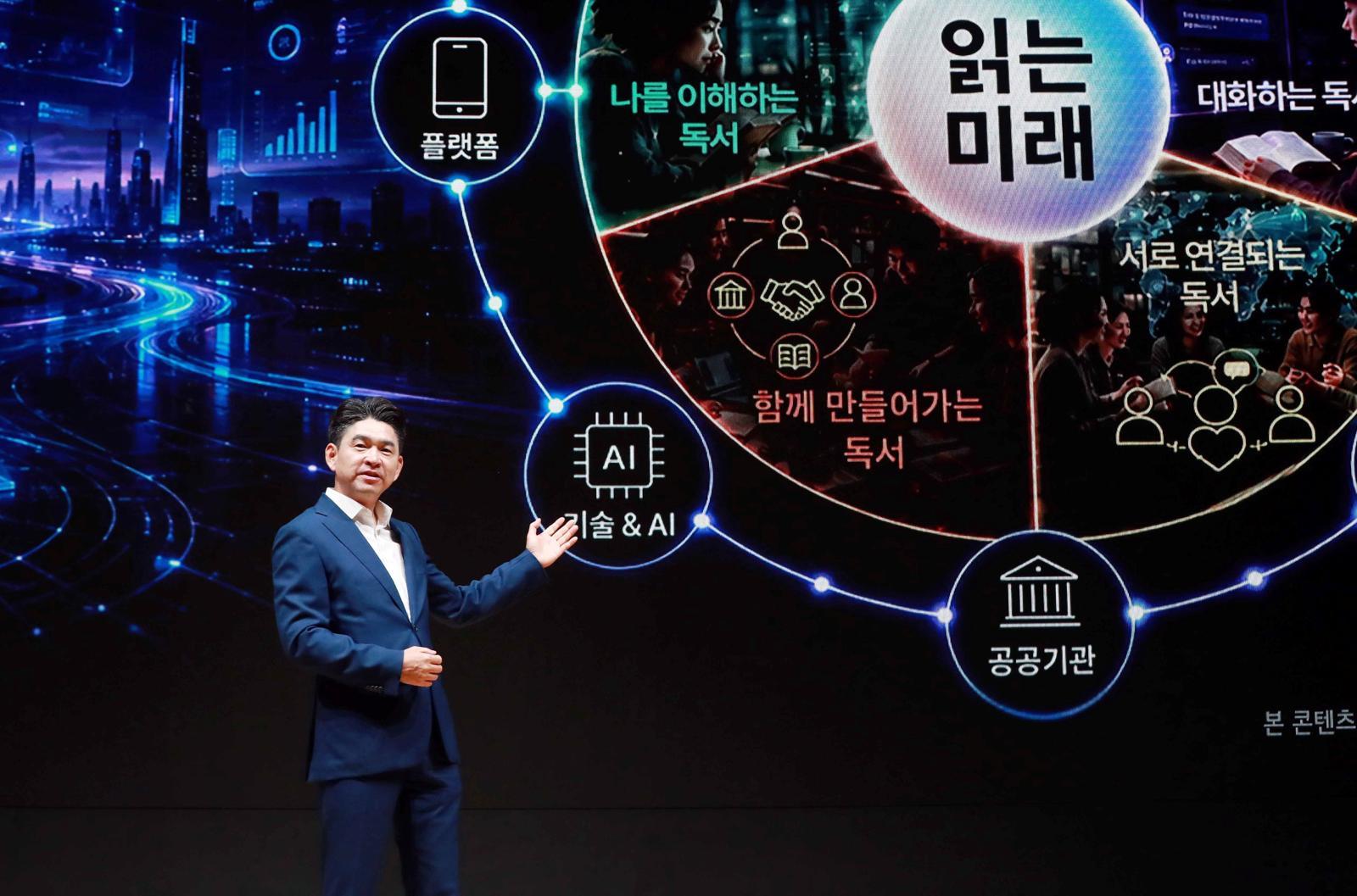
Reading may not disappear in the age of artificial intelligence, but it is likely to change form. That was the central question at Millie’s Library’s 10th-anniversary conference, “The Future of Reading,” held at Seoul’s COEX on Sept. 3.
Chief executive Jung Jae-wook said accumulated membership data pointed toward a shift from owning books to accessing them, and from reading alone to reading together. Wearable AI devices, including digital glasses, could expand reading into experiences that are heard and seen. Technology might also help readers discover their tastes, enable conversations with AI-generated authors, and connect readers across regions, generations and languages.
In the future, reading will change from owning books to accessing them, and from reading alone to reading together.
Philosopher Kim Jae-in offered a more guarded view. He compared the present debate over AI with ancient arguments about whether writing would benefit or harm civilization. He said the decline of reading has been linked to democratic crisis and political dysfunction, and warned that abandoning original sources would shrink humanity’s “shared brain.”
If we stop finding strange passages in translations and using important insights hidden in original materials, humanity’s shared brain will begin to shrink.
Data expert Anna Rosling Rönnlund urged audiences to confront reality through data rather than imagine extreme futures. She said people often rely on stereotypes and underestimate gradual progress, but AI could make it easier to find information and leave more time for reading, interpretation and analysis. Cognitive psychologist Kim Kyung-il said reading develops the brain’s capacity for inference by requiring people to fill gaps in ambiguous and incomplete information.
Novelist Eun Hee-kyung said literary competitions are receiving more submissions that appear to use AI. She argued that AI-written texts often move smoothly toward predetermined conclusions but lack the surprise, sensory detail and human process that can produce new insight. She also questioned the ethics of companies turning people’s personalities into commercial data, while maintaining that literature can help people remain individuals rather than merely components of machine civilization.
AI-written texts are smoothly arranged toward a conclusion, without surprises, and do not let readers experience the process of awakening to something new through characters’ conflicts, feelings and senses.
About this summary
Originally published by Hankyoreh in Korean. Translated, summarized, and contextualized automatically by DistantNews, with a note on how the source frames the story. Not individually reviewed before publishing. How this works.
More Stories


From Our Blog

News in Translation: What Gets Lost, and How We Keep the Framing

Diaspora Media: How Communities Abroad Follow Home

Traveling Where the Press Is Not Free: How to Read the News There

The Digital Nomad's Guide to Local News

The Same Story, Different Countries: How Coverage Changes at the Border
