


The geotechnical trap inside Nepal’s hydropower tunnels
Summarized by DistantNews. Read the original for the full story.
At a glance
Analysis
Sources not specified
Ongoing story
- Debris flows in Nepal’s Bhotekoshi and Trishuli river corridors have inundated hydropower projects, leaving workers missing or trapped in underground facilities.
- The article examines how saturated sediment, confined tunnel geometry and limited drainage can complicate rescue operations.
- It argues that the risks exposed by the disaster should influence the future design of Nepal’s hydropower infrastructure.
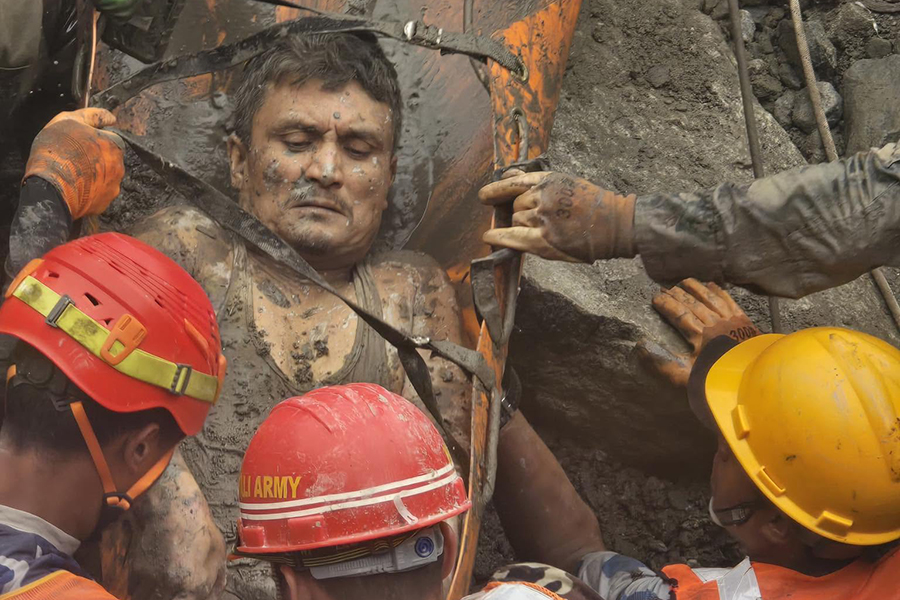
The mud trapped inside Nepal’s flooded hydropower tunnels may be far more dangerous and difficult to remove than ordinary wet soil. That geotechnical problem has become a critical complication in rescue efforts after catastrophic debris flows swept through the Bhotekoshi and Trishuli river corridors on August 26.
Several hydropower projects remain inundated, with workers missing or trapped deep inside underground headrace tunnels and powerhouses. Public frustration has focused on the pace of the rescue, the availability of equipment, the technology being used and whether machinery can reach the sites. But the article argues that the behaviour of the sediment itself deserves equal attention.
Most Himalayan run-of-river projects combine surface headworks and desilting basins with underground headrace tunnels and powerhouses. Although underground construction can protect critical facilities from many surface hazards, debris flows can turn portals and access adits into entry points for huge volumes of water, sediment and rock. The material can damage gates, scour tunnel floors and reach electromechanical areas.
Once sediment enters a flooded underground facility, access and drainage become major problems. Tunnels are generally designed for surrounding-rock stresses, internal water pressure and normal operations, not for the combined impact of massive sediment loads, debris and confinement. A mass of glacial till or alluvium can effectively seal a tunnel. Ventilation may fail, trapped air can reach maximum relative humidity and evaporation becomes severely limited.
For that reason, waiting for the mud to dry is not necessarily a solution. Without an open drainage path and a sufficient hydraulic gradient, pore water cannot simply escape. Understanding these conditions is important both for the current rescue effort and for the way Nepal designs hydropower infrastructure in the future.
About this summary
Originally published by OnlineKhabar English. Summarized and contextualized automatically by DistantNews, with a note on how the source frames the story. Not individually reviewed before publishing. How this works.
More Stories

From Our Blog

News in Translation: What Gets Lost, and How We Keep the Framing

Diaspora Media: How Communities Follow News From Home

Traveling Where the Press Is Not Free: How to Read the News There

The Digital Nomad's Guide to Local News

The Same Story, Different Countries: How Coverage Changes at the Border
