


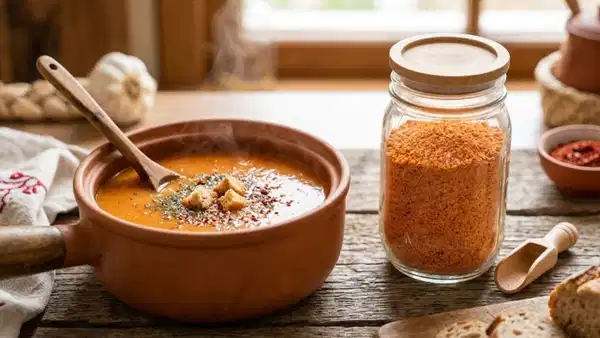
The greatest cure for winter: Step-by-step tarhana making with 5 tips from a mother's touch
Translated from Turkish, summarized and contextualized by DistantNews.
At a glance
In-depth
Sources not specified
Context piece
- The article provides a step-by-step guide to making traditional Turkish tarhana, a winter staple.
- It emphasizes five key points for successful tarhana preparation, focusing on vegetable consistency, proper fermentation, and controlled drying.
- Key advice includes cooking vegetables without added water, using strained yogurt, avoiding direct sunlight during drying, and achieving the right dough consistency for crumbling.
The preparation of tarhana, a time-honored Turkish winter food, begins with the bounty of summer: ripe tomatoes, vibrant red peppers, and thick yogurt. Crafting authentic homemade tarhana, dried in the sun and patiently fermented, is a culinary art that requires attention to detail.
The process hinges on five crucial stages that prevent mold, develop its characteristic tangy flavor, and maintain its rich red color. First, when cooking the vegetable base of peppers, tomatoes, and onions, it's vital to use only the vegetables' natural juices. Adding water dilutes the vegetable flavor and increases the amount of flour needed. After pureeing the cooked vegetables, they must cool completely to room temperature before mixing with yogurt to prevent curdling.
Fermentation is key to tarhana's unique taste. The quality of the yogurt and the fermentation period are paramount. Thick, strained yogurt is essential; watery yogurt will result in a runny dough. The dough must be kneaded twice daily for 7 to 10 days to release gases. While it may seem thin initially, a little flour can be added gradually to achieve a slightly sticky consistency.
Proper drying is another critical step. Exposing tarhana directly to harsh sunlight can destroy B vitamins and fade its color. Instead, it should be dried in a well-ventilated, shaded area, or one that receives only morning sun, spread on clean cotton cloths. Frequently turning the pieces ensures even drying and prevents moisture buildup underneath.
Timing the crumbling stage is also vital. The dough should be neither too wet nor too dry. If it's too wet, it will clog the sieve; if too dry, it will be impossible to crumble. The ideal state is when the outside is dry but the inside still yields slightly when pressed. Finally, after crumbling, the tarhana powder needs a final drying period in thin layers in the shade for several days until completely moisture-free before being stored in airtight containers.
DistantNews Editorial
Originally published by Cumhuriyet in Turkish. Translated, summarized, and contextualized by our editorial team with added local perspective. Read our editorial standards.
More Stories


From Our Blog

What Gets Lost (and Found) When News Is Translated

The Critical Role of Diaspora Media in Global News

What Travellers Should Know About Countries with Restricted Press

A Digital Nomad's Guide to Following Local News

How the Same Story Looks Different in Different Countries
