

The Man Who Rebuilt German Football: Survivor of Dresden's Inferno
Translated from Croatian, summarized and contextualized by DistantNews.
At a glance
In-depth
Sources not specified
Context piece
- Helmut Schön, a legendary German football coach, survived the bombing of Dresden during World War II.
- He became a key player for Dresdner SC, winning championships before and during the war.
- After the war, Schön defected to West Germany and built a successful coaching career, shaping German football.
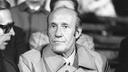
Helmut Schön's life story is one of tragedy, escape, perseverance, and ultimate triumph, extending far beyond his trophies to shape German football history. He remains one of the most successful World Cup coaches, second only to Didier Deschamps in wins.
Born in Dresden, Schön grew up with a father who was an art dealer, not particularly interested in football. Despite this, Helmut pursued his passion, training as a bank clerk but dedicating his free time to the sport. His talent as a striker was undeniable. He became a crucial player for Dresdner SC, winning two German championships and two cups during the war years. Between 1937 and 1941, he also played 16 times for the German national team, scoring an impressive 17 goals. His 190 cm height earned him the nickname "Dippy," and his on-field presence was as commanding as his later coaching career.
On the night of February 13, 1945, Schön was working as an air defense supervisor in Dresden when Allied bombers approached. He heard the news over the radio with growing unease, hoping they were headed elsewhere. He called his wife, Annalies, who was at home with their son, Stephan, staying with her parents on the outskirts of the city. They agreed she would join him the next day. As sirens wailed, she went to the cellar with their luggage. Schön remained at his post, watching marker lights descend through the darkness. "Eerily slow, eerily beautiful," he later wrote in his autobiography, "beams of light descended through the darkness, illuminating the sky over Dresden. As dreamy and peaceful as it looked, it seemed terrifying to us."
What followed was what he described as "tens of thousands of incendiary bombs." These rods, about half a meter long and as thick as an arm, ignited roofs, creating a firestorm that reached speeds of 200 kilometers per hour, consuming entire city blocks as if they were made of matchsticks. Helmut Schön survived the inferno that turned his city to ash.
After the war and Dresden's destruction, Schön began his coaching career in his native Saxony, then under Soviet occupation. However, he soon felt politics interfering too much with sports, stifling freedom and professionalism. In 1950, he made the pivotal decision to defect to West Germany. After brief stints as a player-coach at Hertha Berlin, his career took a unique turn.
Eerily slow, eerily beautiful, beams of light descended through the darkness, illuminating the sky over Dresden. As dreamy and peaceful as it looked, it seemed terrifying to us.
DistantNews Editorial
Originally published by Večernji List in Croatian. Translated, summarized, and contextualized by our editorial team with added local perspective. Read our editorial standards.
More Stories



From Our Blog

What Gets Lost (and Found) When News Is Translated

The Critical Role of Diaspora Media in Global News

What Travellers Should Know About Countries with Restricted Press

A Digital Nomad's Guide to Following Local News

How the Same Story Looks Different in Different Countries
