


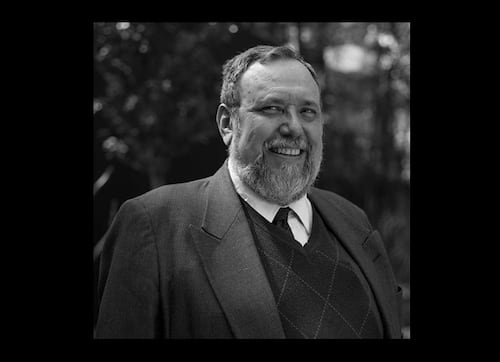
The Mexican Humanism of Mauricio Beuchot
Translated from Spanish, summarized and contextualized by DistantNews.
TLDR
- Mexican philosopher Mauricio Beuchot has dedicated significant work to defining "Mexican humanism."
- Beuchot argues that Mexican humanism emphasizes human dignity through historical and philosophical knowledge, celebrating past achievements and future potential.
- His work integrates universal philosophical traditions with Mexico's specific cultural context, offering a guide to understanding Mexican reality.
The term "Mexican humanism" has often been imposed without a clear understanding of its meaning, frequently used as an ideological or political slogan. However, as El Universal highlights, philosopher Mauricio Beuchot has undertaken the crucial task of illuminating this concept through his extensive work. Beuchot posits that Mexican humanism is fundamentally about exalting human dignity by deeply engaging with history and philosophy. It involves a proud examination of humanity's theoretical and practical accomplishments, fostering faith in future potential and championing human freedom and reason.
Mexican humanism ponders and exalts – through the knowledge of history and philosophy – the dignity of man; it studies with pride his works, both theoretical and practical. It tries to highlight the good aspects that man has shown in his past history, and has faith in those he will display in the future. It is concerned with man's freedom and the preeminent use of reason. It is concerned with constructing the concept of man, of human nature.
Beuchot's approach, detailed in his article "El humanismo mexicano como humanismo analógico," traces the origins of this humanism through various cultural sources that have shaped Mexico. He explains how diverse worldviews amalgamate within the Mexican context, offering a unique perspective on the nation's identity. His reflections, spanning over four decades, emphasize that human beings are defined by the virtues they cultivate, integrating passions, emotions, and intellect. This philosophical endeavor is not conducted from an ivory tower; Beuchot draws from a vast intellectual tradition, engaging with thinkers from Plato to Foucault and Gadamer, all while remaining grounded in the specific circumstances of Mexico.
The human being... goes hand in hand with the virtues we set for him, with which he will integrate the strength of his passions, his emotions, and his feelings, along with the potentialities of his imagination and his intellect.
From a Mexican standpoint, Beuchot's work is invaluable. It provides a much-needed framework for understanding "lo mexicano" – the essence of being Mexican – in a way that transcends superficial political rhetoric. His meticulous philosophical inquiry, though perhaps understated in academic circles, offers profound insights into the human condition as experienced and expressed within Mexico. By synthesizing global philosophical thought with local realities, Beuchot acts as a vital guide, helping to make sense of the complex "universal library" of human experience and offering a coherent vision of Mexican humanism that is both intellectually rigorous and culturally relevant. This is a perspective often missed in broader international coverage, which may focus on political or economic narratives without delving into the philosophical underpinnings of national identity.
encyclopedias, atlases, the East / and the West, centuries, dynasties, / symbols, cosmos and cosmogonies.
DistantNews Editorial
Originally published by El Universal in Spanish. Translated, summarized, and contextualized by our editorial team with added local perspective. Read our editorial standards.
More Stories



From Our Blog

What Press Freedom Means for the News You Read

What Gets Lost (and Found) When News Is Translated

The Critical Role of Diaspora Media in Global News

What Travellers Should Know About Countries with Restricted Press

A Digital Nomad's Guide to Following Local News
