


The Morning Betrawati Disappeared
Translated from English and summarized by DistantNews. Read the original for the full story.
At a glance
In-depth
Named sources
Outcome reported
- A flood entered Betrawati at about 9:20 a.m. on August 26 and devastated the Nepali town within 15 to 20 minutes.
- Yogesh Dangol described buses, vehicles, homes and people being swept away as he searched for his son and parents.
- Betrawati had historical, religious and commercial importance, with about 230 to 235 households and a population estimated at 700 to 800.
Yogesh Dangol’s final walk through Betrawati began like an ordinary visit. He went to Uttargaya Dham, crossed the suspension bridge between Trishuli and Tupche, visited Maranghat Pati and watched the Lakhey. He also stopped at the building of the club he had chaired for eight years.
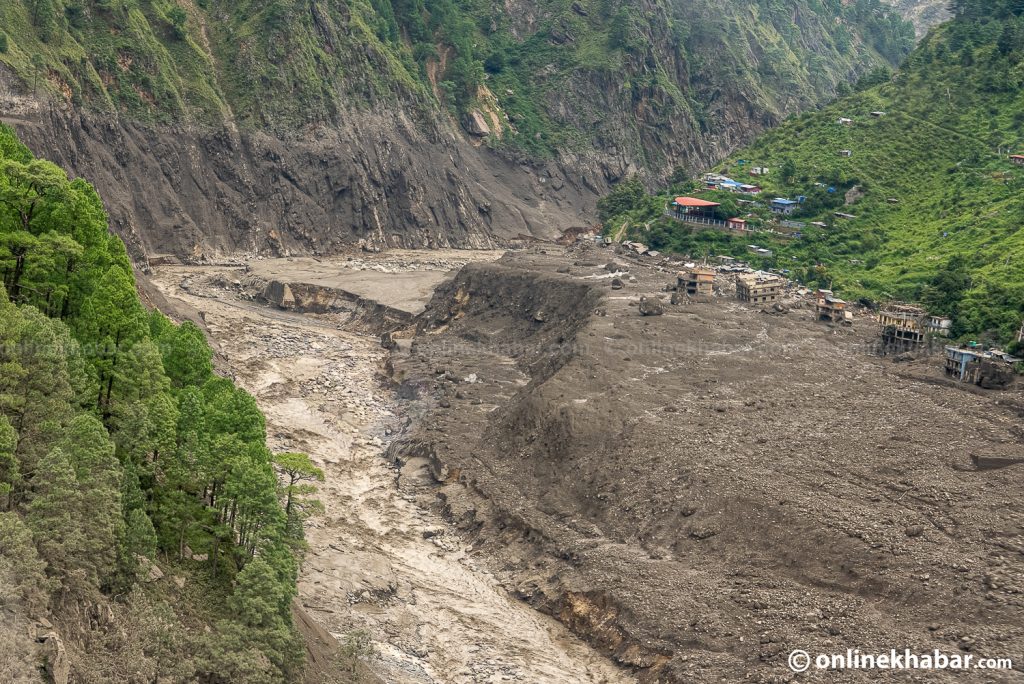
He was returning home and had reached the middle of Betrawati Bazaar when someone warned him: “The flood is coming.” It was around 9:20 a.m. Within 15 to 20 minutes, the settlement had been devastated.
The flood is coming.
Dangol began searching for his son and parents as the water tore through the town. Buses were carried away. People ran across fields on the other side of the river, while the bridge filled with people and vehicles. “I cannot imagine what happened to the people in that field,” he said. “There were people all over the bridge. Vehicles were running. Everything was swept away.”
Four or five large container trucks and cars parked outside the Betrawati police post were swept away, some with people inside. School buses also disappeared in the flood. Dangol had barely crossed the bridge when he saw his maternal aunt and her husband being carried away. “When the flood reached my aunt’s house, panic began. A white torrent came down from the temple. After that, my mind stopped working,” he said.
I cannot imagine what happened to the people in that field.
Dangol’s five-storey house stood in the middle of town, but the flood reached its fourth floor. Homes across Betrawati were swept away within minutes. “Betrawati, this sacred place, was turned into ruins,” he said.
There were people all over the bridge. Vehicles were running. Everything was swept away.
For Dangol, the destruction goes beyond the loss of homes. Betrawati had historical and religious importance, with settlements dating back before the 1849 treaty with Tibet, according to him. Temples and guthis had existed there for generations. About 170 to 180 Dangol households lived in the town, alongside Tamang, Brahmin and Magar families. Dangol estimated that 230 to 235 households, or 700 to 800 people, lived in Betrawati.
The town was also a trading centre, drawing people from nearby areas. It was home to Uttargaya Dham and known for the Lakhey and other festivals. “It was a package in itself, fertile land, clean water, the confluence of rivers, the sacred land of Uttargaya and Lakhey festivals,” Dangol said. Betrawati also served as an important route toward Rasuwa and the Rasuwagadhi border point. Now, he says, there is nothing.
Betrawati, this sacred place, was turned into ruins.
About this summary
Originally published by OnlineKhabar English in English. Translated, summarized, and contextualized automatically by DistantNews, with a note on how the source frames the story. Not individually reviewed before publishing. How this works.
More Stories


From Our Blog

News in Translation: What Gets Lost, and How We Keep the Framing

Diaspora Media: How Communities Follow News From Home

Traveling Where the Press Is Not Free: How to Read the News There

The Digital Nomad's Guide to Local News

The Same Story, Different Countries: How Coverage Changes at the Border
