

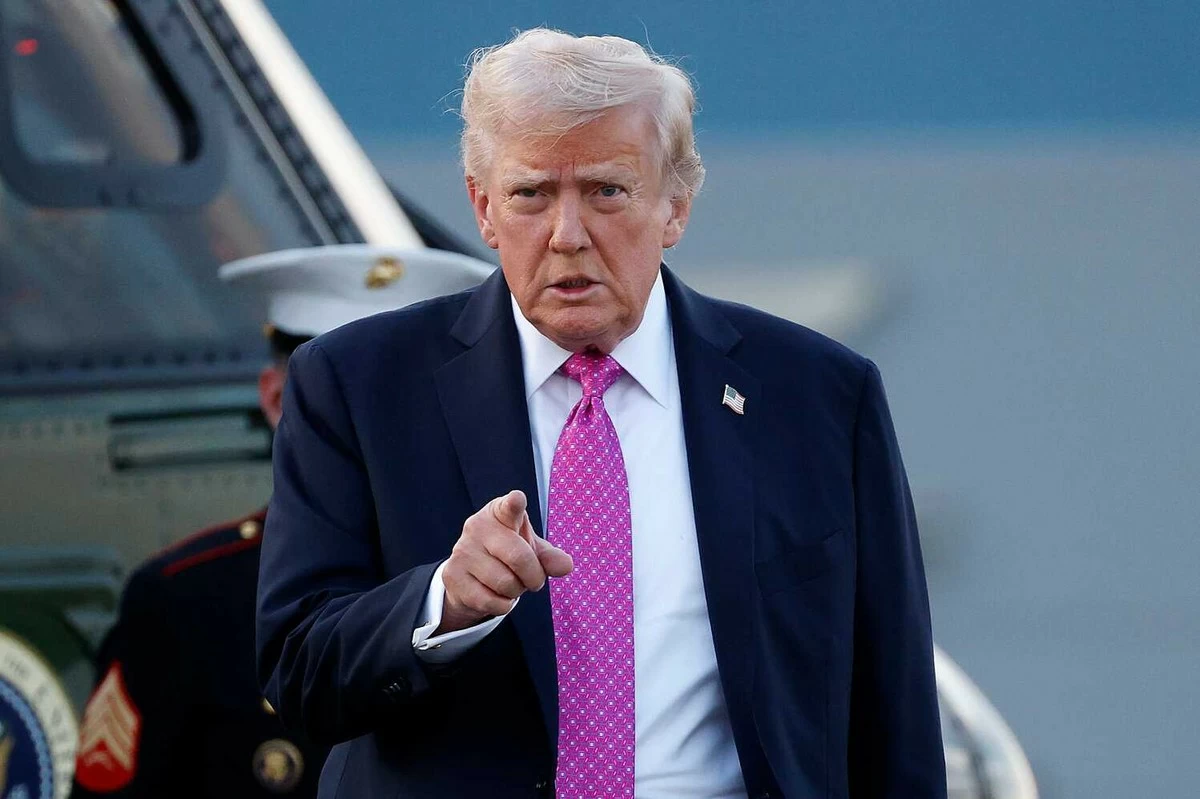

The Munich Trap aided Hitler’s expansion, and now we face an Iranian trap: Beware!
Summarized and contextualized by DistantNews.
At a glance
Analysis
Sources not specified
Context piece
- The article warns of a potential "Munich Trap" involving Iran's negotiations with the U.S., drawing parallels to Hitler's 1938 agreement.
- Iran is accused of destabilizing the global economy by threatening to close the Strait of Hormuz and Bab el-Mandeb Strait, potentially triggering a severe financial depression.
- The author argues that failing to hold Iran accountable, as in the past, emboldens its expansionist strategy and poses a threat to global stability and economies.
A potential deal between Iran and the United States is being likened to the "Munich Trap" that aided Hitler's expansion, with a stark warning that a similar danger now looms. Unlike Hitler's strategy, the Iranian administration employs gradual expansion, a tactic observers have overlooked. This incremental growth is fueled by boundless Persian political ambition, illustrated by the proverb, “I was eaten when the white bull was eaten.”
The ‘Munich Trap’ appears to be resurfacing in the modern era. This time, Iran is involved as it negotiates with the United States of America.
The Tehran regime is actively destabilizing the international economy. It has already blocked the Strait of Hormuz and, during recent tensions with Israel, directed its Houthi allies to threaten the closure of the Bab el-Mandeb Strait. These actions exacerbate global inflation and the economic crisis, actions that could trigger a financial depression far more severe than the 1929 crisis.
I was eaten when the white bull was eaten.
Historically, such economic turmoil has served as a catalyst for conflict. The article recalls that World War II, which claimed over 70 million lives, broke out a decade after the 1929 crisis. The failure to hold the Tehran regime accountable during the Iran-Iraq War, when it used the Strait of Hormuz as leverage and attacked oil tankers, emboldened it to commit further atrocities and launch terrorist attacks in the 1980s.
A small spark can start a huge fire.
The consequences of Iran's actions extend beyond the Arab world. The global economy faces severe recession if direct and indirect losses exceed four trillion dollars, potentially allowing the Iranian regime to control the global economy and expand unchecked. The author concludes that if a world power does not intervene, the "Munich Trap" will be repeated, threatening China, Europe, East Asia, and other nations impacted by Iran's "economic terrorism."
If a world power does not overthrow this regime, the ‘Munich Trap’ will be repeated today.
DistantNews Editorial
Originally published by Arab Times. Summarized and contextualized by our editorial team with added local perspective. Read our editorial standards.
More Stories
From Our Blog

What Gets Lost (and Found) When News Is Translated

The Critical Role of Diaspora Media in Global News

What Travellers Should Know About Countries with Restricted Press

A Digital Nomad's Guide to Following Local News

How the Same Story Looks Different in Different Countries
